

The ancient world was a far more interconnected place than is commonly recognised.
In 1851, archaeologists discovered three clay sealings of King Shabako of Kush in the Palace of the Assyrian king Sennacherib (r. 705-681 BC) near modern-day Mosul, Iraq. The sealings preserve the impressions of cords once used to secure bags containing papyri, providing material evidence of Kushite presence in the Assyrian capital.1
Later excavations uncovered records of Kushite officials, chariot-drivers, horse trainers, and horses in Assyria during the 7th century BC.2 By the 5th century BC, aithiopian contingents in the army of Xerxes were present in mainland Greece at the Battle of Plataea, where they made a strong impression on Greek artists.3
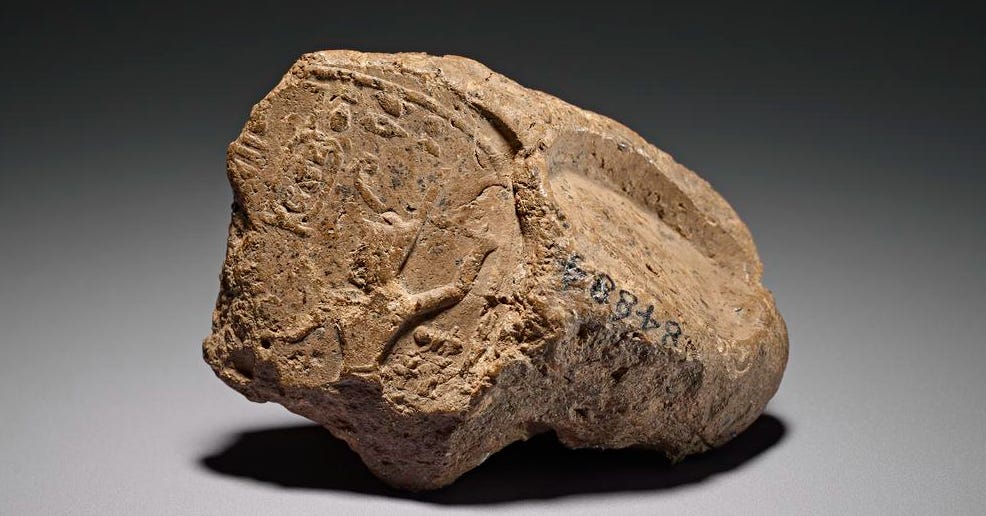
Baked clay sealing with seal impression. Kouyunjik, Iraq. British Museum, No. 84884
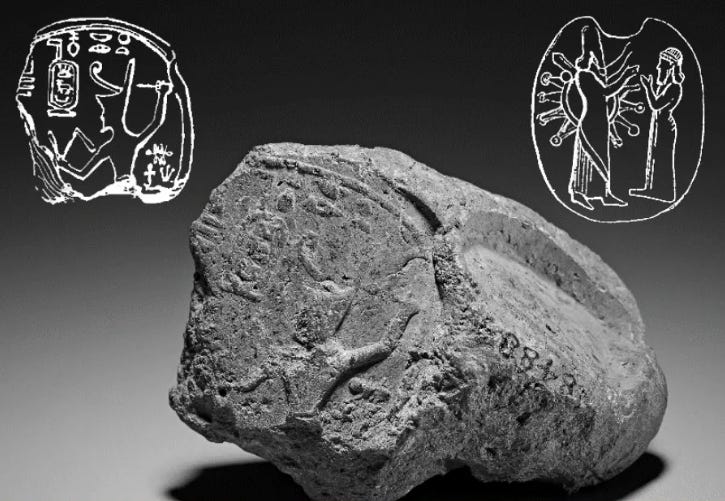
Clay seal of Shabaqo found in Sennacherib’s palace in Nineveh (Iraq) depicting the pharaoh sticking a foe. There is an additional seal impression showing two persons, in Assyrian style. Image by J. Pope.
Following the rise of the Ptolemies in Egypt in 305 BC, this movement of people and knowledge became increasingly reciprocal.
Greek travelers such as Bion of Soli visited Kush (aithiopia), leaving accounts of their travels and itineraries listing the cities between Egypt’s southern frontier and the Kushite capital of Meroe.4
As long-distance trade networks connected the African interior with the Mediterranean, the Romans, who took control of Egypt, sent an expedition of two centurions in 63 CE, who were given Kushite escorts for their southern journey up to the Sudd marshes in present-day South Sudan.5
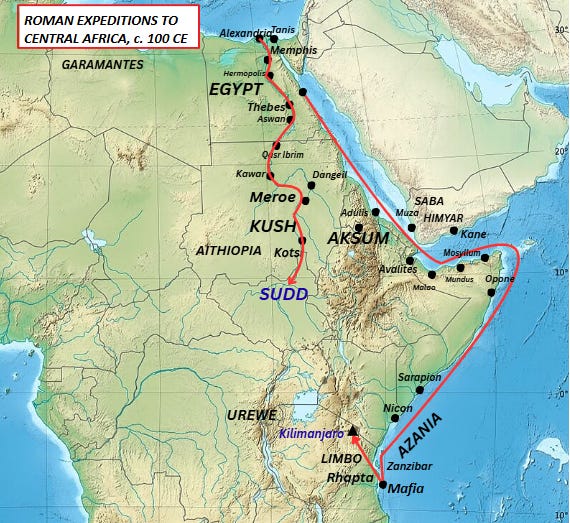
Roman expeditions to Central Africa.
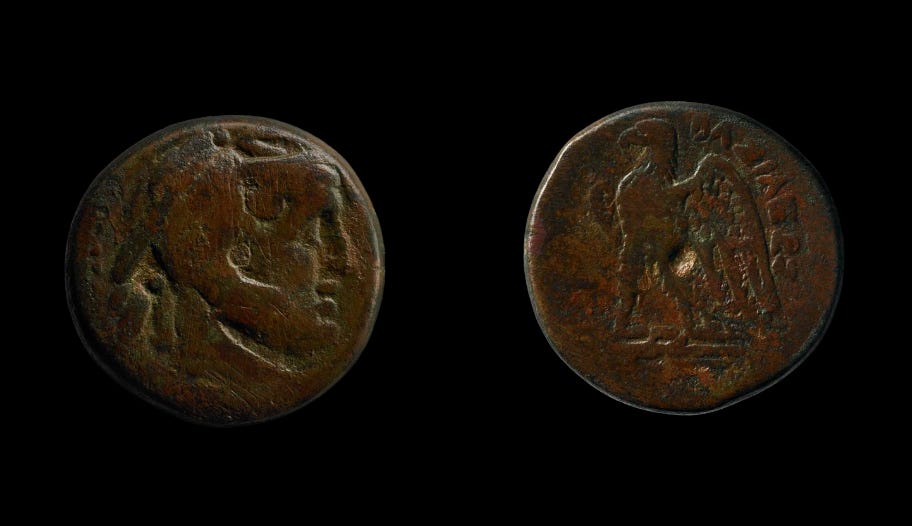
Copper-alloy coin, issue of Ptolemy I or Ptolemy II struck between 305 and 246BC. Found at Meinarti, Sudan. British Museum No. EA80702
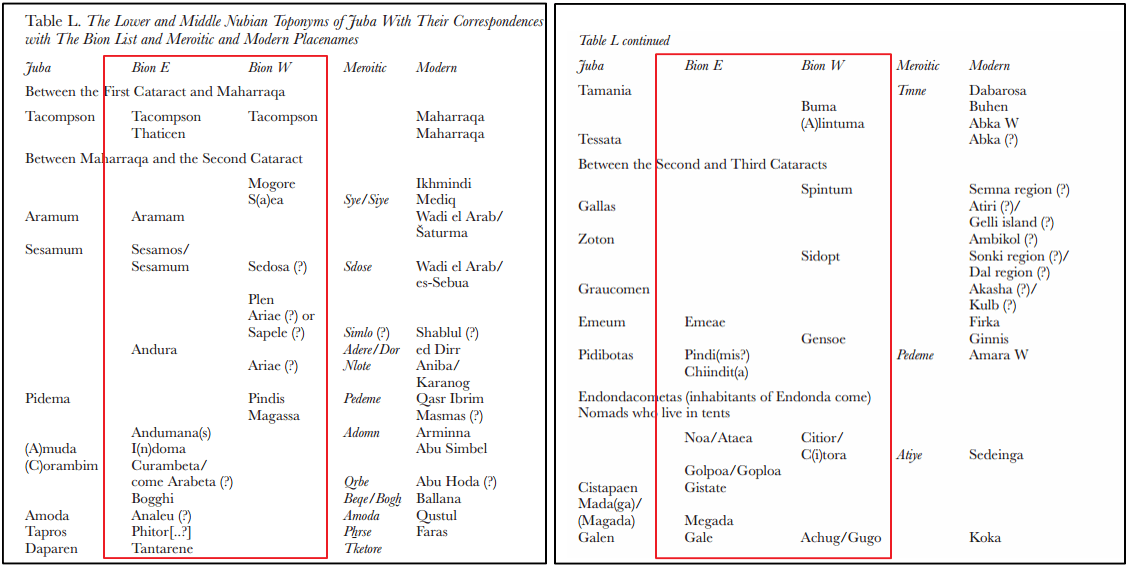
Aithiopian/Kushite cities and towns known to Bion of Soli in the 3rd century BC, and their modern place names. Table by L. Torok
While archaeological evidence for Greek and Roman trade goods currently extends only as far south as the Kushite royal capital, Meroitic material, including scarabs, amulets and wheel-made pottery, has been found considerably farther south at Kotsi, a few hundred kilometers north of the Sudd marshes (see map above).6
Roman skippers likewise reached the East African coast during the 1st century CE, where they found an already established trading network linking the Red Sea region with the East African interior, as well as flourishing port cities such as Rhapta in what is today Tanzania.
Archaeological excavations on Tanzania’s Mafia Islands have uncovered Roman material remains including shaped stone blocks, inscribed pottery, glass beads, and surface finds of coins, indicating the presence of Roman traders in the region.7
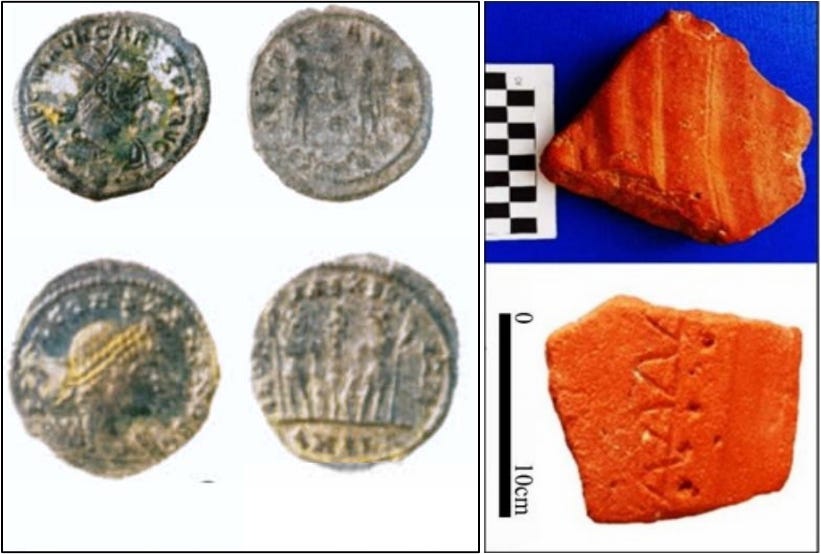
(left) Roman coins from Kimoni near Tanga in Tanzania, issue of Emperor Carus (A. D. 282-284) and Constans (as Caesar) (A.D. 335-337), photo by N. Chittick. (right) Roman pottery, Terra Sigillata fabric. From Juani, Mafia Islands, Tanzania.8
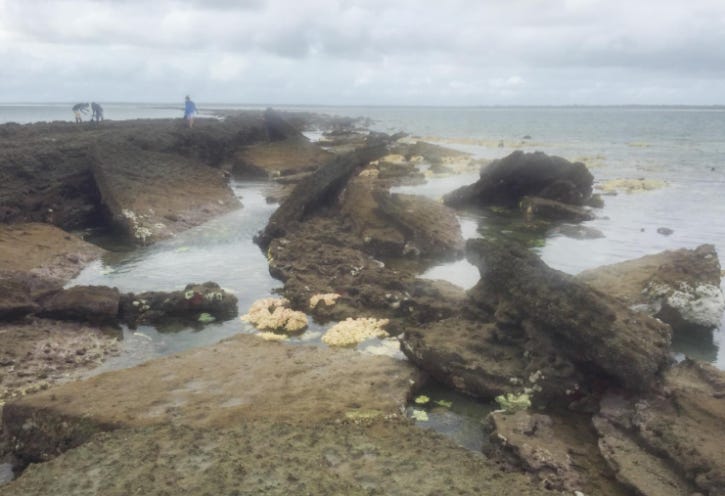
Partially submerged cement blocks at Mwamba Ukuta, from a ruined city wall near Mafia Island, Tanzania. Image by Hannah Jane and Alan Sutton.
In the early 2nd century CE, a sailor named Diogenes travelled 25 days inland from the metropolis of Rhapta, eventually encountering two lakes from which the Nile was believed to flow near the “Mountains of the Moon” (Ptolemy, Geographia 1.9, 4.8).
These enigmatic mountains, which became an object of fascination for explorers in the 19th century, are thought to be the snow-capped peaks of Kilimanjaro, rather than the more distant Rwenzori Mountains whose rivers in fact contribute to the waters of the Nile.9
This remarkable account illustrates the extent of geographical knowledge of the African interior and the maritime trade of Africa’s coastal societies by the Roman period.
Yet such knowledge had much earlier precedents.
Centuries before Diogenes’ journey, the Egyptian king Necho II (610–595 BC) commissioned an expedition that circumnavigated Africa and returned to Egypt. Soon after, the Carthaginian sailor Hanno (fl. 500 BC) explored the Atlantic coast of Africa, reportedly reaching parts of West Africa.
Historical accounts of these expeditions describe exotic lands and fauna beyond the southern reaches of the known world, where the midday sun was observed to the right of the sailors, suggesting that they had rounded the southern tip of the continent.
While skepticism toward these accounts persists among modern historians, archaeological evidence from sites in the Horn of Africa and the East African interior has lent some support to claims of ancient maritime trade and long-distance contacts during the 1st millennium BC.
Finds of ancient trade goods from Neolithic sites in the interior of Kenya and Tanzania dated to the 9th century BC, inscriptions along the coast of Somalia dating to the 8th century BC, and epigraphic evidence of trade links between ancient South-Arabian polities and Egypt by the 6th century BC all point to a flourishing coastal trade at the time of Necho’s expedition.
Additionally, a re-examination of Hanno’s itinerary down the Atlantic coast suggests that Carthaginian sailors undertook some of the furthest recorded voyages southward before the modern Age of Discovery, which would not be surpassed for nearly two millennia.
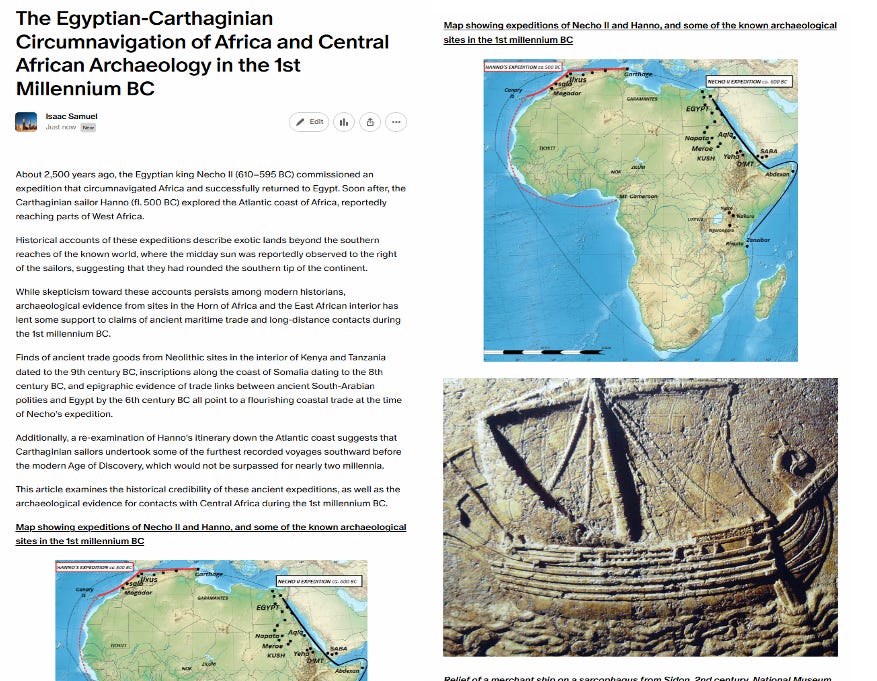
My latest Patreon article examines the historical credibility of these ancient expeditions, as well as the archaeological evidence for contacts with Central Africa during the 1st millennium BC.
Please subscribe to read more about it here;
Sennacherib’s Departure and the Principle of Laplace by Jeremy Pope pg 120-122
The Horses of Kush by Lisa A. Heidorn, pg 107-110
Herodotus’ Histories, 7.69-70, 9.32, 2.29. Before Color Prejudice: The Ancient View of Blacks by Frank M. Snowden pg 46-49, 93-94
Between Two Worlds: The Frontier Region Between Ancient Nubia and Egypt, 3700 BC-AD 500 by László Török pg 380-383
Studies on the History of Late Antique and Christian Nubia. Sudan in Roman and Medieval Times, by L.P Kirwan, pg. 72-76
The features of Meroitic spread in south-central Sudan: remains along the White Nile region by Ammar Awad Mohamed Abdalla. The Southern Frontier of the Meroitic State: The View from Jebel Moya by Michael Brass
Sociocultural and economic aspects of the ancient Roman reported metropolis of Rhapta on the coast of Tanzania: Some Archaeological and historical perspectives by Caesar Bita et al.
Preliminary Report of the Re-excavation of Ukunju Limestone Cave in Juani, Mafia Archipelago, Tanzania: More Evidence of Ancient Transoceanic Trade Connections By Giada Manzinali and Dr. Abel D Shikoni. Cross cultural exchanges in the ancient world: Early connections between Azania and diverse civilizations of the Indian Ocean, the Mediterranean basin and distant regions in the African continent by Felix A. Chami
Africa and the Indian Ocean World from Early Times to circa 1900 by Gwyn Campbell, pg 66
Thanks for the post! I've been fascinated with ancient exploration in Africa since reading Rhys Carpenter's Beyond the Pillars of Hercules. The monsoonal African-Indian-Roman trade and cultural exchange is just incredible.
The ability of Carthaginian navigators is truly astounding! What drove them to explore the farthest African coasts? Rumours of resources, new possible trading partners, conquest?
Funnily, if I recall they perhaps had the earliest recorded interactions with gorillas.