

Abolitionism succeeded thanks to the struggles of many movements, some of which were global, while others were local and emerged from pre-existing Anti-slavery laws in pre-colonial Africa that sought to protect the free subjects of individual states and kingdoms.1
From a modern perspective, it may seem paradoxical that some of the earliest and most vigorous criticisms of Atlantic slavery, as well as efforts to repatriate enslaved Africans from the Americas, came from societies that were engaged in the Atlantic trade.
This paradox is more easily explained by examining the history of “slavery” within African societies, which differed fundamentally from Atlantic slavery in both principle and practice, being governed by legal traditions that strictly defined who was free and who was enslavable.2
As the historian Benedetta Rossi explains:
“Slavery was always morally problematic, but outside abolitionism moral concerns focused on the question of who should, or shouldn’t, be legitimately enslaved and how those enslaved ought to be treated…
Critiques of slavery aimed at reform and amelioration did not result in calls for the abolition of the institution of slavery. Yet, they contained the abolitionist rationale in embryonic form and at work on a scale smaller than the whole of humanity.”3
For example, the Kongo Kings Afonso I (r. 1509–42) and Garcia II (r. 1641–61), and the famous Queen Njinga (r. 1624–63) left a substantial body of written accounts denouncing Portuguese colonial authorities in Luanda (Angola) for capturing their free subjects, and repeatedly sought to compel the Portuguese to abide by local laws.4
These documents are frequently misinterpreted by both admirers and critics, who selectively emphasize evidence of these rulers’ participation in, or resistance to, the slave trade while overlooking the legal and political context in which the documents were produced.
One of the central causes of the wars between Queen Njinga and the Portuguese during the 1620s-40s was her demand that they return the kijikos (serfs) whom they had illegally reduced to slavery and transported to work on plantations in Angola and Brazil.5
Similarly in 17th-century Kongo, one of the main sources of tension between Portuguese in Angola and King Garcia II of Kongo was that the latter encouraged many runaway slaves from Angola to enter his kingdom, where they became free men. The King, for his part, claimed that the runaways were his subjects who had been illegally enslaved by the Portuguese.6
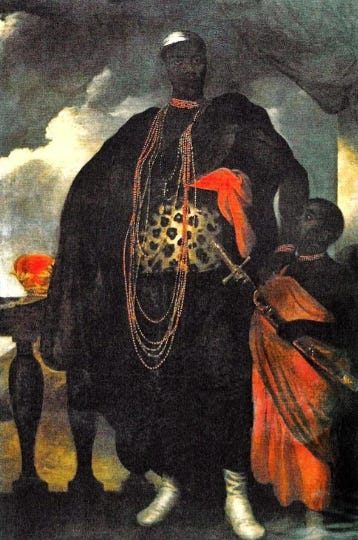
Portrait of King Garcia II Nkanga a Lukeni a Nzenze a Ntumba, by Albert Eckhout, c. 1641
In the interior, African pre-colonial states where documentary evidence on slavery laws is available indicate that the rulers of 14th-17th century Bornu, and 16th-17th century Ethiopia promulgated and enforced anti-slavery laws to protect their free subjects.
They demanded the restoration of their free subjects who had been enslaved in neighbouring kingdoms7, and required the inspection of every slave purchase to verify the origin and legal status of each captive, thereby preventing the unlawful enslavement of free persons.8
Importantly, these laws did not abolish slavery itself but were intended to protect the rights of the free subjects of a particular state or trans-national religious community.
Those reduced to slavery as “foreign” war captives or through judicial punishment for criminal offenses could still be lawfully enslaved, although their legal status varied considerably and differed fundamentally from the chattel slavery practiced across the Atlantic.
As previously explained, 19th-century Abolitionism should be seen as the gradual process by which anti-slavery laws that were initially confined to the subjects/citizens of a given society/state were extended to everyone.
Across the Atlantic world, historians have identified several cases in which enslaved Africans were successfully repatriated through diplomatic efforts.
These include the cases of: the family of Sierra Leone’s King Naimbanna (d. 1793), whose freedom from Jamaica was obtained by the latter; William Ansah Sessarakoo, a Fante envoy to England from the Gold Coast (Ghana), who was rescued from Barbados by his father John Corrente in the late 1710s; and Queen Na Agontimé of Dahomey, whose release from Brazil was arranged by King Gezo (r. 1818-1858).9
In two exceptional cases, the repatriation involved hundreds of enslaved Kongo subjects from Brazil. These occurred after Kings Álvaro I (r. 1568–1587) and Pedro II (r. 1622–1624) exerted pressure on the Portuguese crown and colonial authorities, compelling them to return numerous free-born Kongolese subjects, including people outside the elite classes.10
These examples represent successful attempts to extend anti-slavery laws beyond the boundaries of individual states, despite the limited capacity of rulers to enforce such claims and the reliance on European diplomatic intermediaries.
In some exceptional cases, African diplomats visiting Brazil, whose movements were restricted to the colonial capitals, managed to obtain the release of their subjects. In 1604, the Kongo ambassador António Manuel, who passed through Salvador de Bahia on his way to Rome, ransomed a Kongo slave named Pedro Mambala whom he considered to be illegally enslaved.11
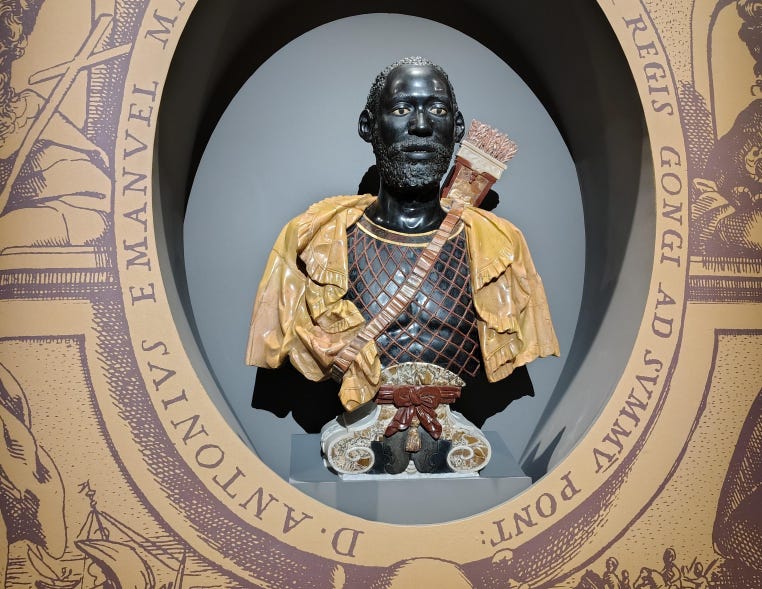
Bust of António Manuel ne Vunda (d. 1608), Ambassador from the Kingdom of Kongo to the Vatican. Santa Maria Maggiore Baptistery, Rome, Italy.
While a few other African envoys are known to have visited Brazil in the 18th century, their movements were similarly circumscribed, and there is little evidence of direct interaction with the African diaspora in the slave colony.12
This context helps explain why the first African elite to stay in Brazil for a considerable period during the 17th century, and witness the atrocities of American slavery through interactions with the Afro-Brazilian diaspora, brought an international court case before the head of all Christendom in the Vatican for the abolition of slavery.
In recent decades, the historiography of abolition has increasingly recognized the contributions of enslaved Africans in shaping early abolitionist movements, whether through the establishment of independent maroon communities as early as the 16th century13, or through the writings of intellectuals such as Wilhelm Amo (d. 1759), Ignatius Sancho (d. 1780), Ottobah Cugoano (d. 1791), and Olaudah Equiano (d. 1797).14
These movements preceded the universal abolition of slavery, that begun with the Republic of Haiti in 1804 and was later followed by Britain’s Slave Trade Act of 1807 and the 1833 Slavery Abolition Act.
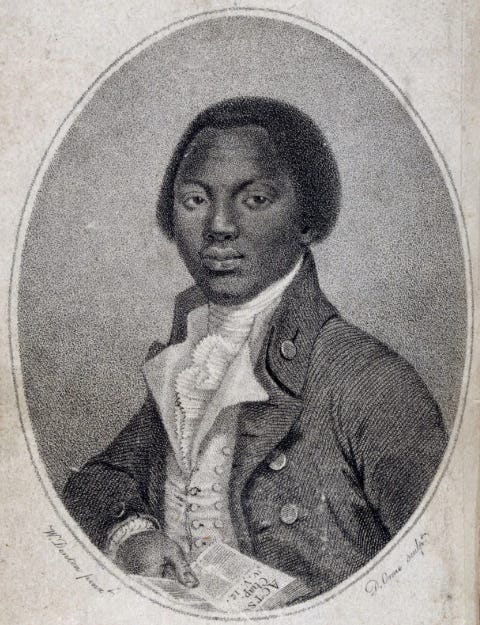
Olaudah Equiano, c.1789
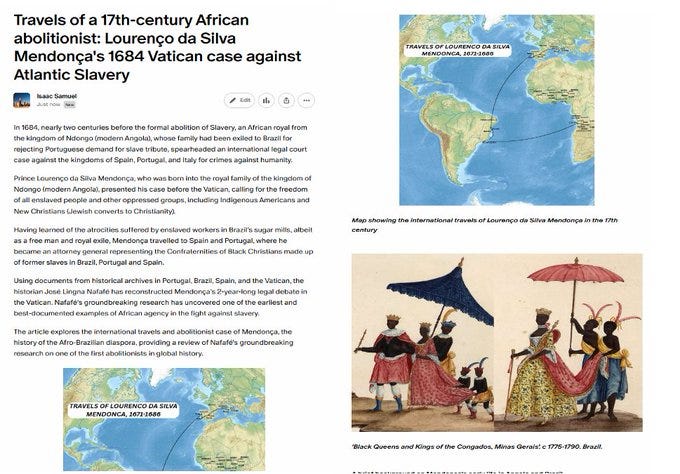
Yet nearly two centuries before the formal abolition of Slavery, an African prince from the kingdom of Ndongo (modern Angola), whose family had been exiled to Brazil for rejecting Portuguese demand for slaves, spearheaded an international legal case against the kingdoms of Spain, Portugal, and Italy, accusing them of committing crimes against humanity.
From 1684 to 1686, Prince Lourenço da Silva Mendonça presented his case before the Vatican, calling for the freedom of all enslaved people and other oppressed groups, including Indigenous Americans and New Christians (Jewish converts to Christianity).
Having learned of the atrocities suffered by enslaved workers in Brazil’s sugar mills, albeit as a free man and royal exile, Mendonça travelled to Spain and Portugal, where he became an attorney general representing the Confraternities of Black Christians made up of former slaves in Brazil, Portugal and Spain.
Using documents from historical archives in Portugal, Brazil, Spain, and the Vatican, the historian José Lingna Nafafé has reconstructed Mendonça’s 2-year-long legal debate in the Vatican. Nafafé’s groundbreaking research has uncovered one of the earliest and best-documented examples of African agency in the fight against slavery.
My latest Patreon article explores the international travels and abolitionist case of Mendonça and the history of the Afro-Brazilian diaspora, concluding with a review of Nafafé’s research in the context of pre-colonial African slavery and abolition.
Please subscribe to read more about it here:
For an introduction to the history of abolitionism, see: The Abolition of Slavery in Africa’s Legal Histories by Benedetta Rossi.
This paradox of Africa’s participation in the Atlantic trade is examined in greater detail by John Thornton in ‘A Cultural History of the Atlantic World, 1250–1820’ pg 63-99.
Global Abolitionist Movements by Benedetta Rossi
Abolitionism and Imperialism in Britain, Africa, and the Atlantic edited by Derek R. Peterson pg 39-53, Afonso I Mvemba a Nzinga, King of Kongo: His Life and Correspondence by John K. Thornton.
Njinga of Angola: Africa’s Warrior Queen by Linda Heywood, pg 39-41, 53,66, 91-92
Abolitionism and Imperialism in Britain, Africa, and the Atlantic edited by Derek R. Peterson pg 51
In 1391 the Bornu sultan requested that the Mamluk sultan should release any Bornu Muslims in his territory who had been illegally enslaved by the pagan arabs.
see; Medieval West Africa: Views from Arab Scholars and Merchants, pg. 106. Ethnoarchaeology of Shuwa-Arab Settlements By Augustin Holl pg 12-13
In 1655 Sultan ‘Alī b. ‘Umar (1639-1677) of Bornu was reportedly denied entry in Tripoli by the Pasha for fear of having to free the “negro slaves, subjects of this prince or his allies”. In 1667, the same sultan sent an embassy to the Pasha of Tripoli, requesting the latter to redeem his nephew.
see; Du lac Tchad à la Mecque: Le Sultanat de Borno et son monde (xvi e –xvii e siècle), by Rémi Dewière pg 185, 194, 322.
Laws demanding the inspection of each slave purchase can be found in Ethiopia during the 16th and 17th centuries as examined in my Patreon Article, and in Kongo during the reign of Afonso and Garcia in the same period.
see; Slavery and its transformation in the kingdom of Kongo by L.M.Heywood.
History, Memory and Imagination: Na Agontimé, a Dahomean Queen in Brazil by Ana Lucia Araujo.
A reinterpretation of the Kongo-Portuguese war of 1622 according to new documentary evidence by J.K.Thornton, pg 241-243
Slavery and its transformation in the kingdom of Kongo by L.M.Heywood, pg 7
Dahomey, Portugal and Bahia: King Adandozan and the Atlantic Slave Trade by Ana Lucia Araujo. For a contrasting view on the historical context and results of similar Dahomean contacts with Brazil, see: Abolitionism and Imperialism in Britain, Africa, and the Atlantic edited by Derek R. Peterson, pg 54-58
A Cultural History of the Atlantic World, 1250–1820 by John Thornton, pg 277-281, 293-297
Belonging in Europe - The African Diaspora and Work edited by Caroline Bressey, Hakim Adi pg 40-41, Anton Wilhelm Amo’s Philosophical Dissertations on Mind and Body pg 10-12. The Slave’s Cause: A History of Abolition By Manisha Sinha pg 25-26, 123-126, Slavery and Race: Philosophical Debates in the Eighteenth Century By Julia Jorati 187-192, 267.
Great article! I went to see the statue of Ne Vunda in Rome last week. I have been doing more research on the Kongo for my MSc dissertation.
I was inspired by the article you wrote about AJR, which echoed a lot of the sentiment I felt when reading their section on the Kongo Kingdom in Why Nations Fail.
Thank you.
Thanks for this crucial information. This needs to be taught in schools.