

Popular literature on the history of technology maintains that the limited adoption of more complex technologies in pre-colonial Africa placed the continent at a disadvantage in its interactions with the wider world.
Africans’ preference for hoe cultivation over plow agriculture, and for bloomery furnaces over blast furnaces, despite knowledge of both technologies, puzzled early European observers, many of whom nevertheless acknowledged the productivity of these systems.
This perspective was not shared by colonial agronomists and metallurgists, who regarded African techniques as outdated and inefficient. Yet their determined efforts to introduce plow agriculture and blast-furnace technology failed to demonstrate the superiority of these presumably more advanced methods.
Even when African technologies proved reliably competitive under colonial contexts, assumptions about their inefficiency persisted in both scholarly and popular literature, where modern technological disparities were projected into the past.
Such facile assumptions have generated numerous misconceptions about the relationship between technology and broader social processes in pre-colonial African societies, which are often contradicted by the historical evidence.
This article adopts a comparative approach to African agriculture and ironworking, explaining the efficiency of pre-colonial technologies through the failures of colonial plow-farming and blast-furnace projects.
Support AfricanHistoryExtra by becoming a member of our Patreon community, subscribe here to read more about African history, download free books, and keep this newsletter free for all:
Jack Goody and the origins of popular misconceptions on African technologies.
The comparative history of technology in Africa and the rest of the Old World is a subject so vast that in dealing with it one would be expected to hesitate to commit oneself to statements of general application lest particular instances be found to controvert them.
Yet this caution has not always characterized comparative sociology. Few scholars have been more influential in shaping general assessments of pre-colonial African economic and political history than the celebrated anthropologist Jack Goody.
In his book “Technology, Tradition and the State in Africa” (1971), Goody articulated a number of arguments about African history that have since been popularised by more influential writers like Daron Acemoglu and James Robinson in ‘Why Nations Fail’ (2012) and Jared Diamond’s ‘Guns, Germs and Steel’ (1997).1
Goody argues that the plow increases productivity by expanding the size of land under cultivation, and observes that it did not spread south of the Sahara except in Ethiopia. He claims that this created a technological gap in productivity between African agriculture based on the hoe with “scarce” iron, and an “advanced” agriculture in Eurasia based upon the plow.
He argues that this gap resulted in different patterns of landholding, social organization, and specialization in feudal Eurasia (and Ethiopia) than those found in Africa. He further claims that iron smelting diffused into Africa from the Mediterranean but wasn’t advanced because African blacksmiths couldn't manufacture firearms, thus enabling the Portuguese in the 15th century to dominate them in battle.2
Goody’s arguments were a product of their time, when limited empirical information about African agriculture, metallurgy, and military history made such sweeping generalizations more plausible than today. Nevertheless, these claims have proven remarkably durable among some social sciences.
In particular, his limited engagement with African land-holding systems outside Ethiopia and his claims about the relationship between “feudalism” and slavery, and the transformative effects of the plow, were uncritically reproduced by Acemoglu and Robinson.
[see my essay on Acemoglu in Kongo ]
Archaeological evidence for the independent origin of African metallurgy has been known since the 1970s. More recent research has since discovered older iron-age sites in Cameroon and Central Africa dating to the late 3rd millennium BC, which significantly predate their presumed points of diffusion in North Africa, and are indeed some of the oldest confirmed dates for iron metallurgy anywhere in the world.

Natural draft furnaces in the Seno plain below Segue, Burkina Faso, 1957, Quai Branly. Earthen smelting furnaces in Ouahigouya, near the capital of Yatenga kingdom, Burkina Faso, 1911, Quai Branly.

Iron smelting at Oumalokho near the border of Mali and Côte d’Ivoire, illustration by Louis Binger, ca. 1892.
The Plow vs the Hoe in pre-colonial African agriculture.
Historians who support Goody’s claims about the low productivity of African agriculture and metallurgy, but are critical of his “technological determinism,” therefore preface their arguments by acknowledging African expertise in ironworking.
Austen and Headrick (1983), for example, note that the development of agriculture and ironworking was an autonomous and revolutionary process. And that African furnaces, which produced high-carbon blooms, attained “a level of sophistication which rivaled contemporary European and Middle Eastern metallurgy in at least its smelting processes.” They suggest, however, that locally produced iron eventually became less competitive than European imports derived from blast furnaces, which were capable of producing iron in far greater quantities.3
They also argue that the reluctance of African cultivators to take up plowing is largely explained by ecological reasons, most notably, the nature of the soils and the costs of integrating horses and cattle into farming. And that there was little incentive to adopt new technologies to increase agricultural productivity (in the form of yields per unit of land), since productivity per unit of relatively scarce labor could be maximized by extensive methods of long fallow cultivation using hoes.4
Historians who are against using the hoe as a proxy measure for agricultural productivity, such as Anthony Hopkins, argue that the plow wouldn’t have produced significant increases in agricultural yields.
Others, such as John Thornton, take this argument further, pointing to the abundance of historical accounts describing the high productivity of pre-colonial African agriculture, metallurgy and cloth making, despite the relatively “simple” technologies that were employed.
In his magnum opus ‘An Economic History of West Africa’, (1973), Hopkins argued that the plough cannot be used to determine the degree of progressiveness of African agriculture, and that its greater cost did not justify its meager improvement in yields, which in some cases were even lower than from hoe farming.
His observations on the limitations of the plow in West African agriculture deserve to be quoted in full5
“Historians and economists are inclined to rank agricultural systems in linear progression from ‘backward’ to ‘advanced’. However, the idea of an agricultural league table can be very misleading. Different systems of cultivation, including those commonly regarded as advanced, co-existed in pre-colonial West Africa, as they did in pre-industrial Europe.
None was anachronistic, for each was subtly adapted to particular circumstances. Furthermore, to equate permanent agriculture with market activity, and shifting cultivation with subsistence farming, is tempting, but mistaken. The methods varied, but the economic goals of both systems were often the same.
To cite the plough as an example of the technological disparity between Europe and Africa is to draw attention to an important, if undisputed, fact. To imply that the presence of the plough would have transformed the development potential of West Africa is to advance a very different case, and one that is open to question.
It is suggested here that the plough was not used in West Africa because it was unsuitable, or too costly, or both. The plough is of greatest use in areas where soils are heavy and land cannot be cleared by fire. These conditions are more typical of Europe than of Africa. Moreover, draught animals are needed to work a plough effectively. Draught animals could not survive in the forest, where, in any case, the plough was ill-suited to the dominant pattern of irregular, tree-studded plots. Ploughing in the savanna could easily lead to soil erosion, as experiments undertaken in French West Africa during the 1920s amply demonstrated.
All the same, the plough could have been used in some parts of West Africa, where the soils were not likely to erode easily, where draught animals were available and where cereal cultivation favoured the creation of a field-type landscape. The plough was not adopted in these areas because its greater cost did not guarantee a more than proportionate increase in returns. The plough can prepare more land in a shorter time than can manual labour, but this achievement often involves a fall in output per man hour, and, in some cases, in output per acre as well.
Farmers’ incomes need to rise some way above the level needed for subsistence before they can afford to adopt new techniques, such as the plough. Even so, a more advanced technology will be used only if it is more profitable than existing methods of production, or if it is essential to ensure survival. Neither of these conditions appears to have applied to pre-colonial West Africa, which, like India, developed a relatively simple technology, but one that was well suited to its requirements.
If ploughs had been available in West Africa in the pre-colonial era, they would have been treated as conversation pieces rather than as agricultural implements. Indeed, that is just what many of them became during the colonial era, when officials tried to convert Africans to the use of technically superior, but economically unrewarding, farm implements.
It is as well to remember that virtually the whole of the massive expansion of domestic foodstuffs and export crops which occurred during the twentieth century was produced with the aid of traditional tools.
To suppose that the failure to adopt a more complex agricultural technology was a cause of underdevelopment in Africa is to put plough before ox, and invention before need.”
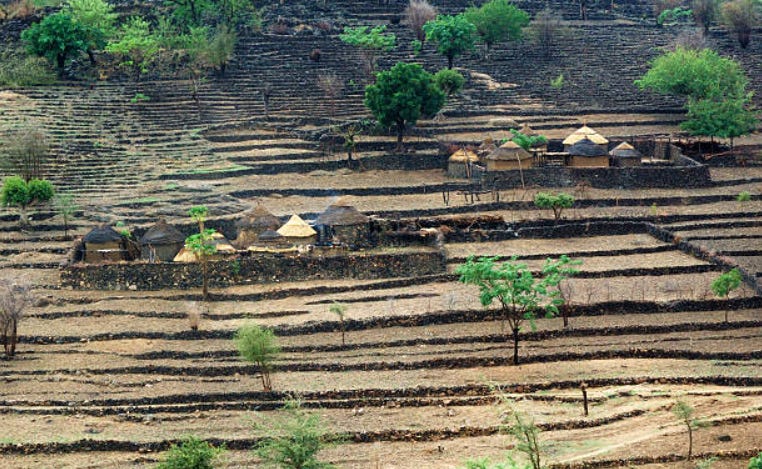
Agricultural Terraces in the Mandara Mountains of Cameroon. Shutterstock image.
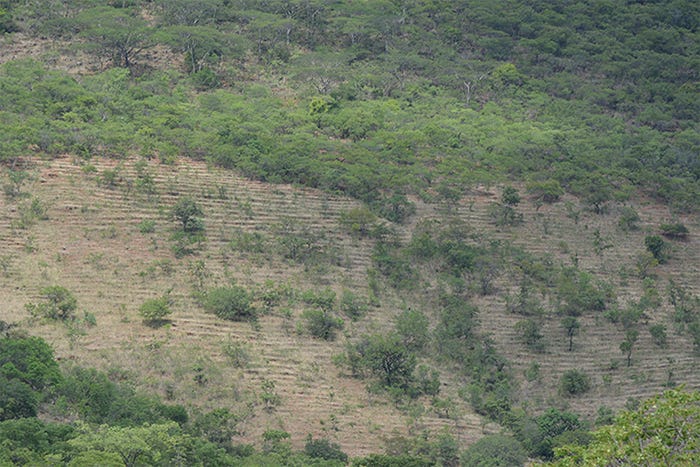
Terraces of Inyanga, Zimbabwe. Images by Plan Shenjere-Nyabezi
While Hopkins suggests it was the productivity of labour rather than land in Africa that was low compared to colonial America. Thornton argues that the productivity of both Land and Labour were relatively high, especially compared to Europe during the 17th century.
According to Thornton, while the absence of the plow is today held to be evidence of low agricultural productivity, the direct evidence from pre-19th century European descriptions of African agriculture does not describe a deficient level of productivity.
He cites a number of examples, including Giovanni Francesco da Roma (1645) in Kongo, Alvise da Mosto (1455) in Senegal, and Pieter de Marees (1668) on the Gold Coast, all of whom observed that fairly light work in farming produced high yields. At least one of the sources, the missionary Wilhelm Johann Muller, who visited the state of Fetu (Ghana) in 1668, mentions crop yields per seed of up to 1:100.6
He argues that modern agronomists are discontented with the performance of contemporary African agriculture because they judge it by the standards of the U.S. Great Plains in the 19th century, but that such observations cannot be extrapolated backwards to the 17th century, when visiting Europeans compared African production favorably with that of European farmers back home.
He notes that even in the 19th century, data collected by the agronomist E. R. Botelho from Caconda in Angola in 1887 revealed maize yields of upto 1,600 kg per ha from traditional hoe farming that were about half of those obtained in the US Great Plains, but relatively high when compared to Portuguese farmers.7
Thornton’s critics, most notably Austen and Hogendorn, argue that it was the productivity of labour (output per unit of labour), rather than the productivity of land (yield per hectare) or crop yield per unit of seed, that was in question.8
Thornton responded that his references also applied to labour productivity, since the sources he cites explicitly note the limited intensity of agricultural labour. Importantly, he points out that his critics don’t provide documentary evidence for African farmers’ low productivity before the 19th century.9
Supporters of Goody’s claims about the low productivity of African agriculture below the Sahara tend to identify Ethiopia as an exception to this general pattern, drawing on the work of specialists such as Donald Crummey and James McCann.10
However, neither of these scholars offers sufficient quantitative evidence to support such definitive claims.
McCann cites estimates of yield per unit of seed in the Ankober District of Ethiopia in 1880, provided by the physician Leopoldo Traversi, which ranged from 1:5 to 1:50.11 But these figures are no more impressive in quantitative terms, nor less impressionistic in their basis than those cited above in 17th-century Ghana.
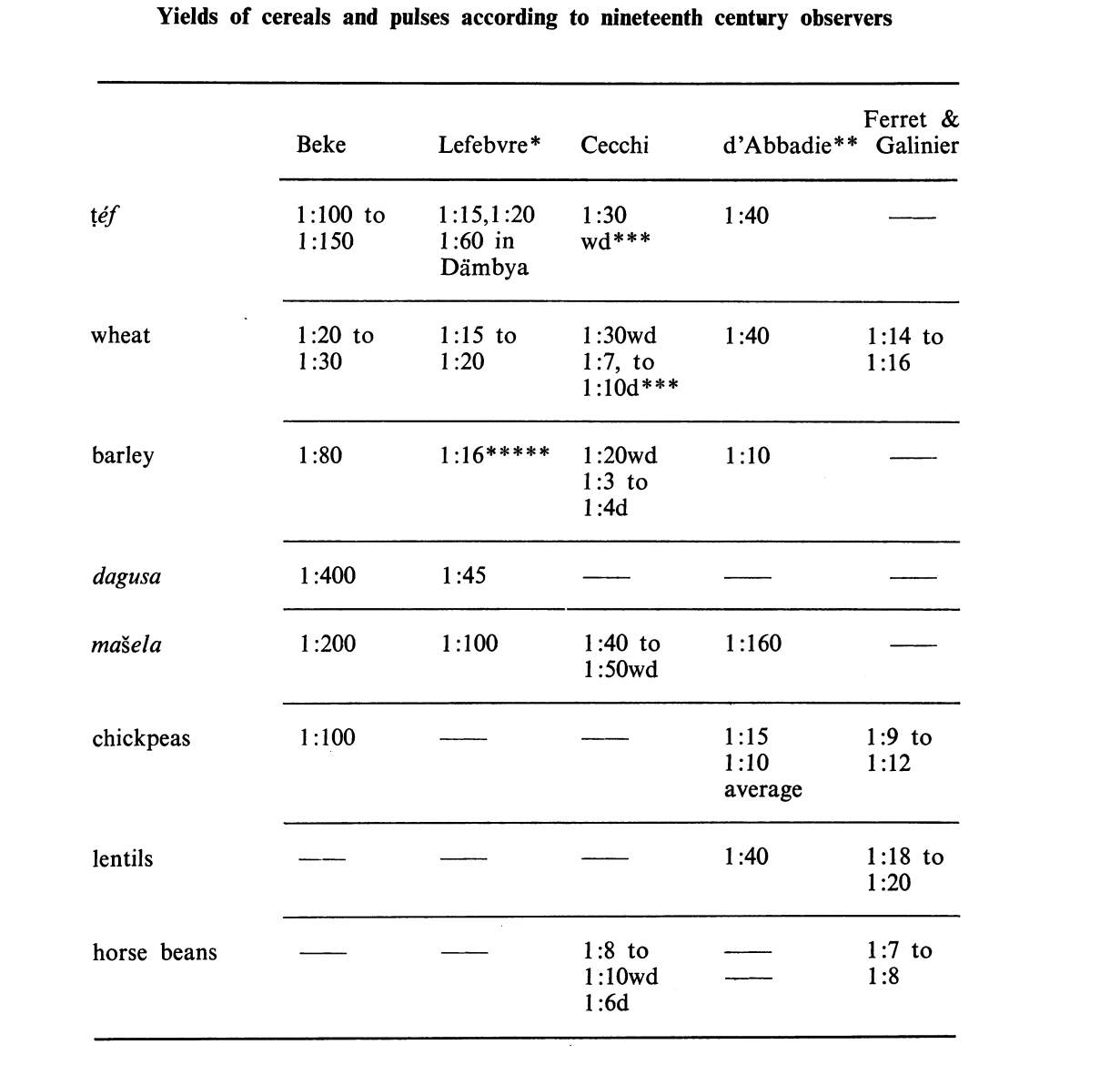
Crummey's excellent overview of plow agriculture in 19th-century Ethiopia is equally less useful for comparative analysis, since the sources he provides from at least five different European visitors (mostly missionaries and soldiers) measure productivity in terms of yields per unit of seed, ranging from as low as 1:7 to as high as 1:400.
As Crummey explains: “Unfortunately, observers couched their reports of yields in terms of the amount of cereal produced in relation to that sown. As a result modern comparisons are rendered difficult. The sources give widely fluctuating figures, some hardly within the realm of sobriety.”12
The collection of pre-19th century documentary sources on Ethiopian agriculture by Richard Pankhurst reveals no significant differences in European perspectives of the productivity of local farmers from those provided by Thornton in West and Central Africa.
He cited Almeida (1624), who observes that the land produced two to three yields a year, even though “the effort the farmers put into cultivating is not great.” Similar observations were made by Alvares (1520-7), and other visitors, who “provide a chorus of praise for Ethiopian agriculture which continued throughout the fifteenth, sixteenth and seventeenth centuries.”13
Pankhurst, however, notes that later European travellers, most notably James Bruce who visited the country in 1770, were less impressed with Ethiopian agricultural yields, citing estimates (presumably of yields per unit of seed) in the range of 1:9 and 1:20.
“By the end of our period agricultural progress in England and other parts of Western Europe had caused foreign visitors to take a less enthusiastic view of Ethiopian agriculture, which had failed to change with the times. [James] Bruce, who was himself a country squire, therefore paints a more critical picture of Ethiopian agriculture than any of his predecessors.
He suggests that Ethiopian crop yields were by now considerably inferior to those of Europe — indeed he contrasts them unfavourably even with those of Egypt, declaring that sometimes the Ethiopian farmer hardly reaped the seed he sowed. In Tigre, he states, it is a good harvest that produces nine after one, it scarcely ever is known to produce ten.’ He writes of an average harvest elsewhere of ‘twenty after one”
Any cross-country analysis of agricultural productivity is of course limited by multiple variables, including the differences in cultivated crops, their suitability to local soil and climate conditions, the potential alternatives for land and labor use, as well as the size, composition, and the changing needs of the population.
Yet despite these limitations, there’s little historical data to support the often repeated assertions that productivity from plow agriculture in Ethiopia (and arguably North Africa) was higher than that of hoe-based farming elsewhere on the continent before the 19th century, beyond the mere presence of the plow.
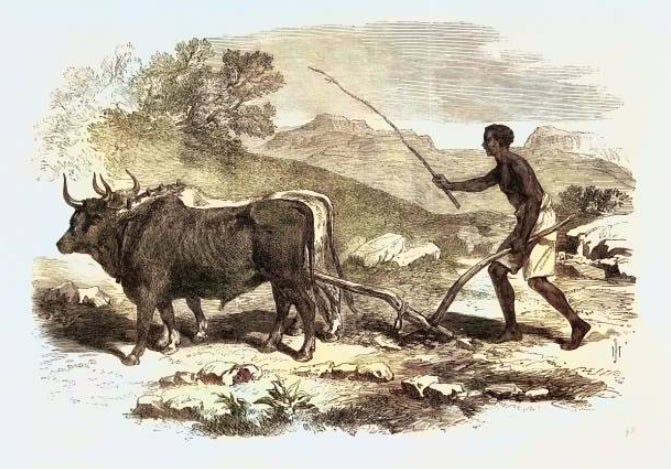
‘The Abyssinian Expedition: a native ploughing in the province of Tigre’. From “Illustrated London News”, 1868.
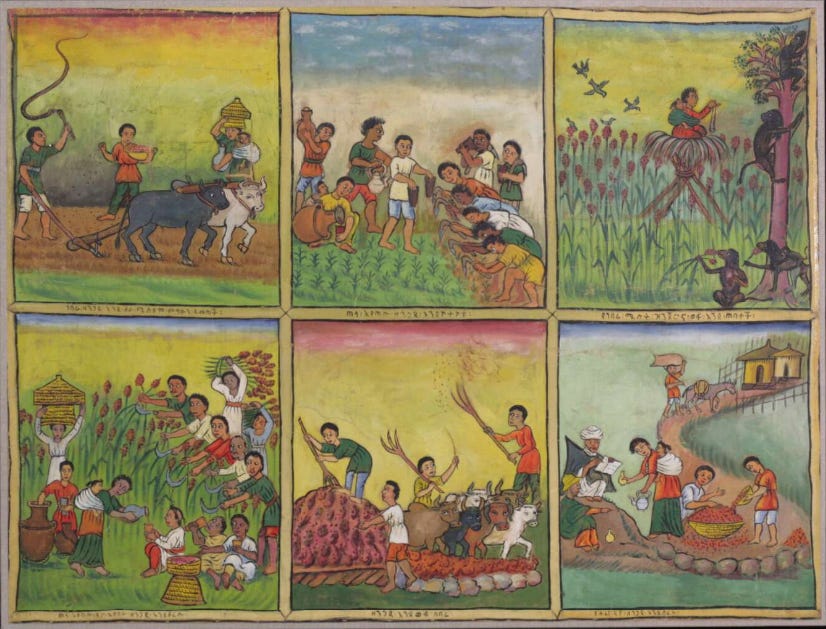
Oil painting depicting agricultural scenes in Ethiopia, early 20th century. British Museum
On the Failure of European plow agriculture in colonial Senegal.
A recent study by Rönnbäck and Theodoridis on productivity of European-owned plantations in early 19th-century Senegal suggests relatively low levels of agricultural yields and labour productivity compared to the American South.
However, this data is evidence for the failure of European agricultural experimentation in Senegal, rather than for low productivity of the latter, as the authors claim. As the authors acknowledge, the possibility that European settler farmers were unable to achieve high productivity may have been due to ignorance of local growing conditions and their refusal to learn from local farmers.14
The failure of European agricultural experimentation in Senegal is particularly relevant to questions concerning the efficiency of the plow in increasing productivity, since the advantages of plow cultivation were explicitly tested by French agronomists in late 19th-century colonial Senegal.
During this period, European demand for peanut oil skyrocketed for soap production and machine lubrication. French merchants heavily commercialized the crop in Senegal, but local farmers remained its chief suppliers.
French colonial administrators and agronomists, who generally despised African agricultural methods, ran a series of experiments to prove the superiority of plows over hoes. However, their results were inconclusive, and the real-world applications instead confirmed the continued effectiveness of indigenous farming practices using traditional tools.
Experiments carried out from 1897-1899 by the agronomists Enfantin, Brennemann, and Perruchot, at the agricultural stations of Cayor, M’Bambey and Kaolack, using different sets of plows (American-made Oliver plow, French Fondeur, Algerian light-plow) that were compared with farms worked by local hoes, provided widely different results that “couldn’t irrefutably demonstrate that plow tilling can under all circumstances be a certain cause of increased peanut yields.”
Enfantin’s yields of 3,000-7,000 kgs per ha were dismissed as exceptional. Perruchot yields were much lower, at 2,100- 2,500 kg per ha on land prepared by plow vs 1,700-1866 kg per ha on land prepared by hoe. Brennemann yields were even lower at 1,300-2,020 kgs per ha on land prepared by plow versus 1,110-1,860 kg per ha on land prepared by hoe.
The researchers noted that these experiments did not specify the conditions under which these trials were carried out and the manner in which they were conducted. They note that Enfantin’s high yields could not be replicated, preferring Brennemann and Perruchot’s results instead. They recommended that any future improvements must take into account local soil conditions, which wouldn’t be suitable for deep plowing, which destroys the soil.15
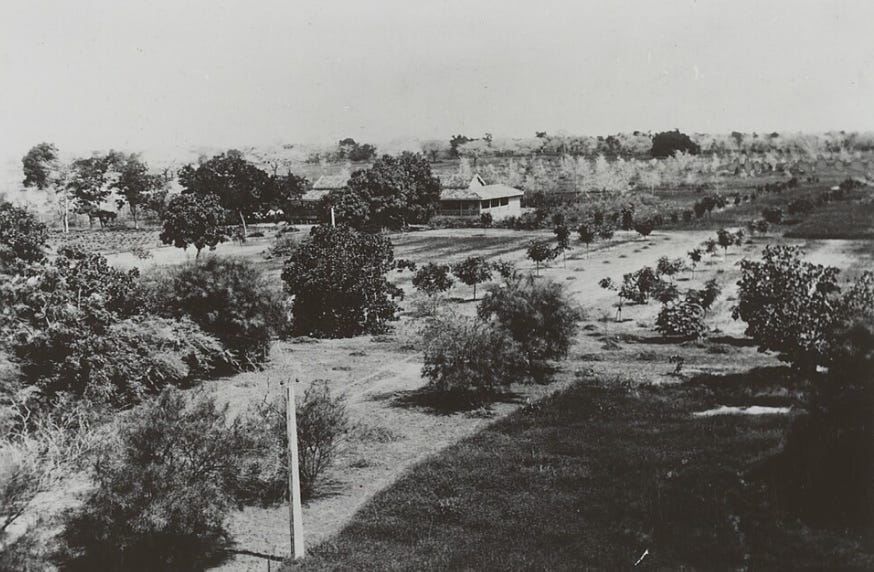
M’Bambey experimental station. Senegal. ca. 1930-1939. Quai Branly.
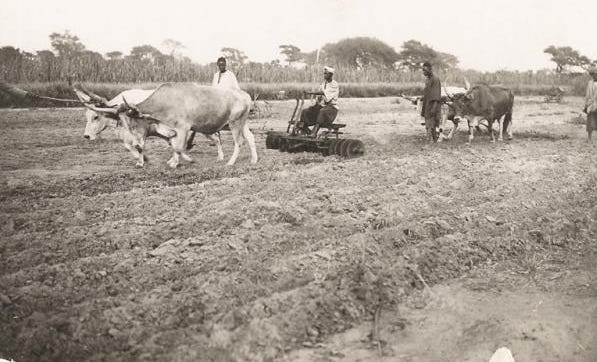
Bambey peanut station. Animal traction. ca. 1958, Senegal ANOM.
Moreover, experiments in other parts of Africa suggest that yields could be twice as high using traditional hoe-farming than when plows were applied!.
Results obtained by agronomists working at the Belgian colonial stations at Congo da Lemba and Zambi in the Republic of Congo during the early 20th century indicate that production of peanuts was higher where the land was prepared by a hoe (Congo da Lemba station: 2,700 kg per hectare), than in land that was turned over with a plow (Zambi station: 1,400 kg per hectare).16
The experimenters note that this result tends to confirm the opinion expressed in the abovementioned studies in Senegal, which observed that:
‘We wanted to introduce the use of the plow to Senegal. The result did not meet expectations; the plowing being more perfect and deeper, the plants grew more vigorously, but fruit formation was lower and ripening occurred slowly and irregularly. It seems that for the terrain and climatic conditions of Senegal, entirely superficial work is preferable, unless a significant amount of manure can be applied.’17
Data from North African settler farms points to much lower yields than Senegal, although this is blamed on the different soil and climatic conditions.
An agricultural manual for European settler farmers in Algeria from 1891 noted that yields from peanuts in Algeria were less than half those obtained in Senegal: “The yield of one hectare is 600 to 700 kilos. It is important to point out that in Senegal this yield is twice as high, and this enormous difference can only be attributed to the lack of water in Algerian cultivation.”18
Ultimately, as noted earlier by Hopkins, it was the African farmer using his hoe, rather than the European settler with the plow, that supplied the bulk of the peanut exports during the colonial era.
Some colonial administrators likewise acknowledged that agricultural productivity in Senegal could not be assessed solely based on plow use, but rather had to be evaluated in terms of actual output.
In 1900, for example, Henri Courtet noted that it was the native Senegalese farmer who supplied 2/3rds of the estimated 180,918,728 francs worth of peanuts exported from 1888 to 1899. He explains that the local farmers knew how to space crops depending on soil fertility, to rotate the different crops, and to burn husks for fertilizer.
He cites the agronomist Brennemann, who observes that “As for the plow, it is highly probable that the native farmer will not use it. A plough does not work without oxen, and it has not been demonstrated that the surplus yield that would be obtained would cover the maintenance costs of the equipment and the oxen. A priori, in native cultivation, the improvement in yields is therefore not at all in the use of the plough, but rather in the choice of seeds, in their selection, and in their specialized adaptation to the cultivation of different soils.”19
More recent studies have shown that a combination of state intervention in farming practices, as well as the provision of improved seed varieties, ultimately explain Senegal’s “Green Revolution” during the first half of the 20th century, when the country became the world’s 2nd largest exporter of peanuts.20
While Goody (1971) continued to insist on the superiority of the plow and its hypothetical improvement of agricultural productivity in Africa long after its failure had been demonstrated in the colonial era21, his contemporaries such as the anthropologist Henri Raulin (1968) were highly critical of this technological determinism:
“Generally speaking, the Western expert, trained in European techniques, sees real and rapid progress only through the widespread adoption of agricultural machinery. However, in Africa, staple food crops (millet, sorghum, maize) and even cash crops (peanuts, cotton) have always been, and still are, grown without prior plowing, except for flooded rice paddies.”22
He observes that the plow still hadn’t been widely adopted in post-colonial Senegal, despite increased agricultural production, and lists several “resounding failures” of colonial-era “industrial farming experiments using mechanical means” such as the peanut experiment in Tanganyika by the Overseas Food Corporation, the Casamance experiment by the Compagnie Générale des Oléagineux Tropicales, and the Office du Niger experiment in Mali.
Importantly, he provides a useful comparison of African farmers in early 20th-century Senegal with their European peers in the Upper Giffre Valley of France during the 19th century, where the transition from extensive to intensive agriculture was achieved, ironically, by abandoning the plow for the hoe and spade.23
The repeated failure of the plow to compete with the hoe, even when used by European agronomists in colonial contexts, suggests that the development of agriculture in African history cannot be reduced to mere farm equipment.
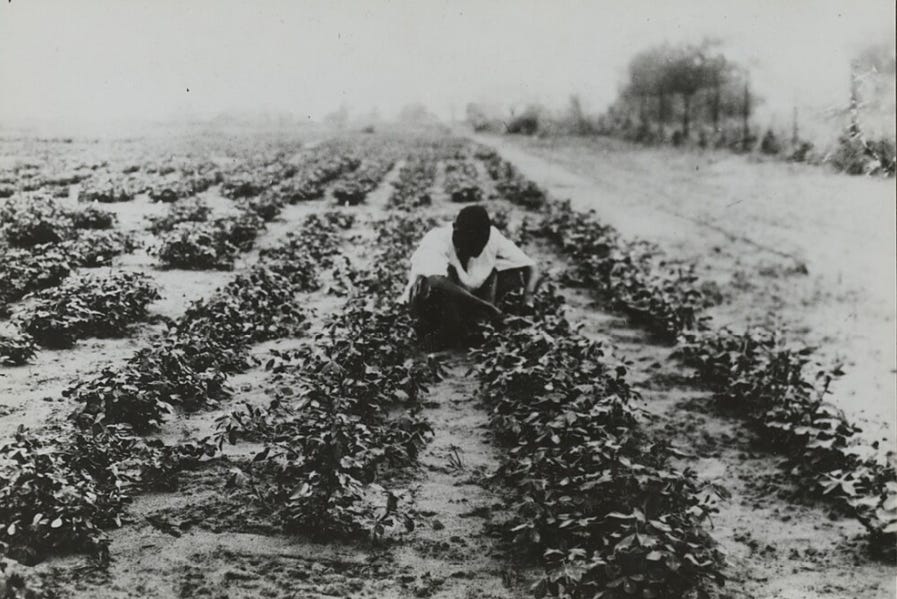
Peanut cultivation at the M’Bambey experimental station. ca. 1930-1939. Senegal. Quai Branly.
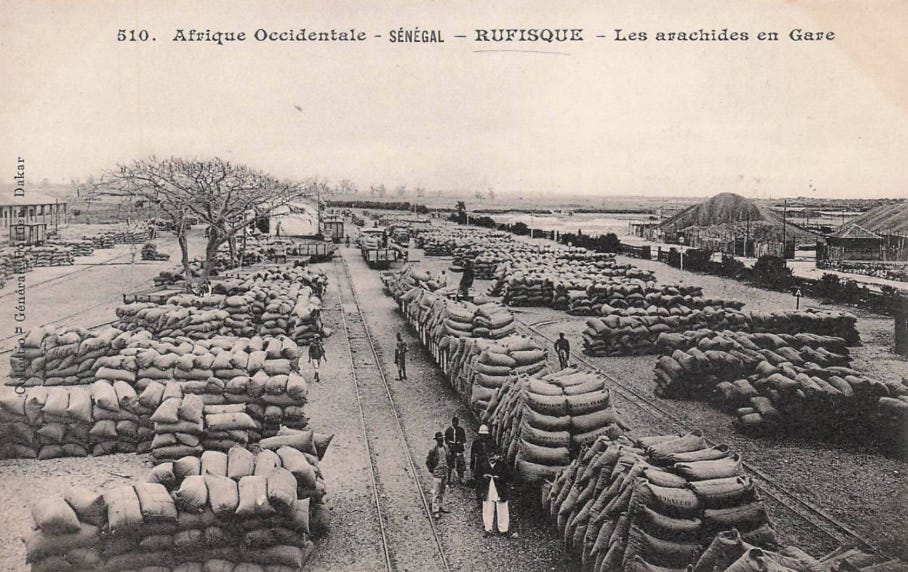
Peanuts at the Station. Rufisque, Senegal. ca. 1906
Guns and Furnaces: Comparing African ironworking with Colonial Metallurgy
Regarding the skill of African ironworkers, Goody’s argument mostly rests on the observation that Africans did not manufacture firearms on the scale of their non-European peers, such as the Japanese and Indians, who were making matchlocks and cannons by the 16th to 17th centuries.
He suggests that this put them at a disadvantage against invading colonial armies both in the late 15th and late 19th centuries. Yet he qualifies this claim in his footnotes, pointing out the Africans could purchase firearms from Europeans, were skilled enough to repair guns and make gunpowder, and that Samori Ture’s blacksmiths managed to manufacture firearms in the late 19th century.24
Readers familiar with popular literature on Africa’s colonisation, such as Jared Diamond’s Guns, Germs and Steel, will recognise some of the more familiar tropes and misconceptions on African military history. The most glaring of these is the conflation of the early colonial invasions of Africa from the 15th to 17th centuries with the actual scramble in the late 19th century.
In my critique of Diamond’s analysis of African history, I outlined the long history of Portuguese military campaigns against various African kingdoms, which were in many cases defeated by African armies, most notably at the battles of Mbanda Kasi (1622) and Kitombo (1670) against the armies of Kongo (Angola), and in 1644-8 against Queen Nzinga, which halted further expansion into the interior of Angola until the late 19th century.
Other battles, such as the battle of Maungwe (1684) against the Rozvi’s Changamire in present-day Zimbabwe, and the fall of Fort Jesus (1698) in Mombasa, Kenya, resulted in the complete loss of previously conquered territory (the kingdom of Mutapa and the East African coast).
Along the West African coast, the defeat of Portuguese invasions in 1446-7 and 1456 by the navies of African coastal polities armed with only poisoned arrows meant that the establishment of large colonial settlements was out of the question, and forced the Portuguese to resort to diplomacy. An Englishman who decided to test this détente in 1568 in Sierra Leone paid a steep price, losing many of his men to poisoned arrows.25
Evidently, whatever advantages Portuguese firearms had in these African battles were outweighed by the effectiveness of available weapons, whether arrows in Zimbabwe and Senegal, or imported firearms and local swords in Angola.
More importantly, the history of European colonialism in India suggests that indigenous manufacture of firearms could not, by itself, guarantee local autonomy.
Historians such as Kaushik Roy and Moumita Chowdhury argue that military organisation played a bigger role than military technology in explaining the success of the East India Company over Indian armies during the 18th century, even as the latter made improvements in gun technology, especially in the manufacture of artillery.26
It should be noted that the West African kingdoms of Benin (Nigeria)27 in the 16th century and Zinder (Niger) in the 19th century did manufacture artillery (ie; cannons, cannon balls, and gun carriages).28 However, the performance of these new technologies against rival African armies and invading colonial armies in the late 19th century was far from satisfactory, compared to pre-existing weapons.
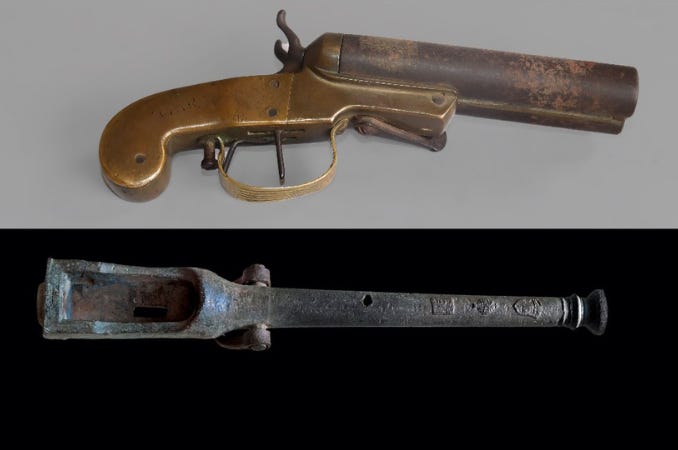
Firearms from Benin City, ca. 16-19th century. Benin City National Museum, British Museum.
Returning to the example of pre-colonial Zimbabwe, the Portuguese myth of the invincibility of their firearms was destroyed at the pitched battle of Maungwe in 1684 by the Rozvi archers of Changamire. His subsequent attacks on the Portuguese settlements in 1693 and 1695 even netted some Portuguese captives, putting an end to Portuguese ambitions in the interior for nearly two centuries.29
It’s important to note that arrows were not the only weapon (nor even the primary weapon) used in pre-19th century African warfare. Other weapons were available, including lances, javelins, clubs, battle-axes, and swords; the last of which can be further subdivided into a whole range of slashing weapons, from broadswords to throwing knives to daggers, all of which were manufactured by African blacksmiths.30
Besides these were, of course, the guns purchased from the Europeans themselves, which became more decisive in battle from around the late 18th century onwards.
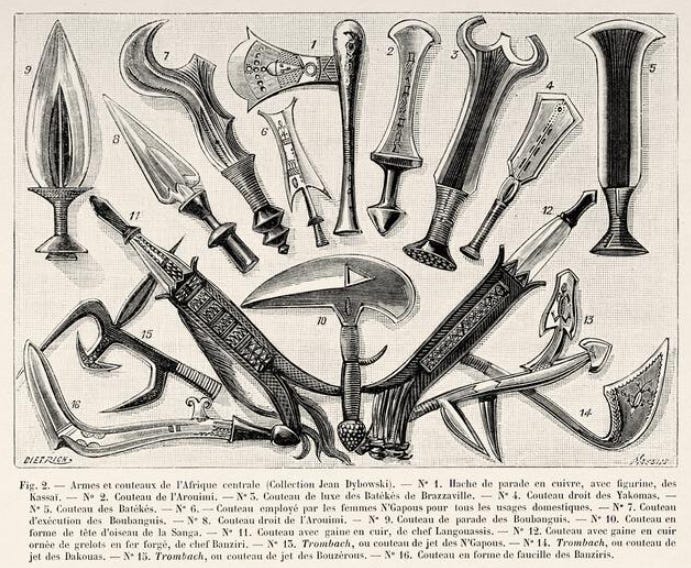
Weapons and knives of Central Africa (D.R.Congo), Jean Dybowski Collection. ca. 1893
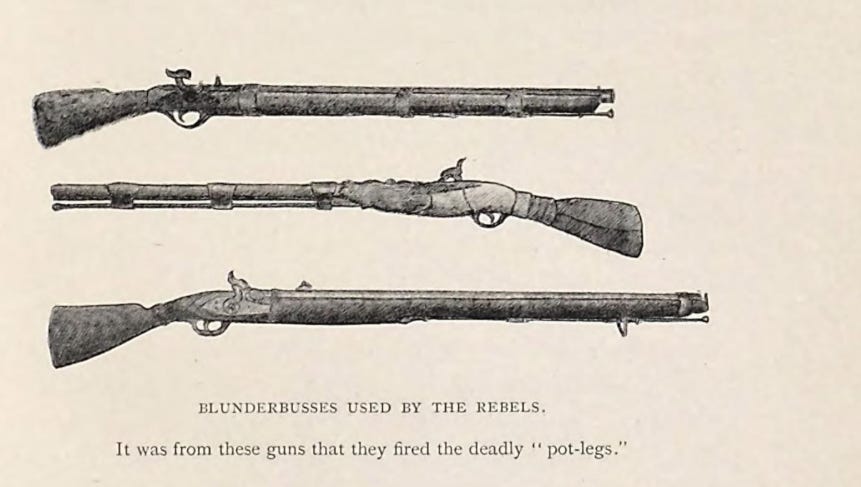
Firearms used in Matebeleland (Zimbabwe), illustration from Frank W Sykes, 1897.
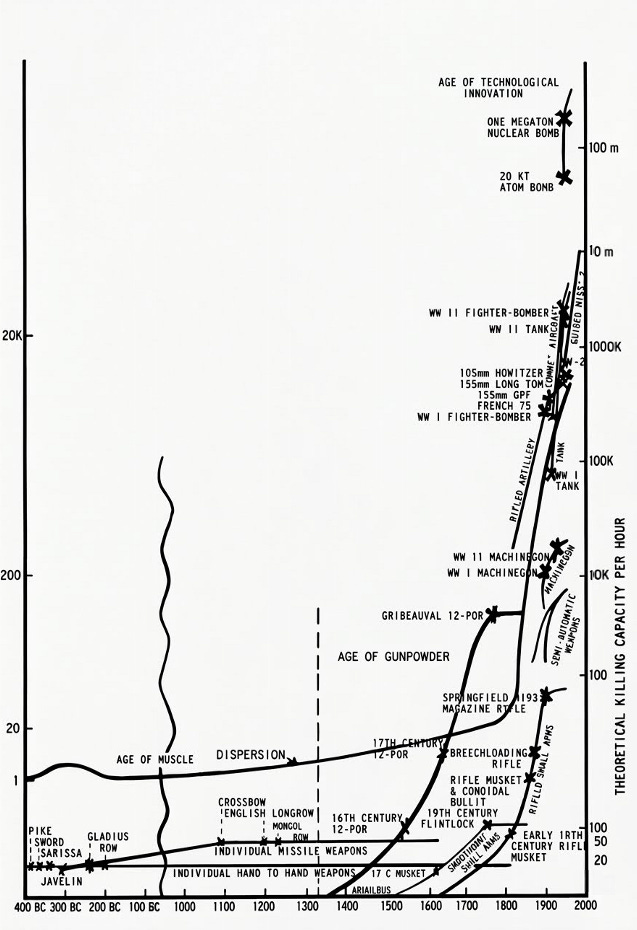
‘Increase of weapon lethality and dispersion over history.’ Graph by Trevor N. Dupuy (1979).31 Note that the theoretical killing capacity of firearms rises significantly during the 19th century.
Just like the plow, firearms didn’t confer significant advantages to African armies before the 19th century. And like the plow, the greater cost of manufacturing firearms locally (as opposed to simply purchasing them) couldn’t guarantee a more than proportional increase in their efficiency as missile weapons.
Robert Edgerton’s research on the Anglo-Asante wars traces the emergence of the technological gap between the Asante (in Ghana) and invading British armies to the mid-19th century, when the former’s flintlock guns proved less effective against the more modern rifles of the latter. But he stresses that this gap didn’t exist when the two armies first clashed in 1824, and was heightened by restrictions on Asante’s ability to buy modern rifles from the Dutch.32
Similar constraints forced Samory to manufacture his guns locally. An estimated 300-400 smiths made 200-300 rounds of ammunition a day and 12 rifles a week using local ores. One of Samori’s blacksmiths is known to have visited the French arsenal at St. Louis, Senegal, but nothing is mentioned about the introduction of more “advanced” methods of smelting like the blast furnace, which Goody thinks is necessary for the manufacture of firearms.33
It is important to note that as late as the 1970s, Mande blacksmiths in Mali continued to manufacture firearms (hunting rifles and pistols) entirely from scratch using relatively “simple” techniques, such as hammer forging and lost-wax casting. This lengthy process of local gun manufacture, which is thought to predate the 19th century, is described in this footnote.34
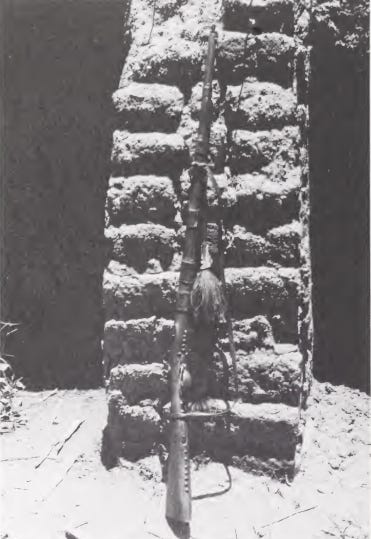
‘Plate 28. Gun made by Cekoro Traore, who specialized in their making and repairing, mostly for hunters, 1973’ Image and Caption by P. R. McNaughton
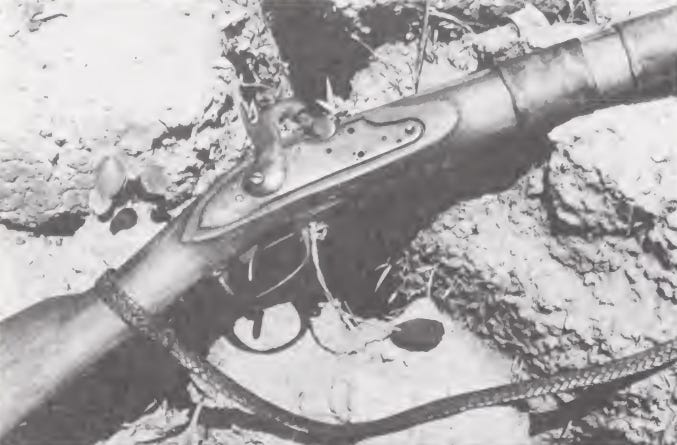
‘Plate 30. Detail of the gun depicted in III. 29. Note that the barrel is held in place inside the stock with wide hide straps’ Image and Caption by P. R. McNaughton
Traditional furnaces could still be found in rural Mali at the time, which would have resembled those found among the Fulbe of Futa Jallon (in Guinea) by the French officer Arsène Lambert in 1860, who, despite the typical prejudices of the time, praised these “miniature blast furnaces.” Incidentally, he also mentioned the high agricultural output of local farmers, despite the absence of the plow:
“It was also in this canton [of Kakriman] that I first saw the small clay factories used for smelting iron ore. They are veritable blast furnaces in miniature: chimney, drawpipe, crucible, pit for receiving the molten iron—nothing is missing. Alternating layers of coal and ore are piled up, as in our own, but neither quartz nor limestone is used to facilitate smelting, either because the Fulani are unaware of the melting properties of these materials, or because their rich ore does not require them.
They possess no other tilling tool than a small, rather convenient hoe and use no fertilizer other than the ashes of dried sod and stubble after the harvest, which they carefully burn before sowing. These primitive methods suffice for them, without crop rotation or fallow periods, to obtain abundant harvests from a soil that seems inexhaustible.”35
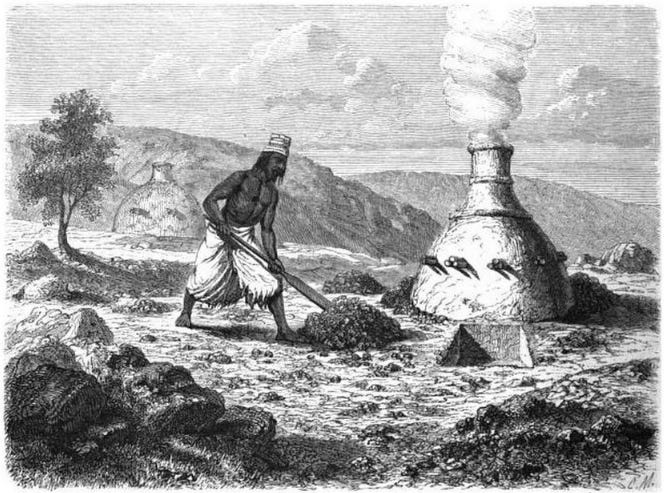
Iron ore smelting in Fouta-Djalon. — Drawing by Hadamard after M. Lambert
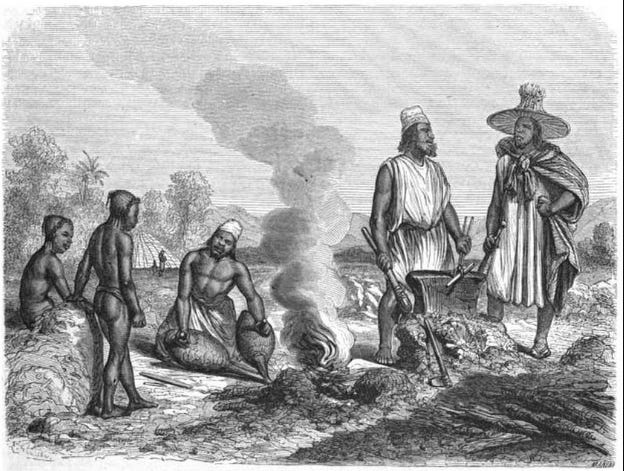
Blacksmith at work in Fouta-Djalon. — Drawing by Hadamard after M. Lambert
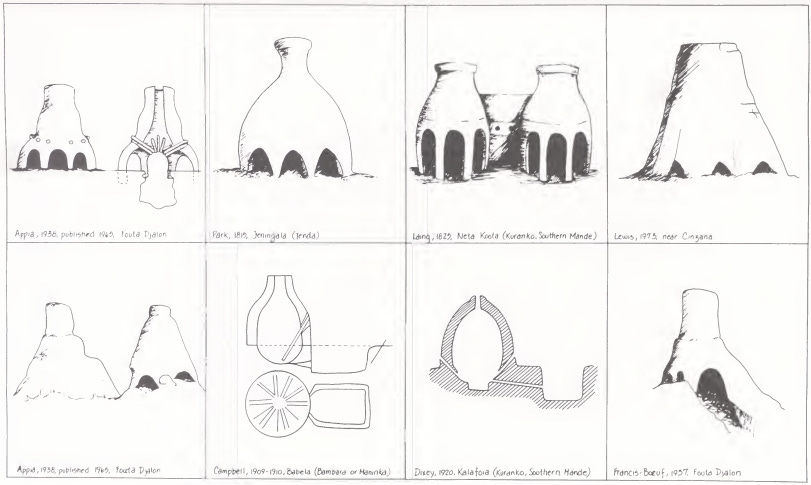
Furnaces in Mali: ‘Variations of dome-type smelting furnaces recorded by several authors’ Image and Caption by P. R. McNaughton
These repeated references to Africa’s “simple” technologies, which were surprisingly productive, whether in farming or in metallurgy, suggest that European explorers, like modern Western scholars, evaluated technological systems in terms of perceived complexity rather than actual efficiency.
It also explains why, when the Portuguese colonial government in Angola decided to construct a European-style foundry in Novas Oerias in 1765, complete with a blast furnace powered by water wheels and worked by European labourers, the project quickly became a “white elephant.” They ended up using the scheme as a way of concentrating skilled African blacksmiths and utilising their traditional technologies.36
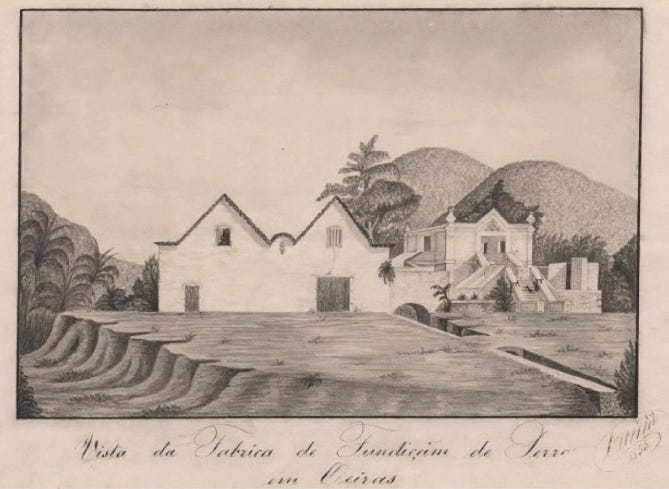
View of the iron factory in Oerias, 1855
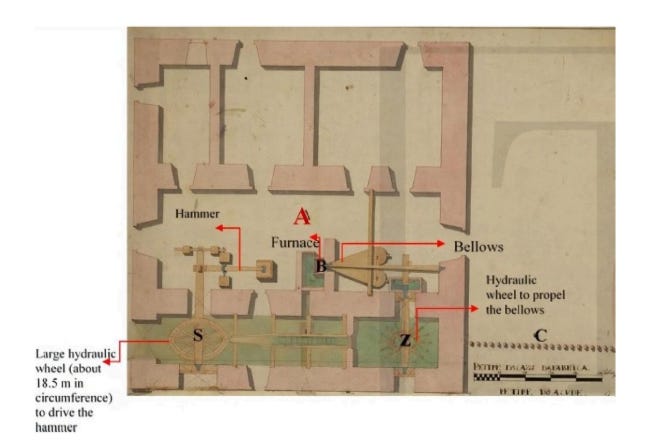
Interior of the machine room, hydraulic forge and storeroom. Image by Crislayne Alfagali
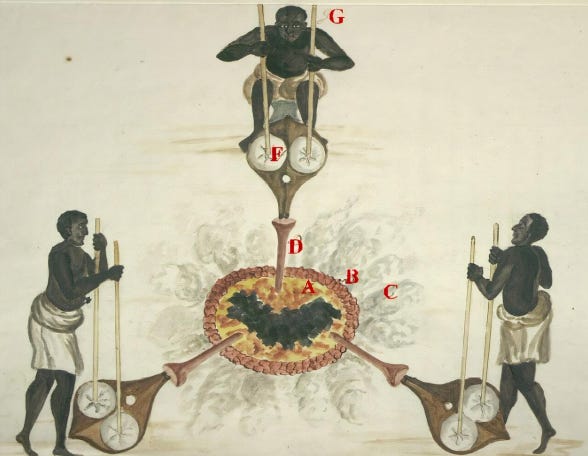
Iron smelting in Nova Oeiras, 1797. “A = The smelting furnace, to make iron bars, the ironstone is placed below the coal to be smelted. B = The furnace wall, built with pieces of tiles. C = The smoke that comes out from the holes in the wall. D = The clay pipe through which the bellows blow air. F = The bellows’ leather. G = Sticks with which they operate the bellows.” Image and captions by Crislayne Alfagali. Note the similarities with the above image of a blacksmith in Fouta-Djalon.
As Crislayne Alfagali’s excellent monograph on the Nova Oeiras factory explains, the actual iron production was undertaken at a separate (and segregated!) site next to the European-style foundry, where a “smaller factory was built for the Negroes to work in” according to a contemporary Portuguese report.
“The smaller factory was the only success of this grandiose undertaking, because the only successful iron smelting techniques —the Ambundu techniques— were employed here, a fact overlooked by the historiography that examined the “big factory” and its failures.
In the small foundry, furnaces dug in the earth, bellows covered with goat hair, and stones were the tools employed by the Ambundu blacksmiths and smelters, who exported approximately 60 tons of iron and steel from 1765 to 1800.”37
If the large quantities of (lesser quality) iron bars produced in European blast furnaces are what gave them the advantage over African smelters along the West African coast, as Austen and Headrick suggest, then the reverse happened in Angola, where Iron production by local blacksmiths at Nova Oeiras continued into the 19th century.
Ironically, it was these high-quality iron bars of African manufacture that were exported to the Portuguese Royal Treasury.
Like the French agriculturalists in colonial Senegal, the Portuguese metallurgists in colonial Angola discovered that their “complex” forms of technology couldn’t reliably compete with the “simple” technologies of African ironworking.
As for the colonial scramble during the late 19th century, It’s instructive that Ethiopia’s King Menelik II managed to defeat the invading colonial armies not by manufacturing firearms, but by accumulating massive stockpiles of modern rifles through skilful diplomacy.
By contrast, the Ethiopian emperor who famously manufactured firearms locally, i.e., Tewodros II, is also the only Ethiopian ruler of the 19th century to be defeated by a foreign power when the British sacked Magdala in 1868, ostensibly to free the European technicians whom Tewodros was using to make his firearms.
There’s substantial historical evidence that African envoys and travelers, who had been visiting Western Europe since the 1600s and were familiar with all the relevant innovations of European industry, immediately became aware of the technological gap once it became decisive during the 19th century.
They recognized the need to modernize their economies and military, either by employing European technicians or by attempting to implement these innovations independently. This process of technological transfer was ultimately cut short by the colonial invaders, whose attempts to impose new technologies also produced uneven results.
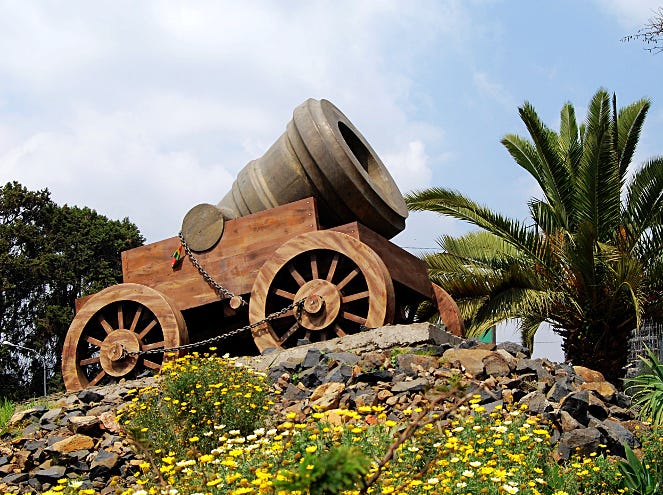
Replica of Emperor Tewodros’ cannon: “Sevastopol”. Addis Ababa, Ethiopia.
Conclusion: the triumph of pre-colonial technologies
The above outline of Africa’s agricultural and metallurgical history demonstrates that mechanization cannot be used as a proxy for productivity.
The presence or absence of the plow, in particular, cannot in itself serve as a measure of Africa’s agricultural and labour productivity. Its limited adoption cannot be explained by the prevalence of “extractive institutions”, as Acemoglu and Robinson suggest, but is better understood in terms of its relative inefficiency in relation to cost and output.
The efficiency of the continent’s relatively “simple” technologies meant that local crafts industries remained fairly competitive, even during the colonial period, when “intermediate” technologies, such as plows and blast furnaces, proved to be poor substitutes.
While Africa’s traditional technologies were ultimately displaced by modern industrial technologies in local manufacturing, as occurred in the rest of the developing world, this later obsolescence should not be retroactively projected onto earlier historical periods
As Thornton explains, on the persistence of African hand looms:
“Historians of technology often admire early machines because they prefigure later ones, or because they represent the discovery of principles that will later be of great value. But this does not mean that an early version of a machine does a particularly good job.
Of course, with hindsight, it is easy to see that a decision to continue efficient hand production and eschew machines was mistaken, but that issue was scarcely clear to decision makers of the time.”38
Such anachronistic approaches tend to obscure the ingenuity and efficiency of historical technologies, and misguide contemporary efforts to address perceived technological gaps.
Like their colonial predecessors, modern “technological solutionists” who simply transplant technologies that have succeeded elsewhere while disregarding local conditions risk misdiagnosing economic challenges by putting the plow before the ox.
My latest Patreon article is about the History of Oromo Literature and the Oromo script in 19th-20th century Ethiopia.
Please subscribe to read more about it here and support this newsletter:
The link between Acemoglu and Goody’s work is more explicit than with Diamond’s work. The former cites Goody’s ‘Technology, Tradition and the State in Africa’ in his footnotes “On the historical backwardness of African technology” The latter cites' Goody’s ‘The Domestication of the Savage Mind’ (1977) on the impact of writing, one of the technologies Diamond believes spread along longitudes and gave European colonialists immediate advantages over Africans when the two first clashed in the 15th century.
Technology, Tradition and the State in Africa by Jack Goody, pg 25-26, 73, 76
The Role of Technology in the African past by Ralph A. Austen and Daniel Headrick, pg 167
The Role of Technology in the African Past by Ralph A. Austen and Daniel Headrick pg 169-171)
An economic history of West Africa by A. G. Hopkins pg 80-83
Precolonial African Industry and the Atlantic Trade, 1500-1800 By John Thornton, pg 6-7
Precolonial African Industry and the Atlantic Trade, 1500-1800 By John Thornton, pg 7. Boletim da Sociedade de geographia de Lisboa, Volume 8, By Sociedade de Geografia de Lisboa, pg 256-257
On Comparing Pre-Industrial African and European Economies by Ralph A. Austen. Assessing Productivity in Precolonial African Agriculture and Industry 1500-1800, by Hogendorn, J. S. and Gemery, H. A.
The Historian and the Precolonial African Economy: John Thornton Responds, by John Thornton
Klas Rönnbäck and Dimitrios Theodoridis, citing James McCann, consider Ethiopia to be the exception to the rule of Africa’s low agricultural productivity
Gareth Austin, while not fully supportive of Goody’s theories regarding agricultural surpluses in economic development, maintains, albeit with some nuance, that the absence of the plow was emblematic of a low level of fixed capital formation in pre-colonial Africa. He also claims that land in Ethiopia was exceptionally scarce and its population density was exceptionally high, ignoring multiple examples that were just as densely populated, such as the West African coast** and the Great Lakes region, where large populations were sustained without plow agriculture.
Reciprocal comparison and African history: tackling conceptual Eurocentrism in the study of Africa’s economic past by Gareth Austin, pg 11. Resources, techniques and strategies south of the Sahara: revising the factor endowments perspective on African economic development, 1500-2000 by Gareth Austin. pg 9. Economic Development and Environmental History in the Anthropocene: Perspectives on Asia and Africa by Gareth Austin, pg 101.
**The West African coast in particular was already densely populated by the 17th century; see: The Historian and the Precolonial African Economy: John Thornton Responds by John Thornton, pg 51-52)
People of the plow by James McCann, pg 127
Ethiopian Plow Agriculture in the Nineteenth Century by Donald Crummey, pg
Economic history of Ethiopia, 1800-1935 by Richard Pankhurst pg 200-202
African agricultural productivity and the transatlantic slave trade: evidence from Senegambia in the nineteenth century by Klas Rönnbäck, Dimitrios Theodoridis pg 11
Les plantes oléifères de l’Afrique occidentale française Volume 1, By Jean Adam, published by A. Challamel, 1908, p 157-160
Bulletin agricole du Congo belge et du Ruanda-Urundi, Volumes 6-7, Published by Ministère du Congo belge et du Ruanda-Urundi, 1915, pg 44
Bulletin Agricole du Congo Belge et du Ruanda-Urundi. Volume 6. 1915 pg 44-45
Traité pratique d’agriculture algérienne By Ch Millot , 1891, pg 267.
Étude sur le Sénégal: Productions, agriculture, commerce, geólogie, ethnographie, travaux publics, main-dœvre, principaux événements depuis 1834 By M Courtet, 1903, Pg 8-10
Penetrating the Natives’: Peanut breeding, Peasants and the Colonial State in. Senegal (1900-1950) by Christophe Bonneuil
Technology, Tradition and the State in Africa. By Jack Goody pg 75
La dynamique des techniques agraires en Afrique tropicale du Nord by Henri Raulin, pg 46
La dynamique des techniques agraires en Afrique tropicale du Nord by Henri Raulin, pg 179-181
Technology, Tradition and the State in Africa. By Jack Goody, pg. 27- 28, n.18
Africa and Africans in the Making of the Atlantic World, 1400-1800 by John Thornton, pg 37-38, Warfare in Atlantic Africa, 1500-1800, by John Kelly Thornton pg 44
War, Culture and Society in Early Modern South Asia, 1740-1849, by Kaushik Roy, pg 164-171. Empire and Gunpowder: Military Industrialisation and Ascendancy of the East India Company in India, 1757–1856, by Moumita Chowdhury, pg 169-176
Cannon known from the former kingdom of Benin by Peter M. Roese & Ronald B. Smith
Colonial Rule and Changing Peasant Economy in Damagherim by Marie-Hélène J. Collion pg 176, Le Damagram ou Sultanat de Zinder au Xix Siecle by André Salifou pg 62
The Dominican Friars in Southern Africa by Philippe Denis pg 36-38. The Role of Foreign Trade in the Rozvi Empire: A Reappraisal by Mudenge pg 387
Warfare in Atlantic Africa, 1500-1800, by John Kelly Thornton pg 44-45, 104-105
Numbers, Predictions, and War: Using History to Evaluate Combat Factors and Predict the Outcome of Battles by Trevor Nevitt Dupuy
The Fall of the Asante Empire: The Hundred-Year War For Africa’S Gold Coast By Robert B. Edgerton, pg. 66- 69
Firearms, Horses and Samorian Army Organization 1870-1898 by Martin Legassick, pg 104-105
“Gunmaking blacksmiths possess the typical array of tools, along with several more specialized items. Locally made files, kaka muruw, are commonly claimed to predate the arrival of the French and their European tool kits. Especially delicate anvils, kulun guli- maw, drawn to a narrow tip in front are used to model a gun’s percussion pin and head. A knife-like tool called nègènike muru is sometimes used to put threads on homemade screws. The screw is held fast in a pincer that works like a vise, then set against the wooden top of one of the smith’s hammers. The blacksmith holds the hammer with his foot, leaving his hands free to make the threads.
In some instances old firing mechanisms or parts from them are incorporated into new guns. In others the smiths forge all of the parts themselves. They have no industrial aids at their disposal to ensure that the parts will fit but instead depend on the accuracy of their sight, their memories, and their very precise physical skills. At certain points in the fabrication process iron pieces must be fused to one another. To weld the firing pin to the base of the barrel, for example, smiths use an ingenious technique. They set the two pieces together, with a fine film of white powdered flux called burasi applied to both surfaces. Then they carefully coat and recoat the two joined pieces with a clay solution that ultimately becomes a mold much like those used across West Africa for lost wax casting. This mold is set into the charcoal basin and covered with the coals.
Then a number of smiths take turns pumping furiously on the bellows. The smith in charge keeps careful watch on the charcoal, because it serves as his temperature index. After fifteen minutes or more of dynamic pumping, the master smith stops the operation and examines the surface charcoal. If it continues to glow yellow and burn even when air is no longer being forced through it, the smith judges the forge to be hot enough to have effected the weld. During the whole operation, the long gun barrel has been sticking out of the forge, and shortly after the bellows work begins, smoke starts pouring out of its end. This smoking barrel and the rapid bellows rhythms make the process exciting to watch.
The stocks of these guns are hollowed out, often in the most delicate fashion, to cradle the section of the barrel that holds the firing pin (Ill. 30) and to accommodate the firing mechanism and the housing for the trigger, called kèlè tigelan, “the war unleasher.” The stocks often run to nearly the whole length of the barrel, which is lashed firmly into place at intervals with thick, tight bands of leather. Barrels themselves are made today from the steering columns of junked cars. Formerly, they may have been constructed by hammer-forging and welding long thin sections of iron around a perfectly cylindrical hardwood core.
Some of these guns are beautiful objects. Sedu Traore has a brother named Cekòrò Traore (Ill. 29), who lives in a small town well away from any of the main roads. With two blacksmith colleagues, Cekòrò specializes in the making and repairing of guns. When I first met Sedu he owned a large gun made by his cousin, but ultimately he found it a little too large and cumbersome for him. So he sold it and bought another from the cousin, the second smallest type, named gwasaa. This gun (Ill. 28) was elegant, being sensitively proportioned and delicately shaped. Cekòrò decorated the bottom and top of the stock with brass tacks and added an attractive metal inlay to the butt.”
The Mande Blacksmiths: Knowledge, Power, and Art in West Africa by Patrick R. McNaughton, pg 37-39
Le tour du monde: nouveau journal des voyages · Volumes 3-4, published by Librairie de L. Hachette, 1861, pg 383
A History of West Central Africa to 1850 by John Thornton, pg 291
Blacksmiths of Ilamba: A Social History of Labor at the Nova Oeiras Iron Foundry (Angola, 18th Century) By Crislayne Alfagali
Precolonial African Industry and the Atlantic Trade, 1500-1800 by John Thornton, pg 14, 19)
My suspicion is that the West doesn't truly understand what led them to the industrial revolution. (Proof: They are still awarding Nobel prizes to researchers who attempt to explain it, we are now in the 2020s).
And so their efforts in exporting it without local support have failed.
Great piece highlighting African ingenuity and agency, thanks.
This is a most interesting essay, full of very informative historical references.
Thank you very much for sharing it.
.
I would however point to what I believe is an exaggerated interpretation on your side of the perceived inferiority of African techniques that you are trying to underline in regards to agricultural practices.
Reading the few translations you provide from French accounts in West Africa, I am easily guessing the original French form, and I do not find in it the contradiction you repeatedly point out to, between simplicity and productivity or success. In essence, you keep describing their perception as one of simple "yet" productive practives; but what they describe is rather simple "and" productive practices. They do not see a contradiction. The contradiction stems from your own interpretation.
.
I happen to have a very extensive collection of French books on agronomy from the 18th and 19th centuries, including close to every collection of courses or manuals in practical agriculture published in France in those years.
I can testify that simplicity of tools and practices is always considered positively, and is always advised as a preferred way for the aspiring farmer. Of course, productivity is the goal, but it is never sought after through unnecessary complexity. Regarding plowing, its use is always closely dependent on the quality of local soil, and it is most often advised as light, surface plowing only.
.
I note also that the agricultural experiments you reference did not simply consist in practising plowing with the certainty of success. Those who carried out the experiments seem to have made sure to compare playing and hoeing, in a sincere attempt to see IF plowing could bring markedly better results. And they seem to have easily admitted that it did not.
Had they been set to proclaim the superiority of European-style technical agriculture, they could easily have found ways to explain the failings of their experiments through climate, bad wheather or poor work from their indigenous workers. Instead, they were openly and honestly ready to explain why simpler practices coupled with better knowledge of local conditions brought equivalent or better results.
.
Considering the progress in mechanised agriculture had brought improvement in so-called "grandes cultures" (the cultivation of cereal, sugar and oil-seed crops) in France in the late 19th century, I can understand why experiments about it would be carried out in French African colonies. Bur by then, the progress in France were recent. Until the last quarter of the 19th century, French agriculture progressed through improvements in seeds, animal breeds, and fertilizers, but not so much through mechanical means. Mostly because even simple plows were a significantly expensive investment for most French farmers, who were farming small lots.
The colonial agronomists also seem quite aware of the issue of animal workforce, and how it would not prove easily practicable in Africa. In France, those owning plows and draft animals were usually renting their services to farmers, rather than farming for themselves, and it was considered a seperate, specialised trade.
.
All the reasons why they concluded that plowing was not the best approach in Africa were also argued for in France, at least for the most widespread types of small-scale agriculture, until the advent of engine-powered agricultural machines. With explosion engines, deep plowing became the rule on every type of soil, under every climate. But it also demanded land ownership reforms and the creation of much larger agricultural lots. So, that is basically a change that took place after World War 1, rather than in the 19th century.
.
As I see it, the cultural and academic bias you are trying to correct must have developed throughout the 20th century, and it is likely a mistake to assume that it already drove 19th century colonial attempts at agricultural development. I believe some investors would have been keen to test mechanised practices, but they knew quite well that such practises did not succeed verywhere and under every condition.
19th century agronomy did not know petrol-fueld engines nor petrol-derived chemical fertilizers. When it is described as "modern", the term refers to rigourous testing of improved methods, yes, but using pretty much the same means as had been used for centuries. And the way it was applied in France and other European countries in the hope of improving "traditional" techniques is not essentially different from what you show was applied in the colonial African context.