

The medieval Sahara was a political and commercial crossroads for caravan traders, empires, and scholars, who established a dense network of cities and towns across a region that is today considered inhospitable.
The city of Agadez was one of the major urban centers of late medieval West Africa. Described as the gateway to the desert, it served as the capital of a Tuareg sultanate whose diverse population reflected broader transformations in the cultural landscape of precolonial West Africa.
Over the course of its history, Agadez was incorporated into the empires of Songhai, Bornu, and Kebbi before briefly emerging as a major regional center, where merchants supplied the Saharan Oases with commodities and manufactures from the south.
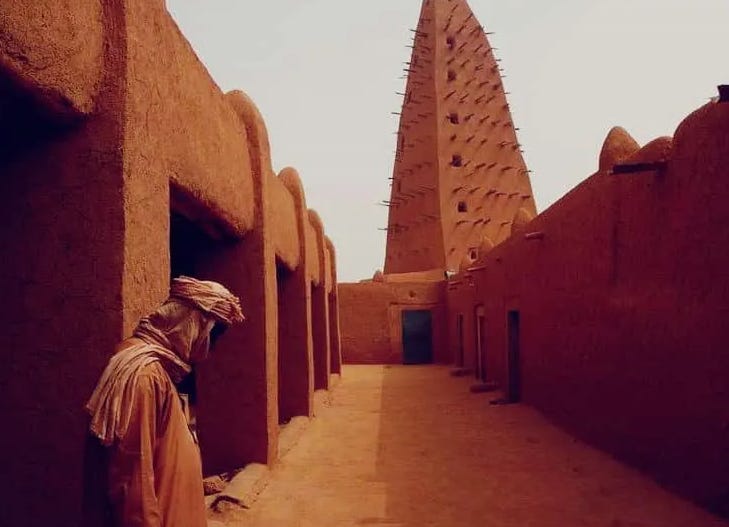
The UNESCO-designated Historic Centre of Agadez is home to one of the most iconic monuments of Sudano-Sahelian architecture: the Agadez minaret, which is the tallest mud-brick structure in the world.
While the city fell into decline in the later period, it remained a significant center of scholarship and regional trade. Its distinctive social geography was quite unlike the modern image of the desert city as a transit hub to the Mediterranean.
This article examines the history of Agadez since the late Middle Ages, focusing on its political development, architecture, and commercial networks
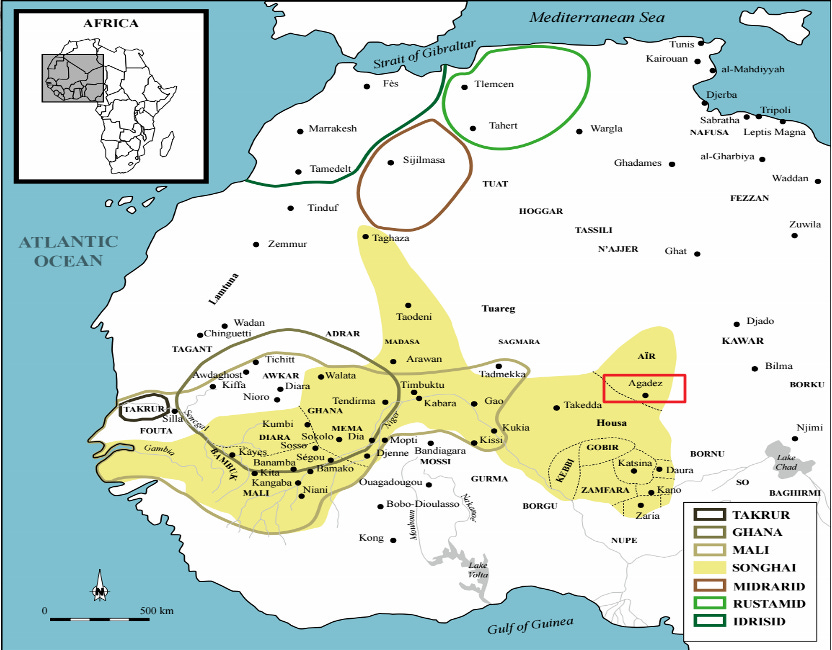
The empires of West Africa and the Maghreb in the 16th century. Map by S. Pradines.
Support AfricanHistoryExtra by becoming a member of our Patreon community, subscribe here to read more about African history, download free books, and keep this newsletter free for all:
The city of Agadez was founded as the capital of the polity known as the Sultanate of Aïr/Ahir during the early 15th century.1
This sultanate first appears in al-’Umarī’s description of medieval Mālī in the 1330s, when it is mentioned as one of three independent bidān/“white” Berber kingdoms north of Mali.2
The globe-trotter Ibn Battuta, who visited medieval Mali in 1353, also met with a Berber sultan, Takarkari, in the Aïr region (present-day northern Niger). He did not specify where he resided, but mentions a matrilineal succession system associated with the rulers of Agadez.3
Agadez appears as a seat of power in the late 15th century, when the Egyptian scholar al-Suyūṭī (d. 1505) wrote a treatise for the kings of Takrur (West Africa); King Muḥammad b. Sattafan, “Lord of Agadez” and his brothers, and to Ibrahim Sura (c.1493-8), King of Katsina in Hausaland (Northern Nigeria).4 Whether the name Sattafan (ie; “black”/sūdān**) denotes the identity of the king is a matter of debate.5
[**On West Africa’s pre-colonial concepts of “race,” see my previous essay: The myth of the Hamitic race in religious and pseudo-scientific literature ]
Al-Suyūṭī’s letter mentions both the King’s nephew Muḥammad b. ʻAbd-ar-Raḥmān, who was likely in power in 1501/2 when the Songhai emperor Askiya Muhammad (r. 1493-1528) invaded Agadez.
The Askiya’s expedition is mentioned in the 17th-century Timbuktu chronicle, Taʾrīkh al-Sūdān, as directed against “Tildza” in “Ayar,” from where the Askiya obtained the kakaki (long ceremonial copper horns). According to the historian John Hunwick who translated the chronicle, Tildza Tanat was the royal nickname of Muḥammad b. ʻAbd-ar-Raḥmān.6
The Askiya returned in 1516 at the head of a Songhai army which fought the reigning Agadez sultan al-’Adala. This sultan is mentioned in the Agades chronicles as being, jointly with his (twin) brother Muhammad Ahmad, the eleventh ruler of the sultanate. Their rule began in 1502-3 and ended with the ‘Askiya catastrophe’ fourteen years later.7
A contemporary account of the Songhai subjugation of Agadez was written by Leo Africanus, who visited the Songhai capital of Gao sometime between 1506 and 1513.8
He describes Agadez as a walled town of the “black”/sūdān (eg; Songhay and Hausa) closest to the towns of the “white”/bidān (Berbers). It had well-built houses, hosted a flourishing trade with the Hausa cities of Kano and Gobir.
It was inhabited by foreign merchants (presumably from the northern Sahara), as well as the sūdān, who were artisans and soldiers of the king of Agadez. The province contributed the largest tribute to the Songhai Empire, but its hinterland to the east was insecure on account of desert nomads who robbed passing caravans.
He describes its political structure as such9:
“The king of Agades maintains an important guard and has a palace in the centre of the town. But his army is made up of men of the countryside and the deserts. In fact, he springs from these people of Libya, and sometimes they dethrone him and replace him by one of his relatives.
But they do not kill him, and he who gives most satisfaction to the people of the desert is named king of Agades. In the remainder of the kingdom, that is to say in all the region to the south, the people engage in raising goats and cows. They live in huts of branches or mats which they carry on bullocks when they move, and they set these up where they pasture their animals, as the Arabs do.
The king earns a large revenue from the dues which the foreign merchants pay, and from the products of the country. But he remits a tribute of some 150,000 ducats to the king of Timbuktu.”
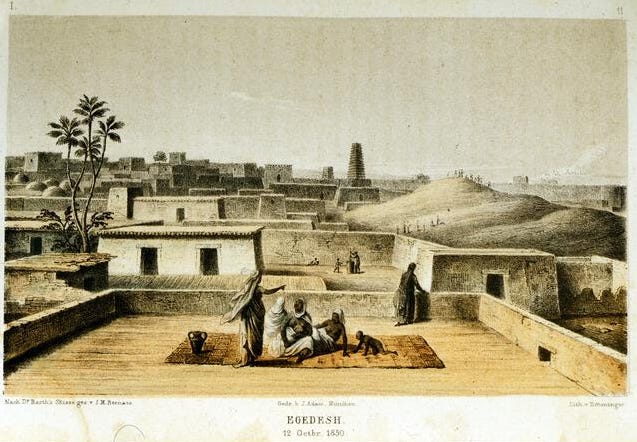
ÁGADES. October 12th. 1850. Drawn by J. M. Bernatz, from a Sketch by Dr Barth.
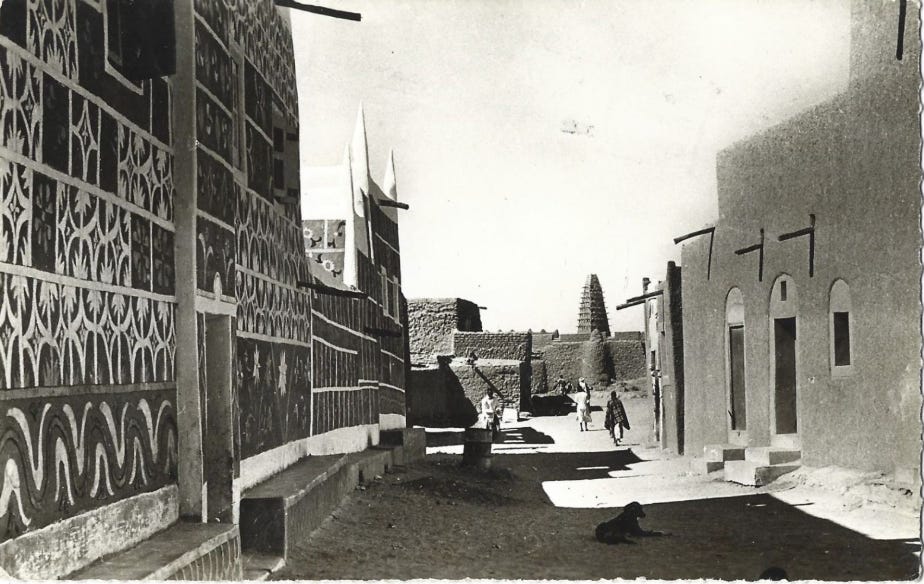
Street scene in Agadez, mid-20th century.
An oral account of the city’s early history was transcribed by the German traveler Heinrich Barth when he visited the city in 1850. Combined with the written accounts by Leo Africanus and the 19th-century account of the Sokoto Caliph Muhammad Bello, Barth mentions that the original ‘five tribes’ who founded the city were expelled after Askiya Muhammad’s conquest. These five Berber tribes originally came from Tuat in Southern Algeria, as well as Awjila, Ghadames and Misrata in Libya.
The Askiya reportedly drove out a considerable number of the Berbers, “with five hundred “jákhfa” (cages mounted on camels, such as only wealthy people can afford to keep for carrying their wives), left the town, but were all massacred.” According to Barth, a section of the Berber population remained behind and intermarried with the “Sónghay colonists”; as evidenced by their language and “mixed” appearance.10
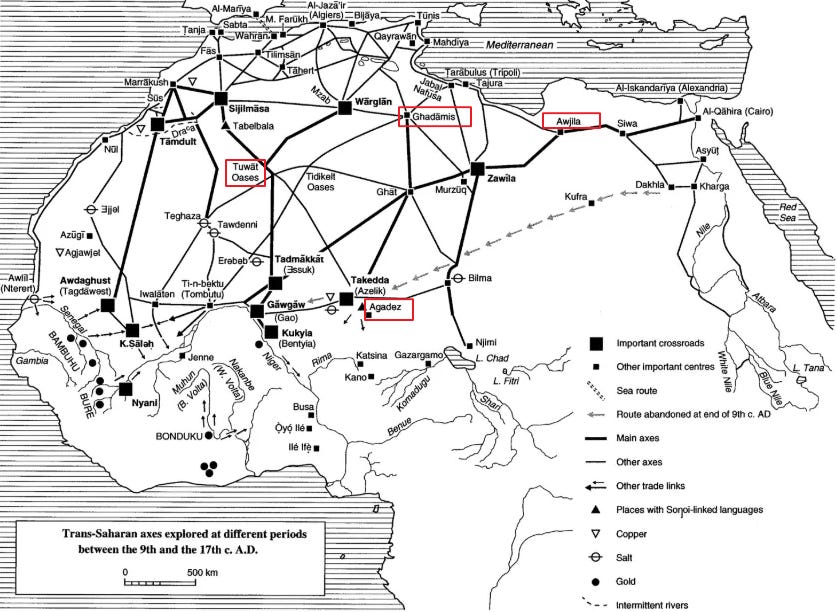
Tuat, Awjila, and Ghadames in relation to Agadez.
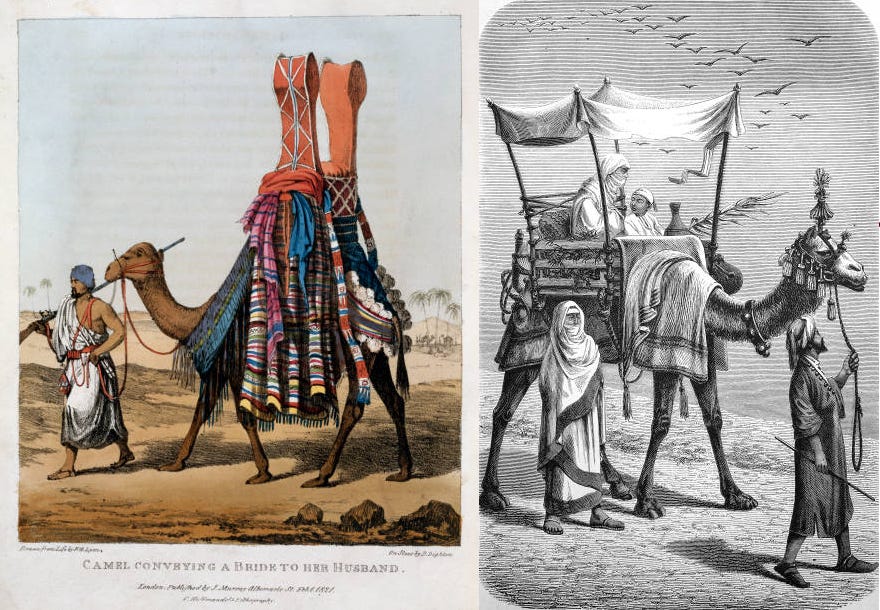
(left) ‘Camel Conveying a Bride to her Husband’, 1821. Plate 16 from A Narrative of Travels in Northern Africa by Captain George Francis Lyon, 1821. (right) Egypt, women on the trip on a camel through the desert, veil, camel drivers, litter, ca 1850. Getty Images.
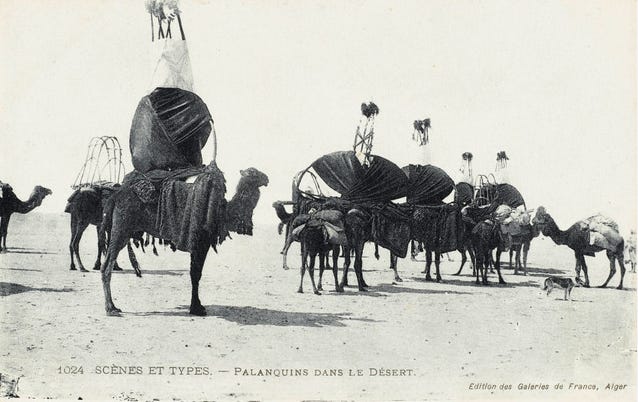
A camel palanquin (covered litter), used to transport wives and children across the arid desert of southern Algeria, each with a central ventilation shaft. ca. 1917
[For the cultural significance of the Camel among Berber-speaking groups, see my previous essay on The Camel in African History ]
Barth surmised that Agadez was established to facilitate trade between Gao and Hausaland, and had its own gold mithqal (a unit of weight rather than gold currency). Its sultan apparently resided in the Hausa kingdom of Gobir, a fact which later made Agadez acknowledge the suzerainty of the Sokoto Caliph when Gobir was subsumed in the 19th century. He estimates a population of 30-50,000 in the 16th century, based on the built area enclosed within the 3.5-mile-long wall.11
It is unknown whether the Askiya left garrisons in the city, but several districts bear Songhay names, such as Ogouberi, Youbboutara, Bangoutara, Tanouberi, and also Gao-Gao (similar to the Songhai capital). The northern Songhay languages of Tadaksahak and Tagdal, which are heavily influenced by Berber languages, were spoken in Agadez as late as the early 20th century. It’s thought that they resulted from the establishment of Songhay-speaking merchant communities.12
The empire of Bornu to the east of Agadez is also known to have sent an expedition against Aïr in 1532 and 1560, the former of which succeeded in subjugating Agadez, while the latter resulted in a settlement between the rulers of Bornu and the nomads of Aïr, and coincided with the brief ascendancy of the kingdom of Kebbi. None of the major empires seems to have established any lasting control of the city.13
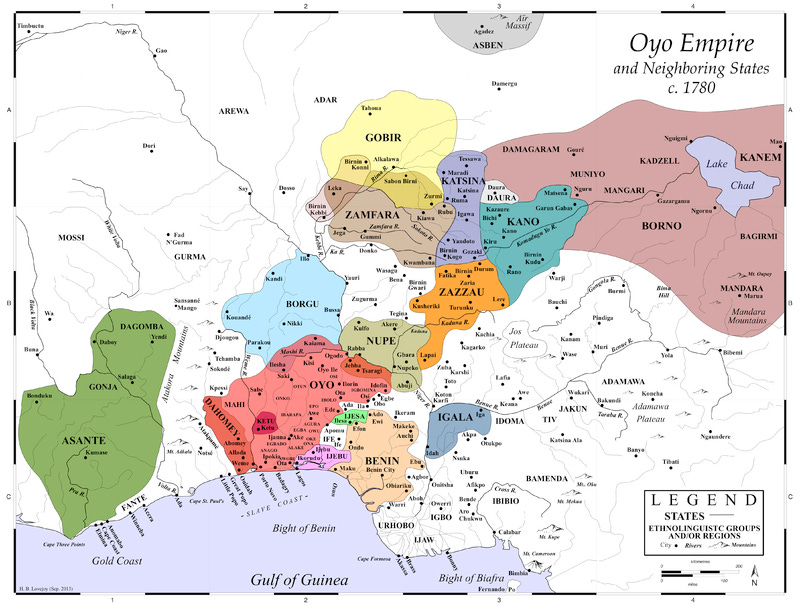
Map by Paul E. Lovejoy, depicting the position of major states in the late 18th century, with Agadez in the extreme north, Bornu to the East, and the Hausa states of Gobir, Kano, and Katsina to the South.
The Historic Monuments of Agadez.
The city’s oldest architectural monuments were likely built during the 15th/16th century, although only the history of the main mosque has been examined in sufficient detail, while the city walls, the palace, saints’ tombs, and houses of officials have yet to be studied.
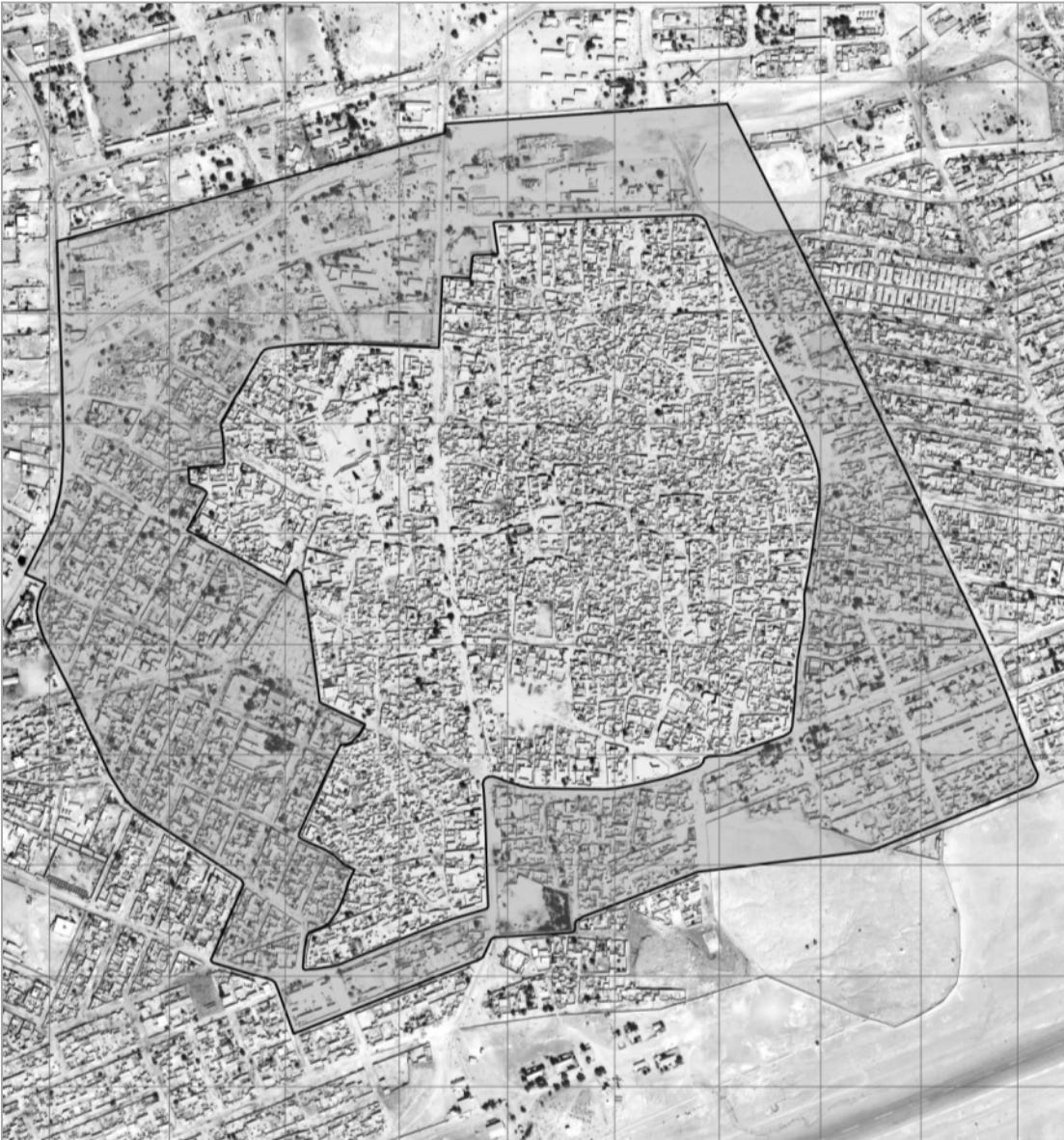
Historic Centre of Agadez. Image by ICOMOS, UNESCO.
Political and religious power was concentrated in the northwestern part of the city. It is there that the palace, closely linked to the great mosque, as well as the residences of the principal dignitaries and the alqali, are still located.
The palace is a two-storey composite complex entirely enclosed by walls, consisting of several courtyards and private apartments, as well as a throne-room. While its date of construction is unknown, within the palace enclosure is a small building in which Askiya is said to have prayed on his way to Mecca, and the entire structure was considerably old at the time of Barth’s visit in 1850.14
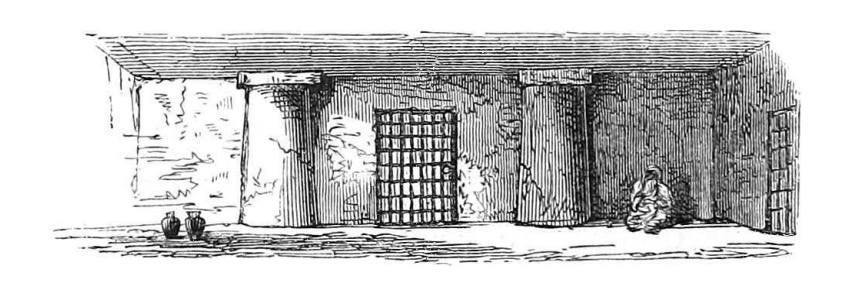
Audience-hall of Chief of Ágades. c. 1850, illustration by H. Barth
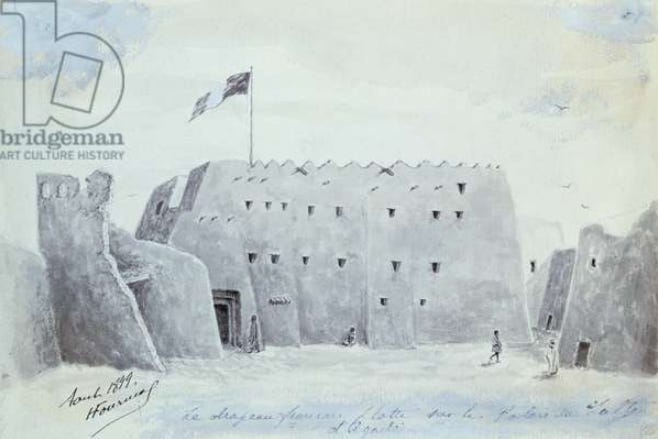
Sultan’s Palace, c. 1899. Henry Fournial.
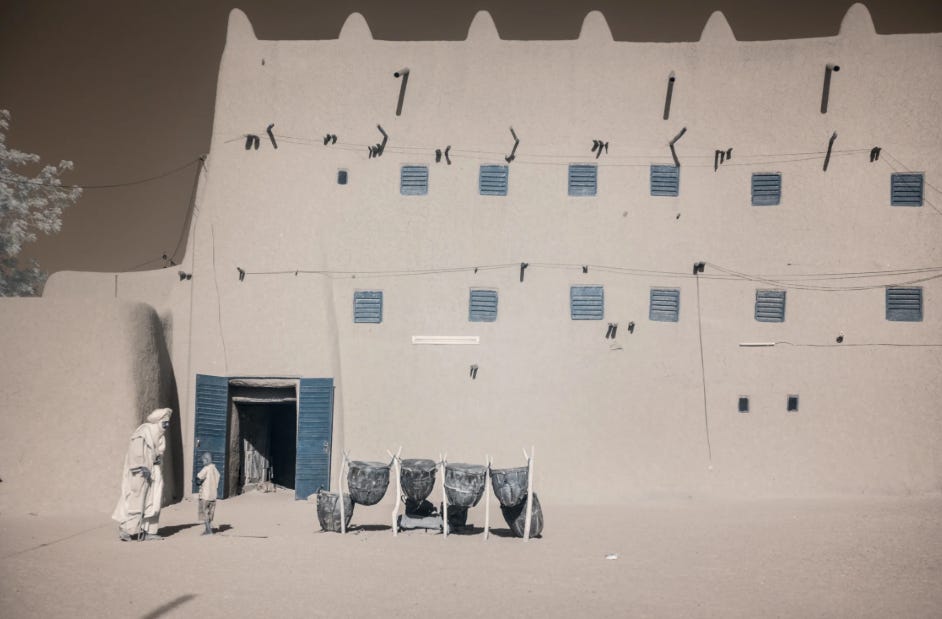
Sultan’s palace. Terri Gold World Imagery
The Agades chronicles, which are mostly transcriptions of oral history collected at the start of the 20th century, also mention the presence of a house of the “twin sultans”, and their tombs next to the mosque in the west of the city at the time of the Songhai invasion.15
The Friday mosque of Agadez was built close to the sultan’s palace. According to the study by Cressier and Bernus, the mosque was constructed in several stages. The first building was raised in 1450 according to the Agadez chronicles; it was later enlarged after the Songhai conquest, and the first minaret tower was erected. In 1844, the south façade was reorganised, and the present minaret was built with a height of 27 m.16
According to Barth, the older tower was detached several feet away from the south-west corner of the mosque, and was “leaning much to one side, more so than the celebrated tower of Pisa”. The mosque itself consisted of low, narrow naves, divided by pillars of immense thickness, which Barth surmised were meant to support a much larger structure that was ultimately not constructed. There were ten other mosques still in use, three of which were the Msíd Míli, Msíd Éheni, and Msíd el Mékk.17
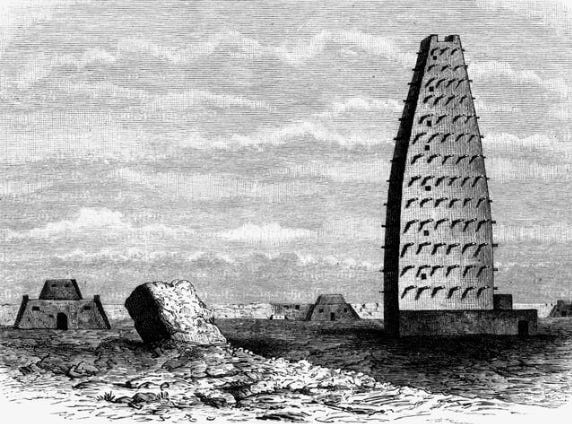
View of the High Watch-tower. c. 1850, illustration by H. Barth
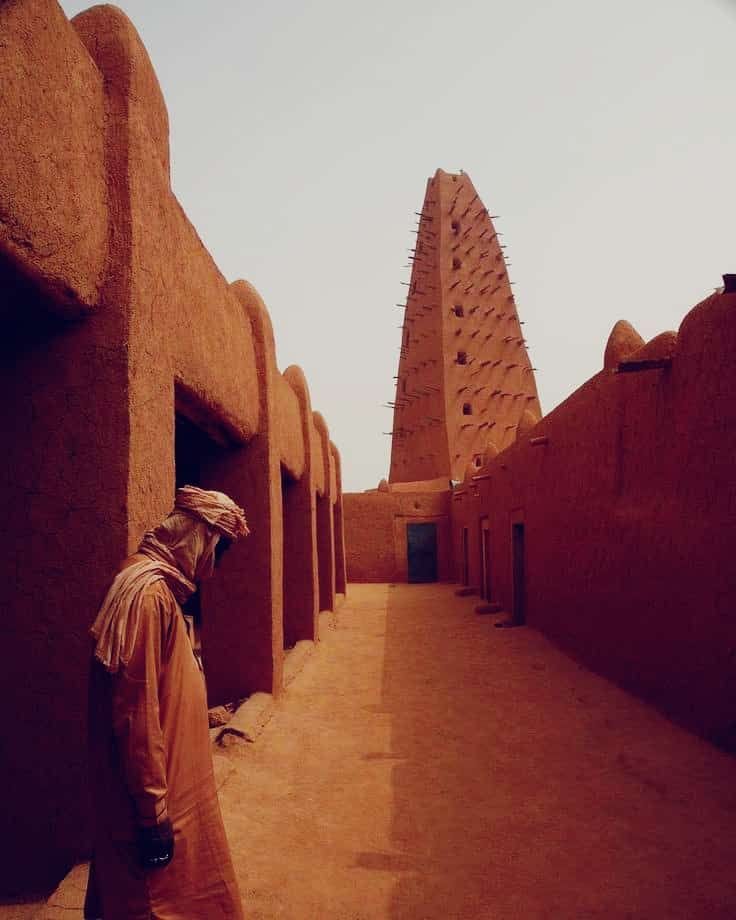
Agadez mosque, image by Antonio Mesquita.
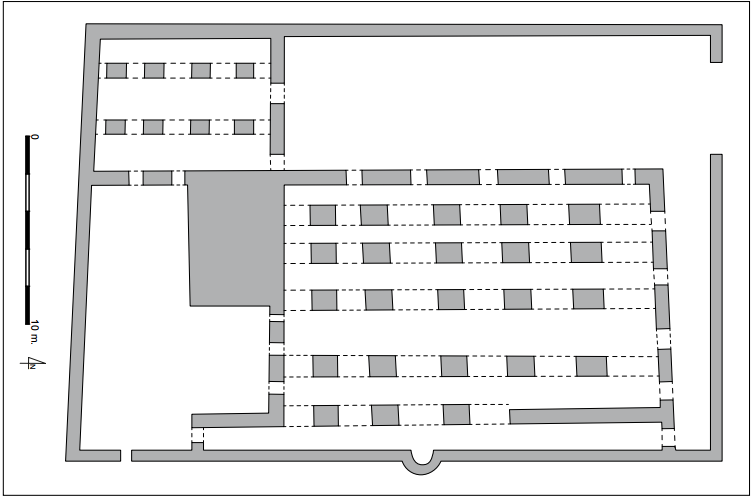
Plan of the great mosque of Agadez, fifteenth century. Image by S. Pradines.
Agadez in the 17th and 18th centuries.
After the fall of Songhai in 1591, the Moroccan sultan Mulay al-Mansur sent a letter to the amir of Agades al-hadjj Muhammad al-Addal b. Muhammad b. al-Aqib, (r. 1556-1594), thanking him for his petition, stressing old friendship, and saying that he depends on his help. It was one of several diplomatic letters sent to different West African kings by the sultan before the Moroccans withdrew shortly after.18
The Agadez chronicles suggest that the 17th century was a time of dynastic stability, with only five kings reigning from 1594 to 1720, and a switch from a matrilineal to patrilineal succession. Accounts of major historical events and regional expansion are mostly associated with the long reigns of Muḥammad al-Mubārak (r. 1653-1687) and Muhammad Aggaba (r.1687-1720).19
Written accounts from Bornu that refer to Agadez, which are dated to the 17th century, suggest a complex political relationship of interdependence and competition over the caravan trade, especially the salt mines of Kawar oasis and the transhumance routes used by desert nomads.20
Most of the Bornu expeditions against Aïr did not target the city itself. One account from 1658 tells of an expedition by Mai ‘Ali, which resulted in the capture of the ruler of Aïr (presumably Muḥammad al-Mubārak) and his conversion to Islam. However, this was more likely an acknowledgement of Bornu’s suzerainty, since this sultan was a staunch Muslim who undertook the pilgrimage twice. Al-Mubārak later conducted his own expeditions against Bornu and Gobir, and established a vassal state at Ader.21
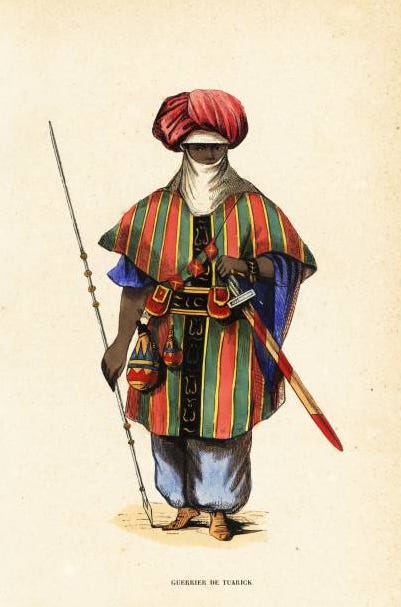
Tuareg Warrior, Illustration by George Francis Lyon c. 1821.
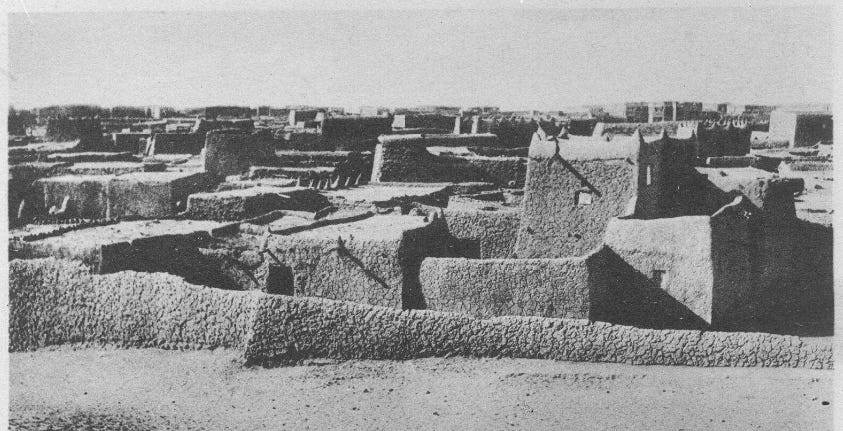
Agadez, ca. 1935. Deutsche Digitale Bibliothek
Information on the historical development of the Agadez Sultanate does not figure in the writings of the few Europeans known to have visited the Central Sahara during the 17th and 18th centuries.
Uncertainty surrounds the odyssey of Pieter Farde, a Belgian who was captured by Barbary pirates in 1686 in the Mediterranean and sold to a man who brought him to Agadez as a slave. Farde mentions the presence of more than forty European Christian and Jewish slaves, mostly from Italy and France. The sultan during Farde’s captivity would have been Muḥammad al-Mubārak, who, together with his son Agabba, figures in the Chronicles of Agadez but isn’t mentioned in Farde’s account.22
Agabba’s reign was marked by a series of upheavals. In 1686, a two-year epidemic caused such high mortality that the city was largely deserted. In 1696, a struggle between the Tuareg** tribes of Kel Owey and the Itesan resulted in numerous deaths; a severe drought struck at the same time, leading to a terrible famine. The following year, the rains fell in such abundance that three hundred houses were destroyed.23
[**The Tuaregs are a Berber-speaking group, while the Itesan, Kel Gres and Kel Owey are confederations of the Tuaregs associated with Agadez]
In 1711, the Franciscan missionaries Father Carlo Maria di Genova and Father Severino da Silesia may have visited Agadez during the reign of Agabba. They continued their journey southward to Katsina, where they are reported to have died without leaving records of observations made during their journey.24
A number of scholars are known from Agadez in the 17th century, and the city appears to have been a regional center of learning during this period.
A scholar named Muhammad al-Taddizi, from Tadeliza in Air during the early 17th century, mentions a revolt against the Sultan of Agades, Muhammad al-Tafrija. Another scholar named Abu Bakr b. Tahir Tashi (d. 1697) was apparently close to the ruling house and wrote a brief autobiography containing interesting material on the sultanate of Agades, its wars with Gobir, and the conquest of Ader.25
The 18th and 19th centuries saw a succession of short-lived rulers, campaigns into Hausaland, and succession wars involving the various Tuareg tribes which would prefigure in the composition of the Agadez chronicles and their related controversies.26
It’s during this period that the city declined considerably. Barth notes that by 1790, most of the city’s population had moved south to the Hausa cities of Katsina, Tasawa, Maradi, and Kano.27 Perhaps related to this was the abolition of the Pashalik in Gao and Timbuktu by the Iwellemmedan Tuaregs in the late 18th century, and the rise of Katsina.
The weakness of the city-state, lacking its own military strength, stemmed from a power-sharing arrangement between an urban sultan, a religious leader who controlled the caravan routes and oversaw the development of a trading hub, and the nomadic chiefs who lived with their warriors and herds in the desert.
The sultanate, whose institutions in many respects resembled those of the southern Hausa states, appeared as an urban creation distinct from the surrounding Tuareg world.28
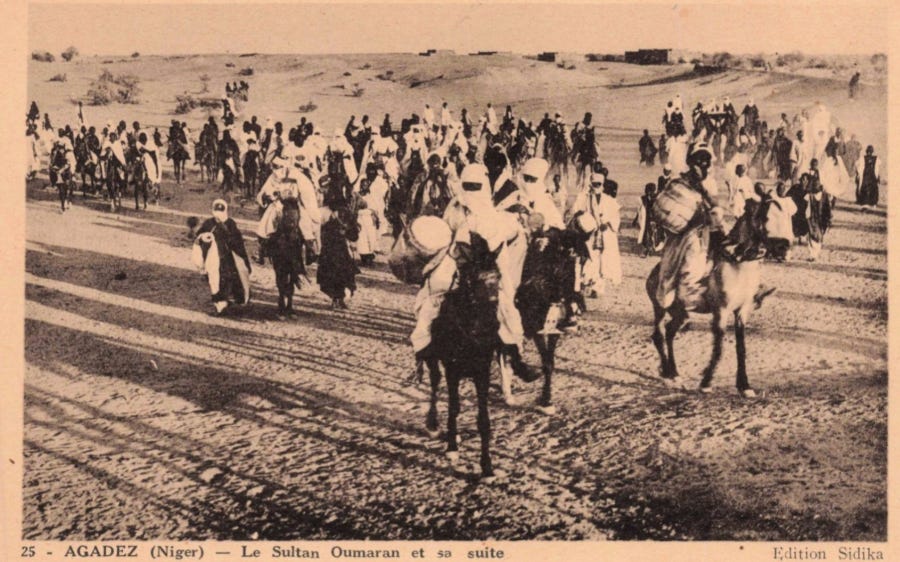
Entourage of Sultan Umaru Agg-Ibrahim (Oumaran). Early 20th century.
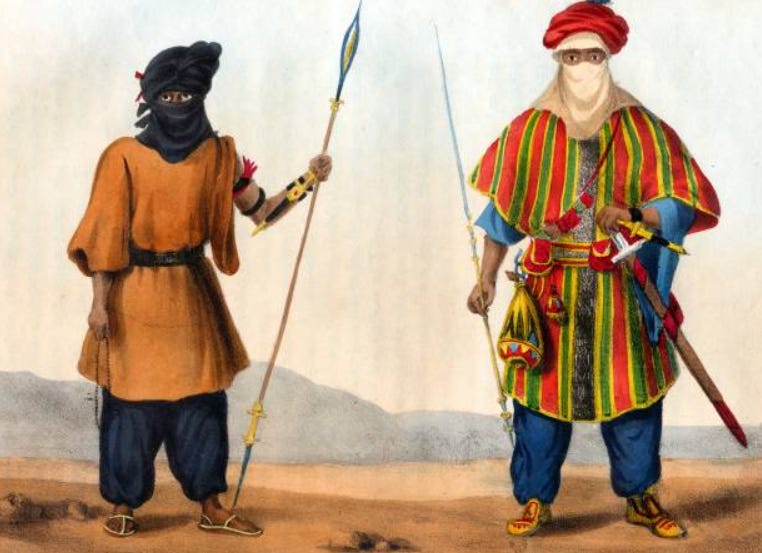
Tuaregs of Agadez, Illustration by George Francis Lyon c. 1821.
Agadez in the 19th century
The Sokoto Caliph Muḥammad Bello (r. 1817-1837) comments on the instability of the peculiar political arrangements of Aïr in his Infāq al-maysūr , where the appointed sultan’s power depended on the support of the Tuareg warrior tribes.
“This province was formerly in the hands of Soodan inhabitants of the Goobér. But five tribes of the Tawarék, called Amakeetan, Tamkak, Sendal, Agdalar, and Ajdaraneen, came out of Aowjal, and took it from them; and, after having settled themselves, they agreed to nominate a prince to rule over them, in order to render justice to the weak against the powerful.
They appointed a person of the family of Ansatfén; but they soon quarreled among themselves and dismissed him. They then nominated another, and continued upon this system, viz. whenever a prince displeased them, they dethroned him, and appointed a different one.”29
At the time of Barth’s visit in 1850, the Sultan el Bákiri (Muhammad al-Baqiri “Sufu”) was described as “rather a chief of the Tawárek tribes residing in Ágades than the ruler of Ágades”. He had been deposed a few years earlier by Hámed e’ Rufäy (Ahmad ar-Raffa’ ibn Muhammad Guma), whom he again succeeded. But in 1853, upon the intervention of the Sokoto Caliph, he was again compelled to resign in favour of the former.
The investiture of the sultan required the participation of the chiefs of the Itísan (Itesan), Kél-geres (Kel Geres), and the Kél-owí (Kel Owey), and a short pilgrimage to the tomb of a marabout called Sídi Hammáda, in Tára-bére, just outside the town. The Kel Geres and the Kel Owey were reportedly rivals, but maintained an uneasy alliance of convenience against the nomadic Awelímmiden (Iwellemmedan).30
Hausa was the official language at the court, and its cultural influence is reflected in the titles of the officials (named serki/Sarkin**) in charge of the palace, regulating trade, and collecting taxes, such as the “bába-n serkí” (the chief eunuch), “sáraki-n-turáwa”, the “serki-n-káswa,” the “fadáwa-n-serkí” (royal courtier), the fadawa-n-serkí (the aides-de-camp of the sultan). Besides these were the kádhi or alkáli, and the war-chief.31
[**On the spread of Hausa cultural influence and the diaspora, see my previous essay: The Hausa trading diaspora in West Africa. ]
The town had gone into considerable decline, with many abandoned houses, some with upper stories, decorated interiors, and baths. They were constructed with sundried mudbricks, like in the broader Sudano-Sahelian Architecture. Most of their roofs had pinnacles (also found in Hausa architecture) that were ornamented with ostrich eggs, and some residents kept live ostriches, as later visitors would attest.32
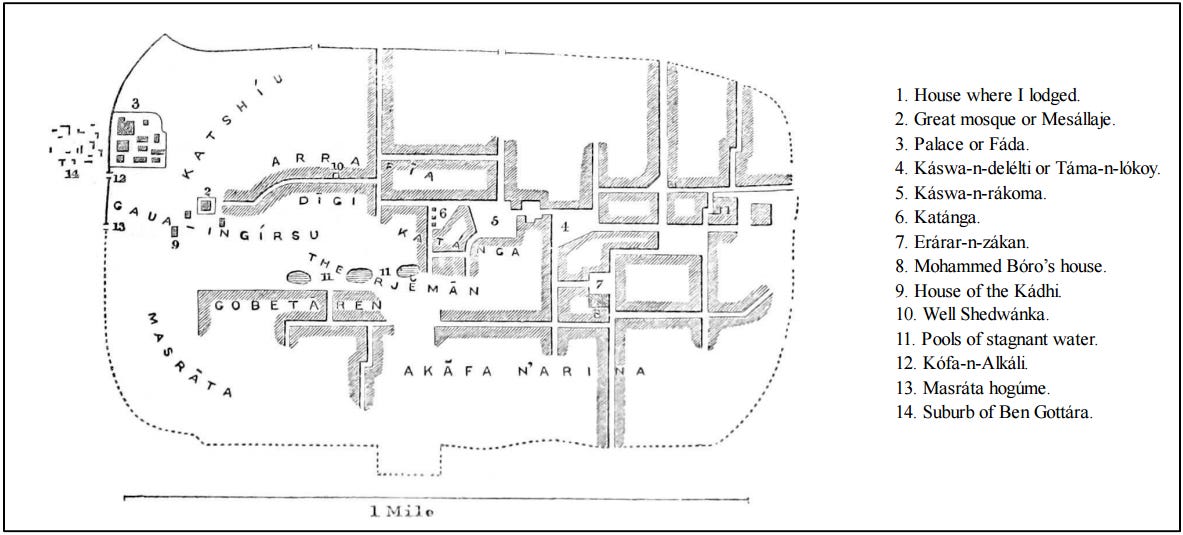
Ground-plan of Ágades. c. 1850 by H. Barth.
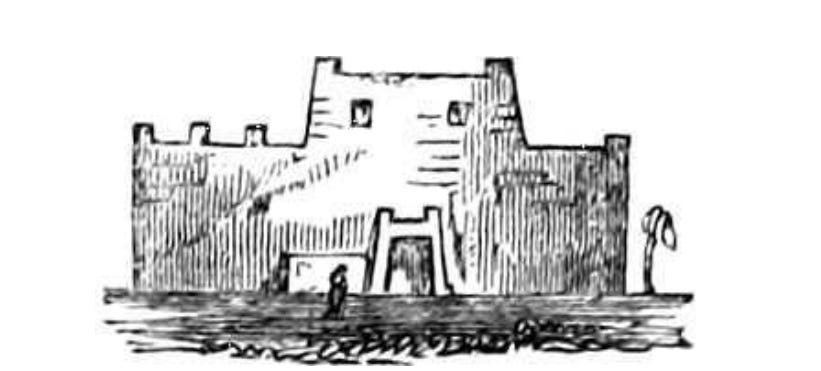
Mohammed Bóro’s House. c. 1850 by H. Barth.
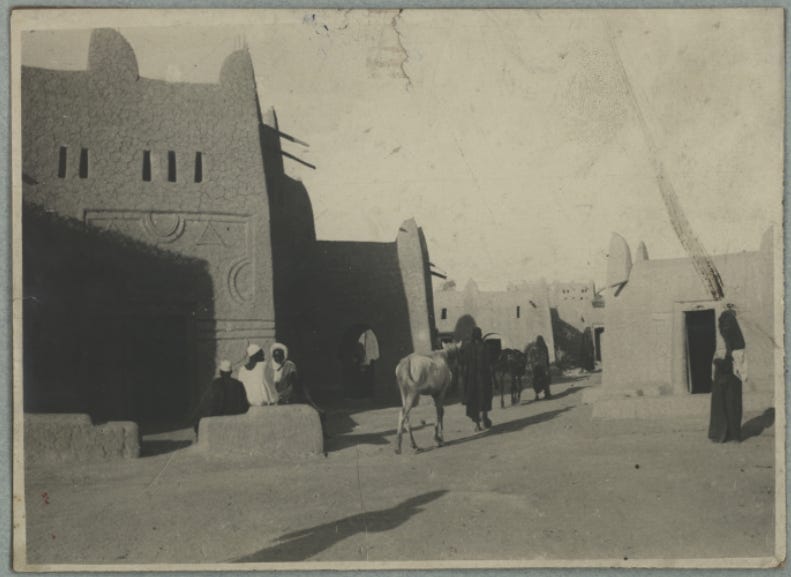
Agadez, c. 1930. House of Mallam Yaro
There were merchants from Tuat (in Southern Algeria), whose main trade was speculating on the price of millet. Besides this trade was the import of salt from Bilma in the Kawar Oasis by the camel caravans of the Itesan, Kel Geres, and the Kel Owey, which was exchanged for grain and dyed textiles from Hausaland.
The latter trade was associated with the Emgédesi, who were established in Katsina. The other trade was in the selling of camels, conducted by the Ighdalén, or Éghedel, who were of mixed Berber and Songhay origin, and spoke Sónghay.33
As early as 1780, an external account by the English traveller Simon Lucas, which was written based on information from merchants in Libya, indicates that Agadez was closely linked to the Hausa city of ‘Cashna’ (Katsina.)
His account, which mistakenly assumes that Agades was part of the ‘Katsina empire’, notes that “the salt of Bomou [Bilma] supplies the consumption of Cashna, and of the Negro kingdoms to the south, yet its owners have abandoned to the commercial activity of the merchants of Agadez, the whole of that profitable trade.”34
Quite contrary to the image of Saharan cities as entreports on the southern terminus of the Trans-Saharan trade, most of the trade in Agadez was largely confined within the central Sahara, involving exchanges of salt, grain and textiles between the Kawar oases and Hausaland.
This trade fit with pre-existing patterns of transhumance and regional travel, as the same traders who owned houses in Agadez, Zinder, Kano, also built relationships with owners of salt pans in Bilma, bred camels in the surrounding desert for transport, and established estates in Ader and Damergu where grain was cultivated.35
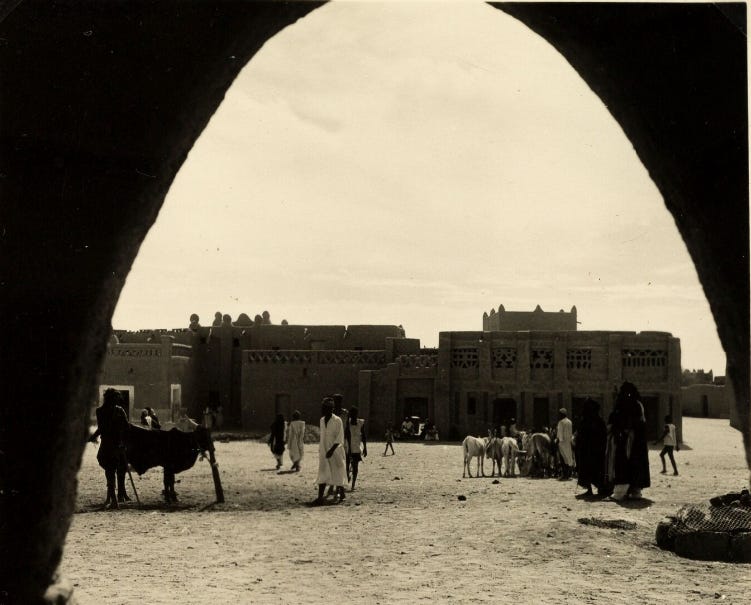
Market in Agadez, Niger. ca. 1945. Quai Branly
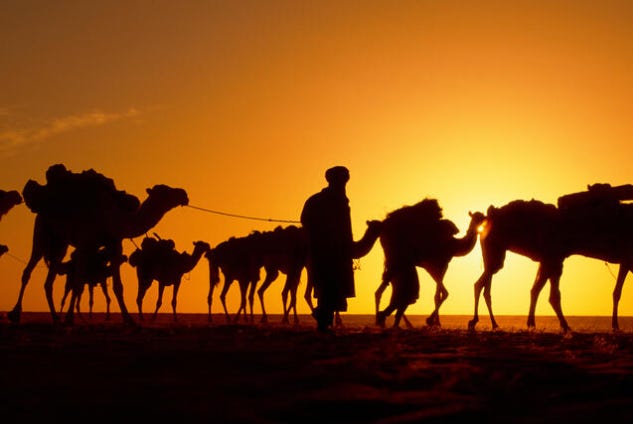
Traditional salt caravan from Agadez to the oases Fachi and Bilma. Alamy Images
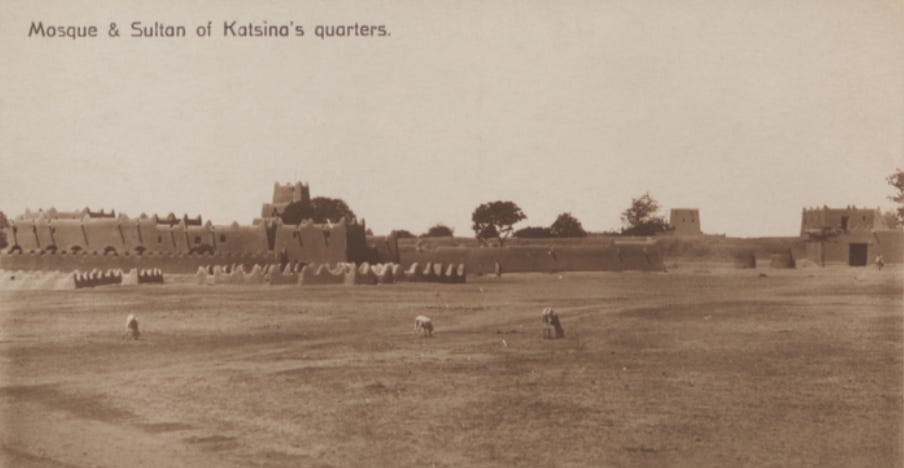
Sultan’s palace and mosque. Katsina, Nigeria. ca. 1918. Bristol Archives
Agadez remained a center of learning in the 19th century, and was visited by some of the scholars of Sokoto.36 At the time of Barth, there were an estimated 250-300 students of wealthy families in “five or six schools scattered over the town”, which was relatively large, compared to the town’s population of about 7,000.37
A short biography for 32 scholars from Agadez in the 19th and early 20th century contains one of the few descriptions of intellectual life during this period. Like other West African scholars, many travelled across the region for advanced learning, mostly to Kano; some served as viziers and secretaries at the court, but most remained independent.
They left behind several works on theology, law, poetry, and history (including the chronicles). Unfortunately, Most of the writings of Agadez were lost after the French suppression of the 1916-1917 revolt. All the scholars, intellectuals, and religious figures of Agadez were executed by French soldiers in the city’s Great Mosque, where they had taken refuge, and their manuscripts were burned.38
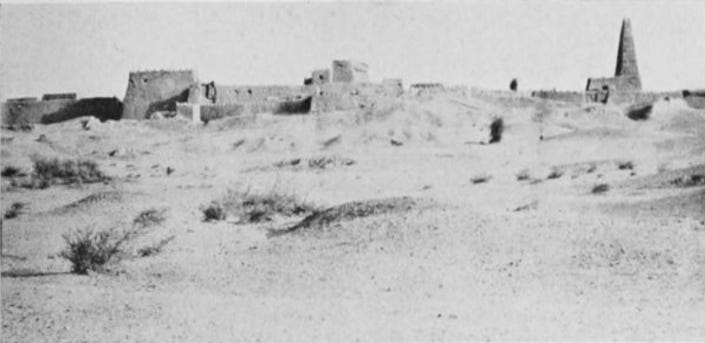
View of Agades. Image by Angus Buchanan, c.1920
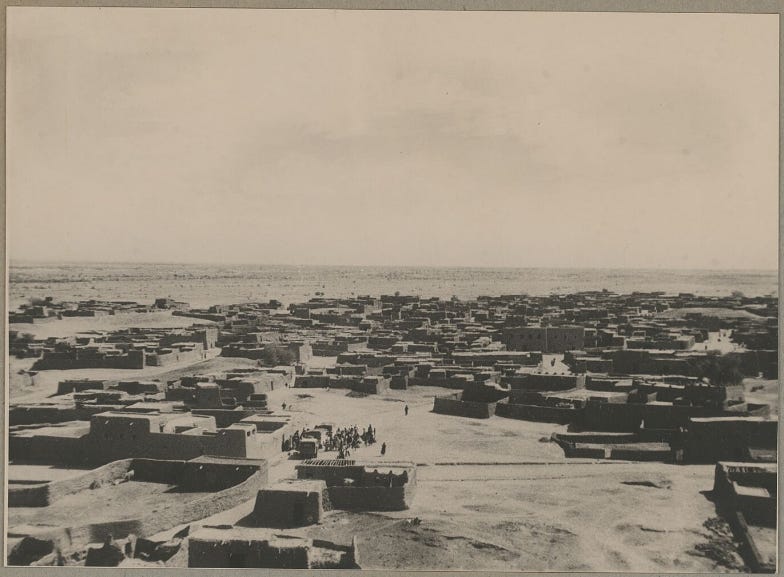
Agadez, c. 1933. Quai Branly
The town’s fortunes declined further in the late 19th century, such that by the time of the Foureau–Lamy colonial expedition in 1899-1900, the city’s ruined quarters are described as “a fleeting memory of a bygone era.”
The sultan was Mohamed-El-Baqeri, a grandson of the ruler met by Barth. He took the throne in 1891, but his authority barely extended beyond the walls of the town. He was isolated by all the fierce Kel-Ferouane nomads, and beholden to the few northern traders allied with the Senussi order. Foureau describes the bulk of Agadez’s residents as “black,” including the sultan and his officers.39
While Agadez formally acknowledged French authority in 1900, recurring Tuareg revolts and a rebellion by the Sultan meant that the city wasn’t formally brought under colonial government until 1917. Its population continued to decline during the colonial period, only recovering and surpassing its pre-colonial level after independence.40
Agadez is today the fifth largest city in the modern Republic of Niger and among the oldest continuously inhabited urban centers in West Africa. It’s regarded as a gateway city to the Sahara and transit hub for migrants to the Maghreb and Europe.
However, this new status reflects more recent economic and political processes during the last two decades, rather than representing a long-standing tradition, since the pre-colonial desert city was only a regional center whose reach was confined to the Central Sahara.
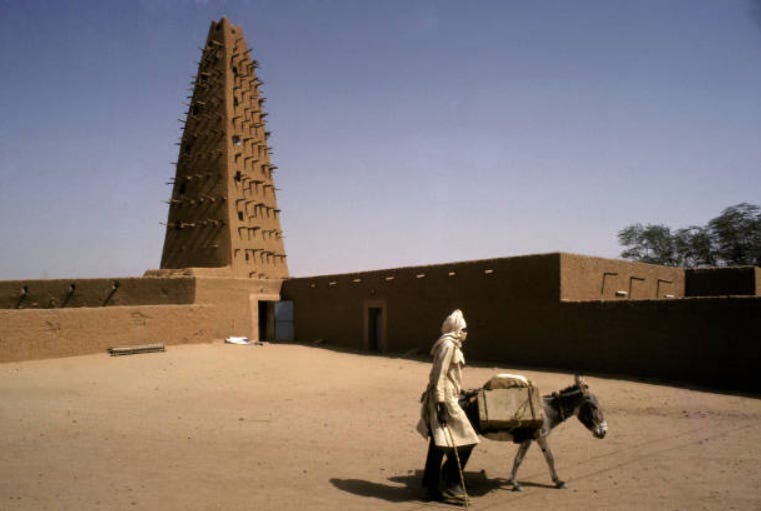
Agadez mosque, Getty Images.
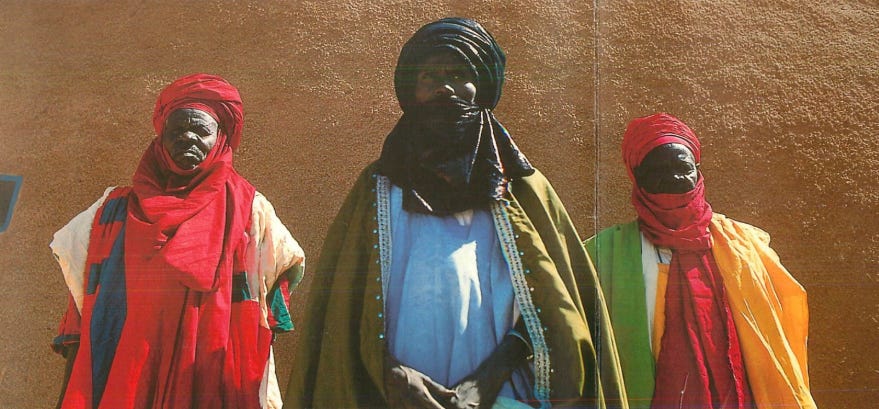
Oumarou Ibrahim Oumarou, Sultan de l’Air et d’Agadès
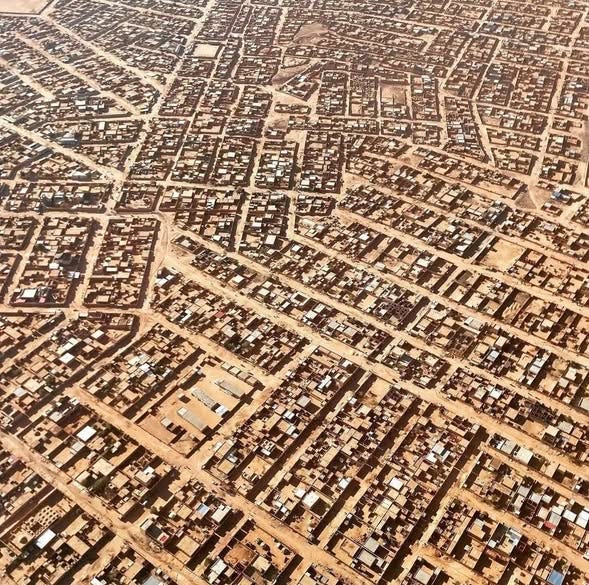
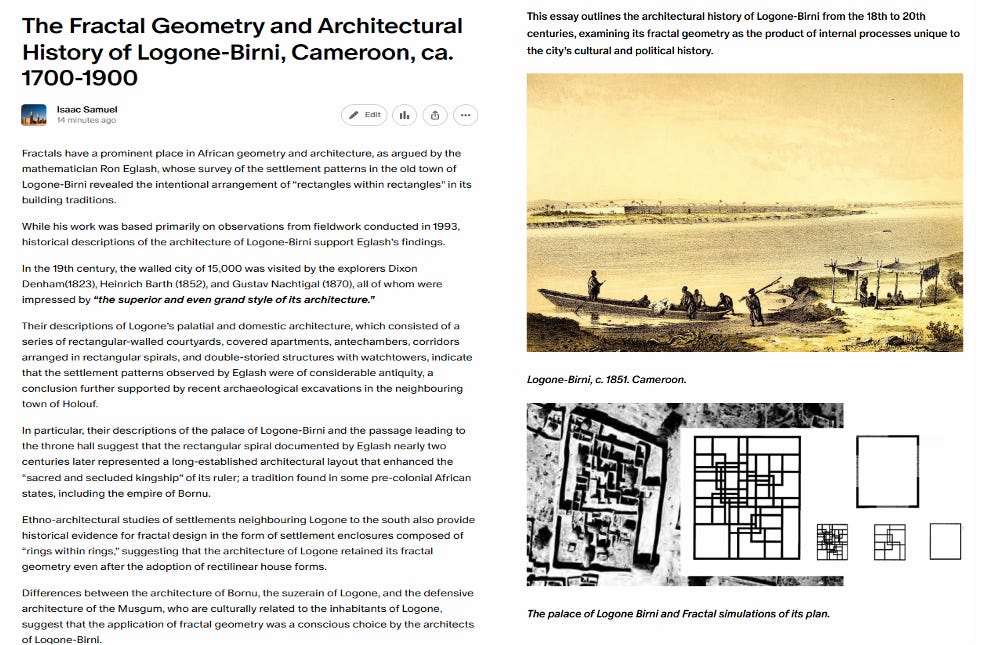
My Latest Patreon Article is about the unique fractal geometry of the old city of Logone-Birni in Cameroon, where African masons created a unique building tradition, consisting of a series of seemingly infinite rectangular courtyards within rectangular courtyards.
Please subscribe to read more about it here and support this newsletter:
Air (Ayr, Ayar, Azbin, Abzin) by E. Bernus, D. Grebenart, M. Hawad and H. Claudot-Hawad p. 342-363 in ‘Encyclopedie Berbere,’ 1986
Medieval West Africa: Views from Arab Scholars and Merchants, Nehemia Levtzion, Jay Spaulding, pg 65.
The Travels of Ibn Battuta, AD 1325-1354. Volume 4, pg. 974- 975
Sharīʻa in Songhay: The Replies of Al-Maghīlī to the Questions of Askia Al-Ḥājj Muḥammad by Muḥammad ibn ʻAbd al-Karīm Maghīlī, edited by John O. Hunwick, pg 40-41
The Agadez Chronicles and Y Tarichi: A Reinterpretation, by Benedetta Rossi, pg 103. People of the Veil by Francis James Rennell Rodd, pg 369
Timbuktu and the Songhay Empire: Al-Sa’di’s Ta’rikh al-Sudan down to 1613, and other contemporary documents, translated and edited by John O. Hunwick, pg 108
Timbuktu and the Songhay Empire: Al-Sa’di’s Ta’rikh al-Sudan down to 1613, and other contemporary documents, translated and edited by John O. Hunwick, pg 113
Timbuktu and the Songhay Empire: Al-Sa’di’s Ta’rikh al-Sudan down to 1613, and other contemporary documents, translated and edited by John O. Hunwick, pg 272
Timbuktu and the Songhay Empire: Al-Sa’di’s Ta’rikh al-Sudan down to 1613, and other contemporary documents, translated and edited by John O. Hunwick, pg 286
Travels and Discoveries in North and Central Africa, by Heinrich Barth, Harper & Brothers, 1857, pg 361-365
Travels and Discoveries in North and Central Africa, by Heinrich Barth, Harper & Brothers, 1857, pg 366-372
Timbuktu and the Songhay Empire. by John O. Hunwick, pg xxxiii. Agadez, by H. Lhote, S. Bernus and S. Chaker, p. 229- 236. In ‘Encyclopedie Berbere’, 1985.
UNESCO General History of Africa Vol 4, pg 278, UNESCO General History of Africa Vol 5, pg 456, 495-496.
Agadez, by H. Lhote, S. Bernus and S. Chaker, p. 229-236 in ‘Encyclopedie Berbere’, 1985.
Notes on Some Asben Records By H. R. Palmer Pg 392.
La grande mosquée d’Agadez: architecture et histoire, by Patrice Cressier, Auteur ; Suzanne Bernus
Travels and Discoveries in North and Central Africa, by Heinrich Barth, Harper & Brothers, 1857, pg 354-357
Timbuktu and the Songhay Empire. by John O. Hunwick, pg 292
Notes on Some Asben Records by H. R. Palmer Pg 393
Du Lac Tchad à la Mecque : le Sultanat du Borno et son monde (XVIe-XVIIe siècle). by Rémi Dewière pg 170, 199.
The Cambridge History of Africa. Vol. IV. From c. 1600 to c. 1790 pg 124-125
A Seventeenth-Century Belgian Visitor to Agadez and the North of Nigeria by Joseph Kenny. The Agadez Chronicles and Y Tarichi: A Reinterpretation by Benedetta Rossi, pg 105
Agadez, by H. Lhote, S. Bernus and S. Chaker, p. 229-236 in ‘Encyclopedie Berbere’, 1985.
The Agadez Chronicles and Y Tarichi: A Reinterpretation, by Benedetta Rossi, pg 103. People of the Veil by Francis James Rennell Rodd, pg 105-106
Arabic Literature of Africa: The writings of central Sudanic Africa Vol.2, edited by John O. Hunwick, Rex Séan O’Fahey, pg 28-29, 34. The Agadez Chronicles and Y Tarichi: A Reinterpretation by Benedetta Rossi, pg 106
Notes on Some Asben Records By H. R. Palmer Pg 394-400. The Agadez Chronicles and Y Tarichi: A Reinterpretation by Benedetta Rossi.
Travels and Discoveries in North and Central Africa, by Heinrich Barth, Harper & Brothers, 1857, pg 371
Air (Ayr, Ayar, Azbin, Abzin) by E. Bernus, D. Grebenart, M. Hawad and H. Claudot-Hawad p. 342-363 in Encyclopedie Berbere, 1986. Structures politiques et sociales des Touaregs de l’Aïr et de l’Ahaggar , by Johannes Nicolaisen Pg 25-29
The Agadez Chronicles and Y Tarichi: A Reinterpretation, by Benedetta Rossi, pg 107. The modern traveller [by J. Conder]. Part 403, Volume 2, by Josiah Conder, 1829, pg. 168- 169)
Travels and Discoveries in North and Central Africa, by Heinrich Barth, Harper & Brothers, 1857, pg 336-338
Travels and Discoveries in North and Central Africa, by Heinrich Barth, Harper & Brothers, 1857, pg 369-371
Travels and Discoveries in North and Central Africa, by Heinrich Barth, Harper & Brothers, 1857, pg 330.
Travels and Discoveries in North and Central Africa, by Heinrich Barth, Harper & Brothers, 1857, pg 317-318, 330, 341, 358-9, 374-5
Proceedings of the Association for Promoting the Discovery of the Interior Parts of Africa Volume 1, C. McRae, 1790, pg 157, 167. Caravans of Kola by Paul Lovejoy, pg 56
The Desert-Side Salt Trade of Kawar by Knut S. Vikør. On the role of Agadez in the caravan trade of the Hausa, see; Caravans of Kola by Paul Lovejoy
Arabic Literature of Africa: The writings of central Sudanic Africa Vol.2 edited by John O. Hunwick, Rex Séan O’Fahey, pg 144, 204, 208.
Travels and Discoveries in North and Central Africa, by Heinrich Barth, Harper & Brothers, 1857, pg 372
Sur les traces des savants d’Agadez au tournant du XXe siècle. Traduction d’un manuscrit de Bukhārī Tānūdé (écrit vers 1967-1969) by Salao Alassane
Mission saharienne Foureau-Lamy. D’Alger au Congo par le Tchad by Fernand Foureau, Published by Masson, 1902, pg 380-392
Niger: The Bradt Travel Guide By Jolijn Geels. Pg 162