

The city of Malindi is one of the oldest urban settlements in East Africa.
Several clusters of stone ruins abandoned in the 18th century have been associated with the medieval city, as archaeologists and historians continue to debate its precise location.
Malindi is most famously (or infamously) known as the home of the pilot who guided the first Portuguese fleet to India. During the 16th century, it became the capital of Portugal’s East African possessions, using its alliance with the Portuguese to supplant the regional hegemony of its rivals.
Yet Malindi’s significance predates its relationship with Portugal.
The cosmopolitan city exerted an outsized influence across the Indian Ocean world, sending envoys to China before the famous voyages of Zheng He reached the city, and establishing diasporic communities along the coast from Kilwa to Madagascar.
This article outlines the history of medieval Malindi and its significance in the Indian Ocean world.
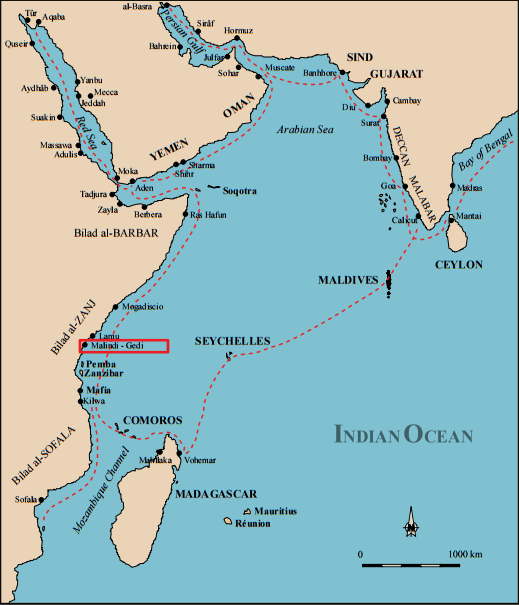
Trade routes in the Indian Ocean. Map by S. Pradines.
Support AfricanHistoryExtra by becoming a member of our Patreon community; subscribe here to read more about African history, download free books, and keep this newsletter free for all:
Medieval Malindi: History, Archaeology and the “Lost city”
The medieval city of Malindi first appears in the account of the 12th-century geographer al-Idrisi as “a town of the Zanj”, which “lies on the shore, at the mouth of a river.” “They own and exploit iron mines; for them iron is an article of trade and the source of their largest profits”.1
Al-Idrisi also refers to traditional priests and sorcerers by their still-used Swahili term of mganga. About a century later, Abu al-Fida (d. 1331) also mentions that there were “many sorcerers” in Malindi, adding that “the king of the Zanj lives at Malindi.”2
Malindi appears in Chinese accounts from the 14th to 15th centuries along with several kingdoms from Eastern Africa such as Zanzibar, Pemba, Ethiopia, and Mogadishu whose envoys visited the imperial court.3
[see: Historical contacts between Africa and China from 100AD to 1877 ]
The city twice sent a giraffe to China, first indirectly through the sultan of Bengal, Saif-ud-Din, in September 1414, and the second time directly in October 1415. This second giraffe was brought by Malindi’s envoys two years before the 5th expedition of Zheng He reached the city in 1417 and brought back the envoys.4
The discovery at Mambrui (in Malindi) of sherds of Ming Yongle (1403–1424 CE) imperial kiln blue-and-white porcelain and a ‘Yongle Tong Bao’ copper coin cast between 1403 CE and 1424 CE, which were made exclusively for the central government and imperial family, confirms the presence of the fleet on the East African coast.
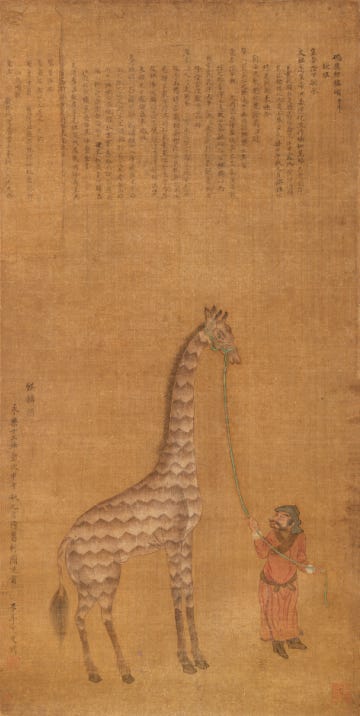
Giraffe presented to Ming Emperor Yongle by the African city of Malindi, 1414, Philadelphia Museum of Art.
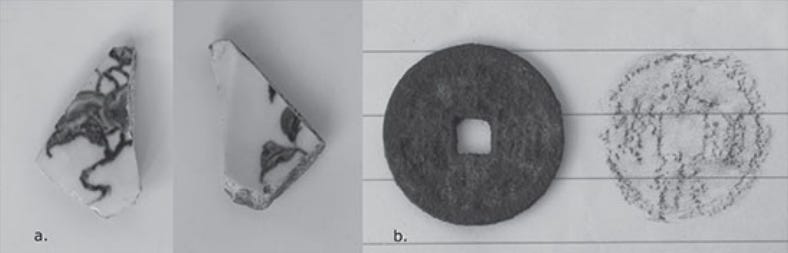
(a) Ming Yongle imperial kiln blue-and-white porcelain; (b) ‘Yongle Tong Bao’ copper coin. Images by Dashu Qin and Yu Ding
According to the archaeologist Mark Horton, medieval Swahili towns were made up of a cluster of neighbouring settlements between the continental mainland and the coastal islands that relied on each other for provisions, labour, military aid, and trade goods.
Each conurbation was tied together by bonds of kinship, political and religious authority, and some expression of shared or complementary ethnicities.5
The conurbation centered on Malindi Old Town included the site of Mambrui to the north and the sites of Gedi, the small ruined sites in the Mida Creek, and the Watamu sites to the south.6
The difficulty, therefore, lies in determining which of these major sites constituted the medieval city of Malindi.
Archaeologists have debated whether Gedi, Mambrui, or the Malindi Old Town itself represented the principal urban centre in the 12th century, and whether that settlement was the same city encountered by the Portuguese three centuries later, and what date each of these settlements was abandoned.
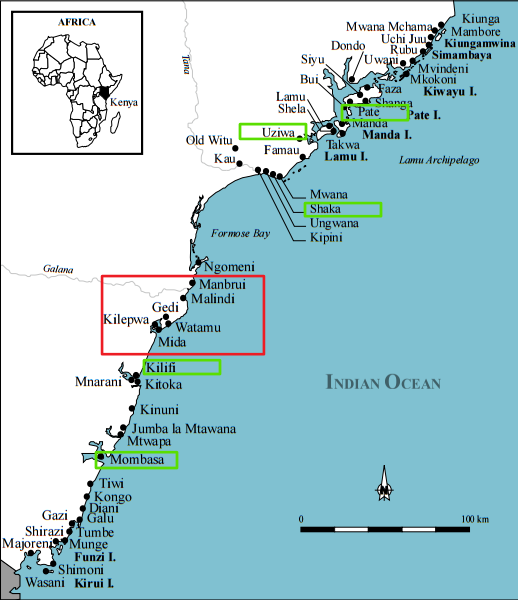
The Malindi conurbation and related sites on the Kenyan Coast. Map by S. Pradines.
Excavations at Malindi Old Town and Mambrui by Ceaser Bita and Dashu Qin from 2006 to 2013 found numerous locally made Early Iron Age wares (dated 2nd-6th century CE), Triangular Incised Ware (6th-13th century), and Swahili Tradition wares (SW) used until the 18th century, a few imported Chinese wares (9th-20th century), and Islamic wares (10th-16th century). They also uncovered house foundations, sanitary facilities, city walls, furnaces, and iron slag.7
The oldest occupation sites at Malindi Old Town and Mambrui are dated to the period from 850-1000 CE. Extensive iron production and imported wares appear in the 11th-12th century, followed by the construction of coral structures and the first mosques in the 13th-15th centuries.
Both sites covered atleast 30ha at their peak. Malindi continued to flourish during the 16th- 17th centuries, and well into the 19th century, with large pillar tombs and an increase in Chinese imports, but Mambrui went into steep decline after 1640.8
C. Bita suggests that Mambrui was probably medieval Malindi, which is supported by the results of Dashu Qin’s excavations, but the latter clarifies that it was mostly contemporaneous with Malindi Old Town, which developed rapidly from the 13th to 16th century.9
However, few of the old monuments survive, save for two mosques, the 15th-century pillar tombs, Vasco Da Gama’s pillar of 1498, and a 16th-century Portuguese chapel.10
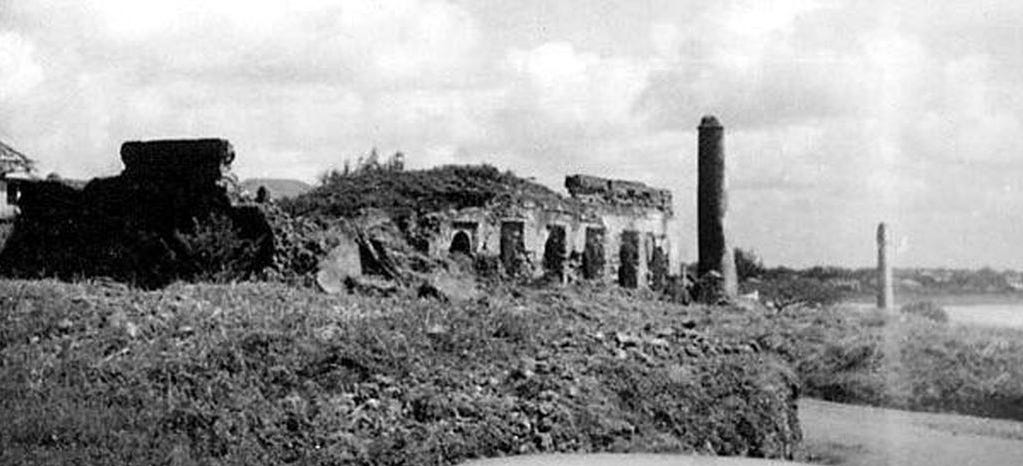
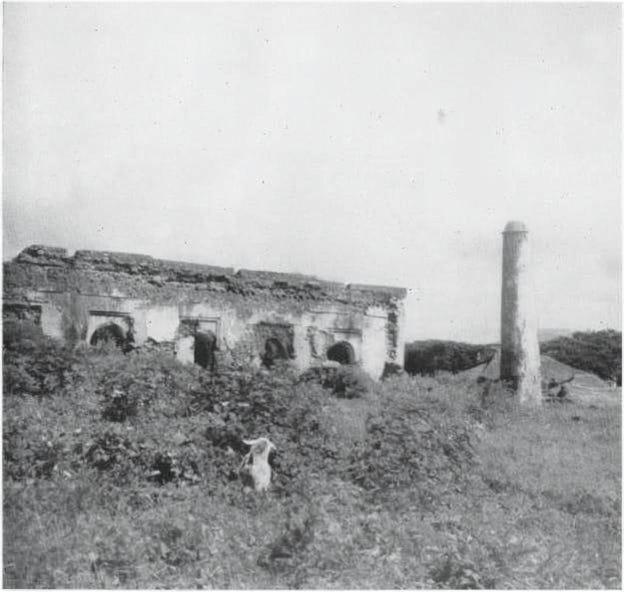
mosque, Malindi.
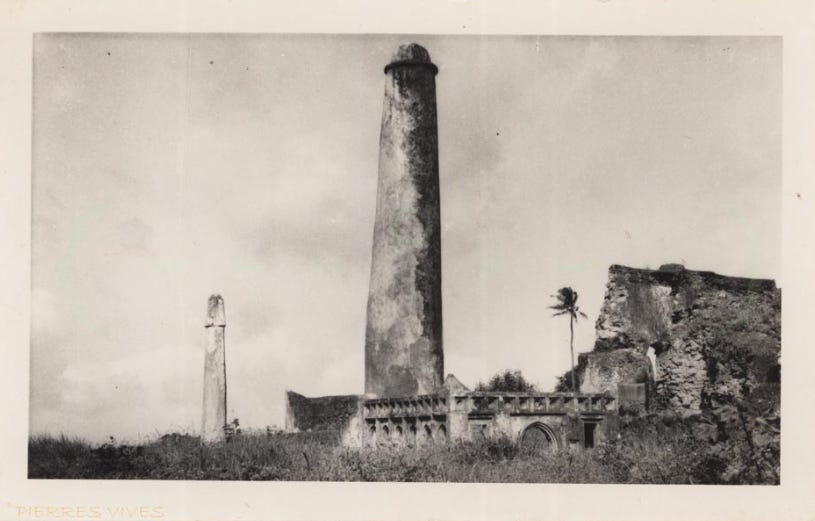
Pillar Tomb, Malindi. Early 15th century.11
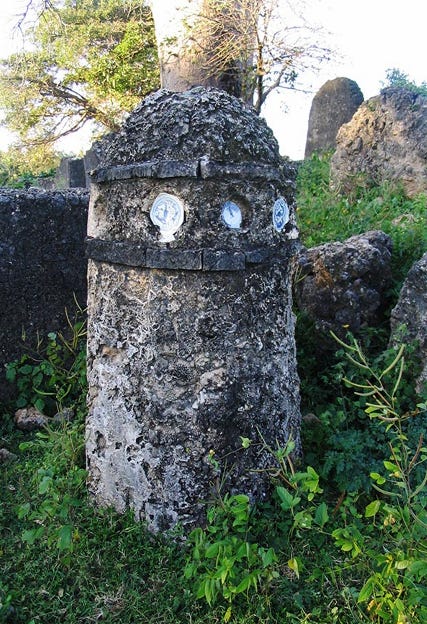
Pillar tombs decorated with imported ceramics in Mambrui, Kenya. Image by Yu Ding.
The well-preserved ruins of Gedi are located about 10 miles south of Malindi and 6km inland from the coast.
The 20-30 ha archaeological site contains a large palace, six mosques, hundreds of domestic houses, and several tombs dated 1050-1450 CE. Paradoxically, this large Swahili settlement doesn’t appear in any historical documents from the period.12
According to James Kirkman, who excavated the site in 1948, Gedi was associated with Malindi, likely as a breakaway polity that later became a dependency of the ruler of Malindi, and may have been destroyed as a result of a punitive expedition sent by Mombasa against Malindi in 1529.13
Later excavations by Stéphane Pradines in 2003 suggest that Gedi was probably the site of the medieval city of Malindi, and the city would have been displaced at the same time as the course of the Sabaki River at the beginning of the 15th century.
A section of Gedi’s population emigrated to a coastal village situated at the new mouth of the Sabaki River during the late 14th century to mid-15th century. This village was to become the city of Malindi, visited by the Portuguese in 1498. Cut off from its access to the Ocean, the ancient city of Malindi/Gedi fell into obscurity after 1589, and the city was abandoned in 1631.14
However, since the more recent excavations at Malindi Old Town and Mambrui provide evidence for settlement continuity from the 9th century, this interpretation may be considered tentative.
Archaeological surveys of the ruined sites in the Mida Creek in 2021 have revealed the remains of mosques and tombs that are contemporary with the period of Gedi’s expansion.
The excavators, supporting Pradines’s theory that these sites functioned as Gedi’s (original) access to the sea, suggest that the sites operated as a shoreline facility to accommodate beached or moored vessels carrying goods destined for Gedi and the return journey to the Indian Ocean.15
In conclusion, since Malindi may not have been confined to a single settlement at all times, the question of which site should properly be identified as “medieval Malindi” remains unresolved.
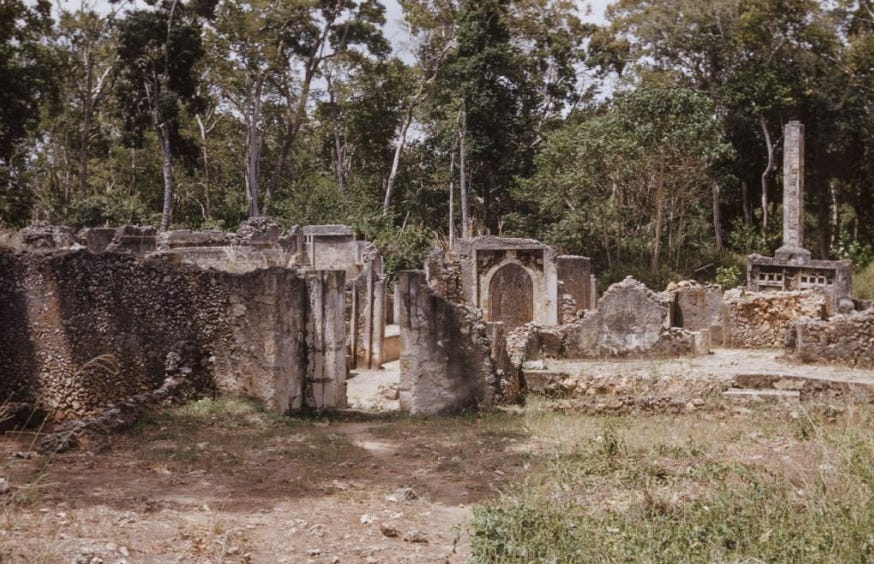
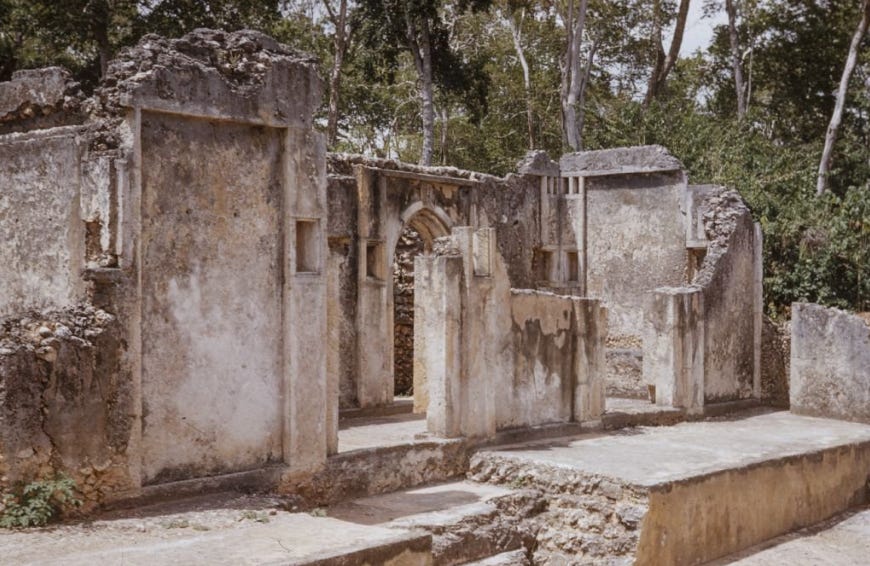
Ruins of Gedi, Kenya. Images from ETH Zurich
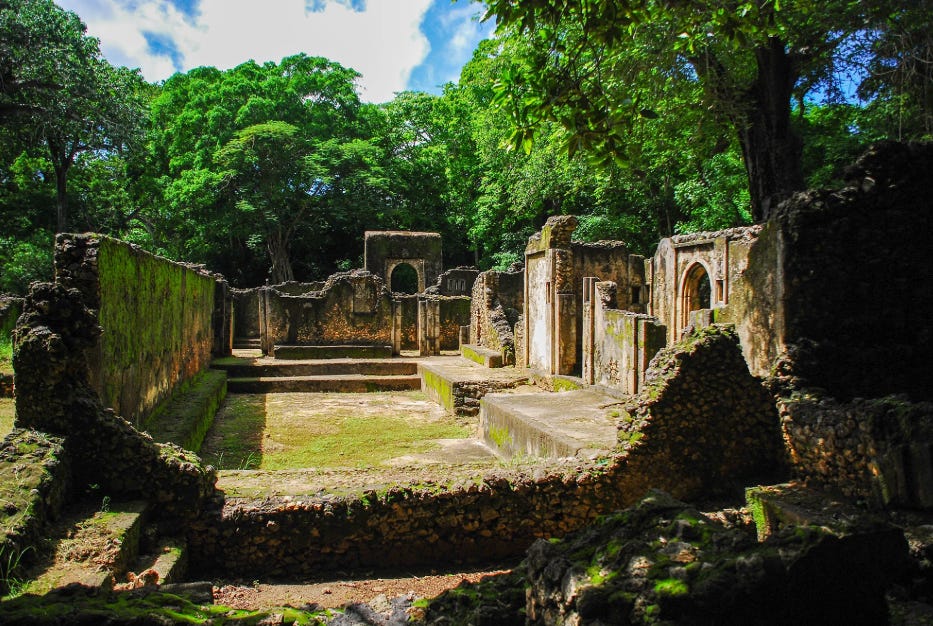
Political organisation of Medieval Malindi.
Malindi was for most of its early history the largest settlement among several smaller town sites in the Sabaki Delta, and its rise may have predated its southern rival, Mombasa. But Mombasa had the advantage of a much better harbour, and at some stage between the 13th and 15th centuries, it began to supplant Malindi as the leading international port in this section of the coast.16
The development of Swahili city-states was driven by commercial competition and political rivalry for control of a region. The coastal cities formed an ethnic and cultural interface between the African mainland and the Indian Ocean world. Two political systems characterised Swahili society: the Wangwana council of elders/patricians of the African type, or a sultanate of Islamic influence.17
The difference between the two was the election of the main leader to head the governing council, and whether the ruler could, in later periods, create a dynasty through hereditary leadership.
In the early 16th century, cities like Barawa (Brava), Lamu, and Mombasa were often described as oligarchic republics, whose elected leaders were erroneously titled as ‘kings’ or ‘Queens’ in external accounts, while Kilwa, Pate, and Nzwani (Anjouan) were ruled by a hereditary monarch or ‘Sultan’.
Malindi’s political system appeared closer to the latter group, but included aspects of the former.
From the city’s official correspondence with the Portuguese king Dom Manuel (r. 1495-1521), the first ruler in 1515 was titled “Sheikh,” while his successor in 1520 and those that came after were titled “Sultan.” It's thought that the former was only the son of the ruler.18
The title and names of the author of the 1520 letter: ‘Ali ibn Sultan ‘Ali, Sultan of Malindi’, indicate that he was a hereditary monarch. He addresses the Portuguese king Manuel as the ‘great Sultan’.19 Portuguese kings would later grant his successor, Sultan Muhammad, the prestigious title of “Brother in Arms of the King of Portugal.”20
According to the Portuguese chronicler Joao de Barros, at the beginning of the 16th century the king of Malindi claimed to be descended from the sovereigns of “Quitau” (Kitau), a town located in the Tana delta, which once reigned over the whole region. It was at the time only a “poor village” whose imposing ruins attest to its past splendor.21
Correia in 1550 writes of a “supervisor [regedor] of land production,” a “supervisor of the sea,” and a qadi in charge of justice at Malindi in 1498. These seem not to have been true state officials, but instead representatives of lineages which exerted authority in designated areas, sometimes on a hereditary basis.22
Malindi appears as a minor power on the Swahili coast at the beginning of the 16th century in the shadow of Kilwa and Mombasa. The city’s population is significant, but its political importance is not equal to the two metropolises.
Its territorial claims extend from Kilifi in the south to the sites of Oja along the Tana River (see map above). Still, they are heavily contested by Mombasa and the leaders of the smaller towns.23
Despite this competition, the Malindi diaspora could be found as far south as Kilwa, and is mostly associated with religious offices.
According to the Swahili version of the 16th-century Kilwa Chronicle, all the amirs and qadis in the city were settlers from Malindi. This is supported in the Arabic version by the great prominence which Malindi settlers achieved at Kilwa during and after the reign of Kilwa’s sultan al-Malik al-Adil Muhammad (1412-21). One of them, named Faqih Muflah al-Malindi, was the uncle of the author of the Arabic chronicle.24
A small ruined mosque at Kilwa, dating to the 14th-15th century, was still called by the people of Kilwa the Malindi Mosque in the 20th century, and the name may reasonably be connected with the establishment of settlers from Malindi.25
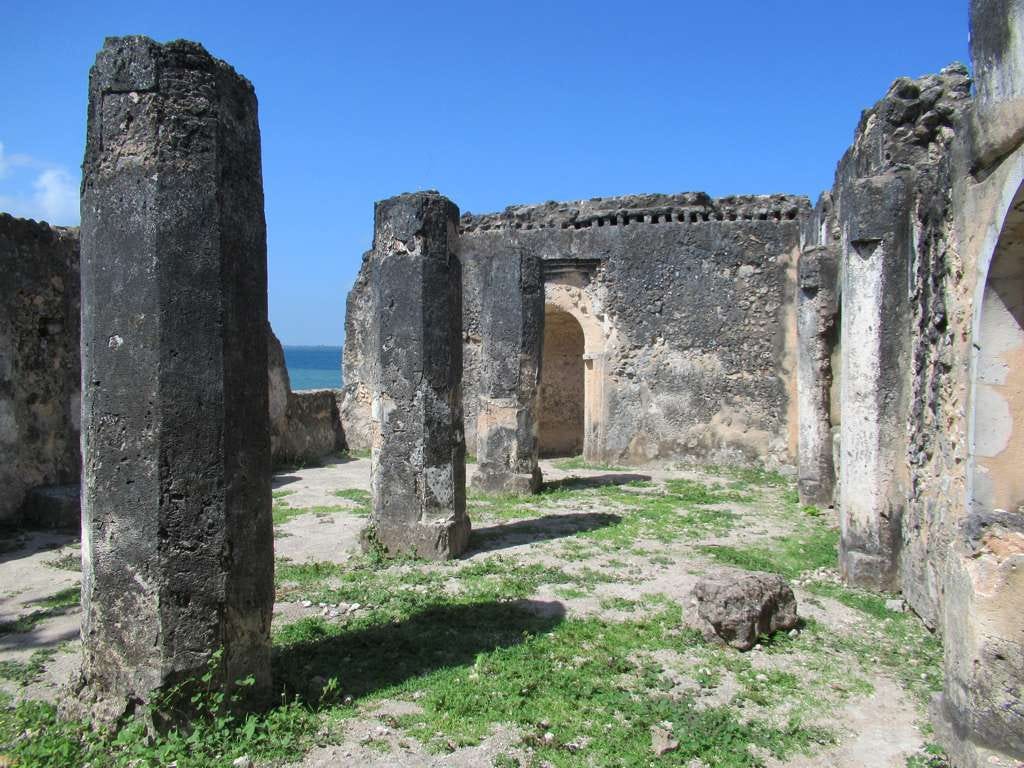
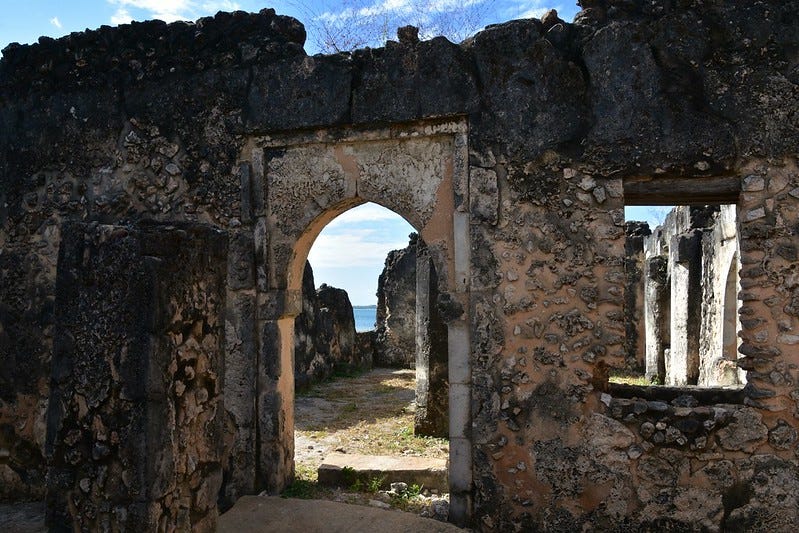
Malindi mosque at Kilwa, Tanzania.
The city of Malindi in the Indian Ocean world.
When the Portuguese fleet under Vasco de Gama first arrived on the Swahili coast in 1498, the Malindi sultan welcomed them as useful allies against its rival Mombasa, which had been attacked by the same fleet. The Sultan offered provisions for their four-month-long stay and an Indian pilot named Malemo Canaqua (not Ahmed Ibn Majid) to guide Vasco de Gama to India.26
According to Hernan Lopes de Castaneda’s description of Vasco Da Gama’s visit;
“The town is well built. The houses are of stone and mortar, handsome on the outside and furnished inside with many rich decorations and paintings. The natives of the land are dark-skinned, with woolly hair, but well disposed.
The foreign residents are Arabian Moors. The nobles wear clothes above the arms, and turbans with silk and gold tassels. Their arms are short swords, lances, daggers, and bows and arrows. The greater number of the merchants who live in this town are from Guzerat in the kingdom of Cambaya. Gold, silver, ambergris, ivory, tar, and wax are found in this country.”27
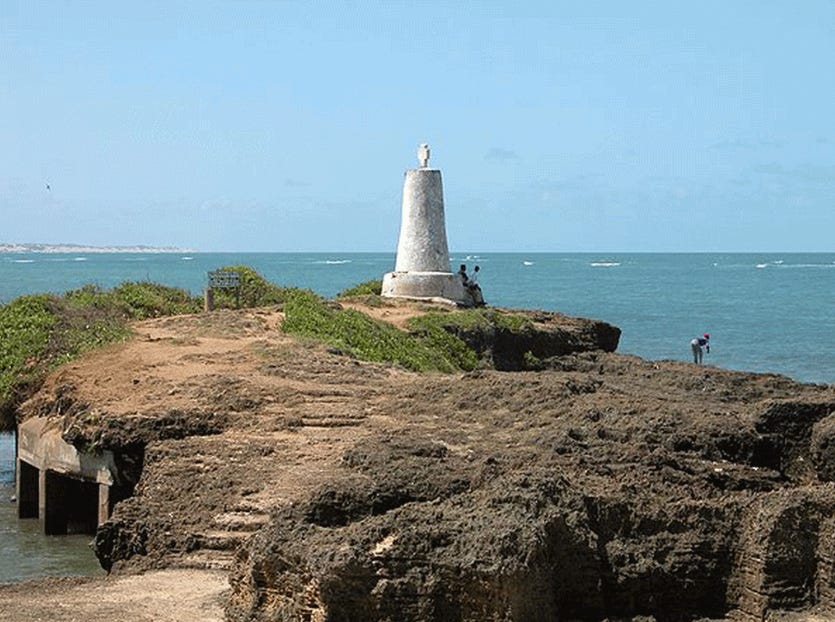
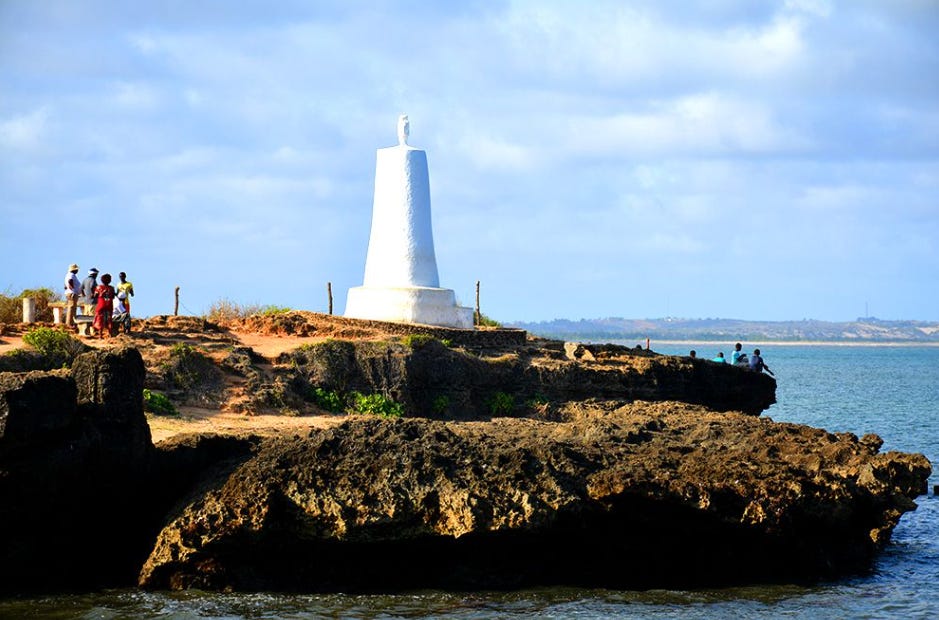
Vasco da Gama pillar at Malindi.
The alliance between Malindi and the Portuguese was mutually beneficial, providing a base of operations in exchange for military aid and a redirection of all coastal trade to Malindi.
Subsequent expeditions will reinforce this close collaboration and the advantage that Malindi could derive from it. The Malindi king sent his own envoy to Portugal in the company of Vasco Da Gama, and the envoy successfully returned with the fleet of Pedro Alvares Cabral in 1500, bringing letters from the King of Portugal.28
The sultan took the opportunity of Cabral’s fleet to India to complain about an incursion from Mombasa. In 1503, the city suffered another attack from Mombasa, and the Portuguese retaliated by blockading Mombasa. In 1505, the ruler of Mombasa was once again at war with Malindi, ostensibly over Malindi’s alliance with the Portuguese. Malindi defeated Mombasa, and the latter was sacked by the Portuguese forces under Francisco de Almeida, who also attacked Kilwa.29
According to Joao de Barros, there is little doubt that the innumerable conflicts between Swahili city-states predate the Portuguese arrival, and were caused by disputes over territorial claims which the Portuguese captains did not always perceive. Thus Mombasa and Malindi disputed in the early 16th century Kilifi and “Chiona”, dominions of Malindi according to its sovereign.30
In 1506, the Malindi sultan requested that the Portuguese fleet under Tristao da Cunha invade the neighboring city of Oja, described as a beautiful walled city (likely near the ruined site of Shaka). Contrary to the sultan’s claim that Oja resented Malindi for its alliance with the Portuguese, João de Barros suggests that the conflict predates the Portuguese incursion.31
In an exemplary letter concerning the attack on Mombasa in 1542, João de Sepúlveda reported that, “the King of Malindi asked me to destroy some neighboring place with whom he had been at war for many years, which I did.” In the late 16th century, Malindians not only used the Portuguese to subdue and extract tribute from the island of Pemba, but also settled the island with members of the ruling Malindian Sultan’s family.32
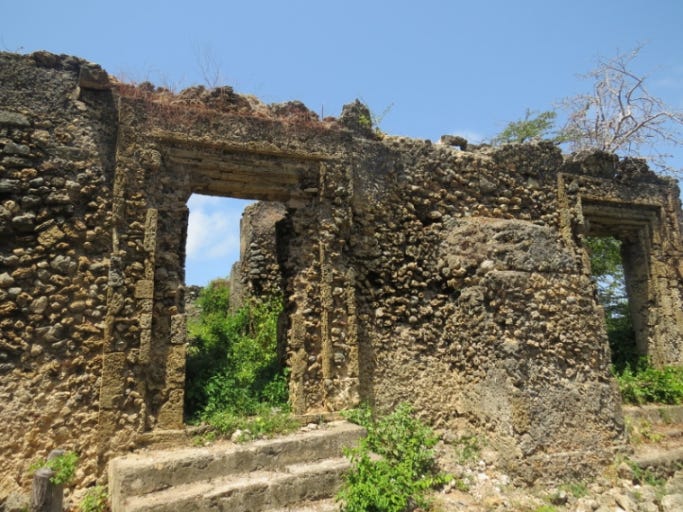
Ruins of Shaka, Kenya.
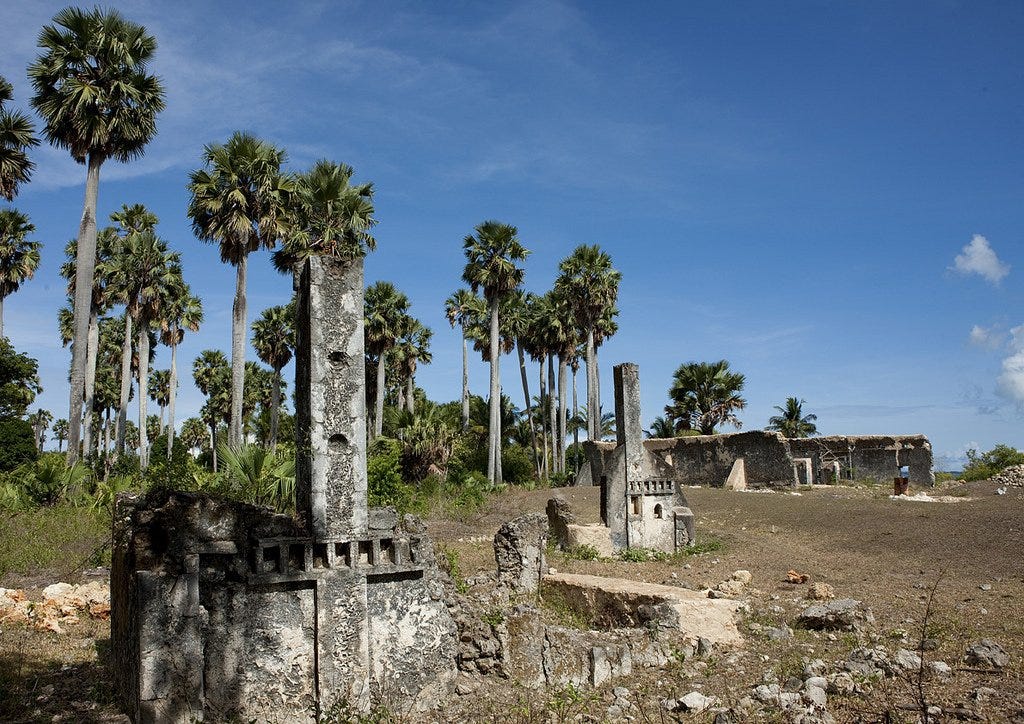
Pillar tombs and mosque (in background), Ras Mkumbuu, Pemba Island, Tanzania.
Malindi would remain the main base of operation for the Portuguese from 1509 to the founding of Fort Jesus at Mombasa in 1593.
A position of “captain of the coast of Malindi” (capittio da costa de Melinde) was put in place, and his office was mostly centered on issuing safe conducts to ships. The only military operations were all based on requests from Malindi and Zanzibar seeking to reduce Mombasa’s hegemony, but were often inconclusive given the lack of permanent garrisons before 1593.33
In 1585-9, the war between the Ottoman corsair Ali Bey with his allies at Mombasa and the Portuguese with Malindi ends with the defeat of the former, with assistance from the Segeju, a mainland African group.
The Segeju occupied Mombasa and Kilifi, apparently at the request of Malindi’s ally known as Watamu, and later handed Mombasa over to Malindi. The Malindi royal family then moved to the Portuguese fort at Mombasa, where it received a third of the revenue.34
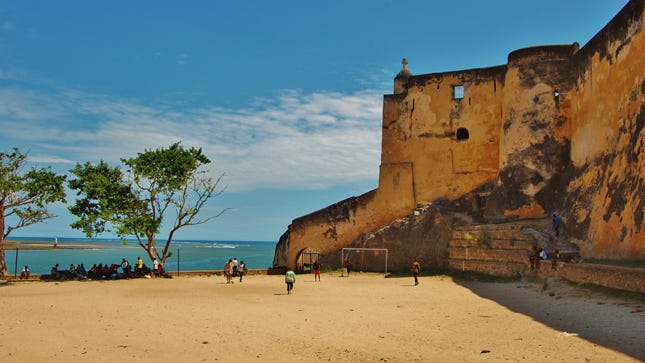
Fort Jesus, Mombasa, Kenya. Image by World History Encyclopedia
The extent of Malindi’s international trade is revealed in Portuguese documents from India during this period.
In 1511, Malindi was included among several Swahili cities whose merchants were reported in the city of Malacca (in Malaysia) by Tome Pires, alongside Kilwa and Mogadishu.35
In 1515, the king of Malindi, Sheikh “Wagerage,” asked for authorization to send one of his ships to Goa. In 1586, Sultan Muhammad of Malindi sent a ship to the Portuguese settlement of Bassein. In 1596, the same king wrote to Philip II of Spain requesting free passage to the Portuguese outposts in India and a trading mission to China.36
In 1606, the Franciscan friars met a mwalimu, described as an “old Muslim Negro” and a “Melindano” (a native of the coast of Malindi) who in 1597 had guided the ship of Francisco da Gama, the future viceroy of India, from Mombasa to Goa.37 A letter written in 1619 mentions muslims from Malindi passing through the capital of the Estado in Goa, India.38
In 1694, the leader of the Swahili community in Goa was Faki Wali wa Mwinyi Matano, who was titled “Governor of the Moors of Malindi.”39 These may have been the same group as the government pensioners found in records at Goa dated to the early 17th century, who were from East Africa and were called ‘noblemen of Malindi’.40
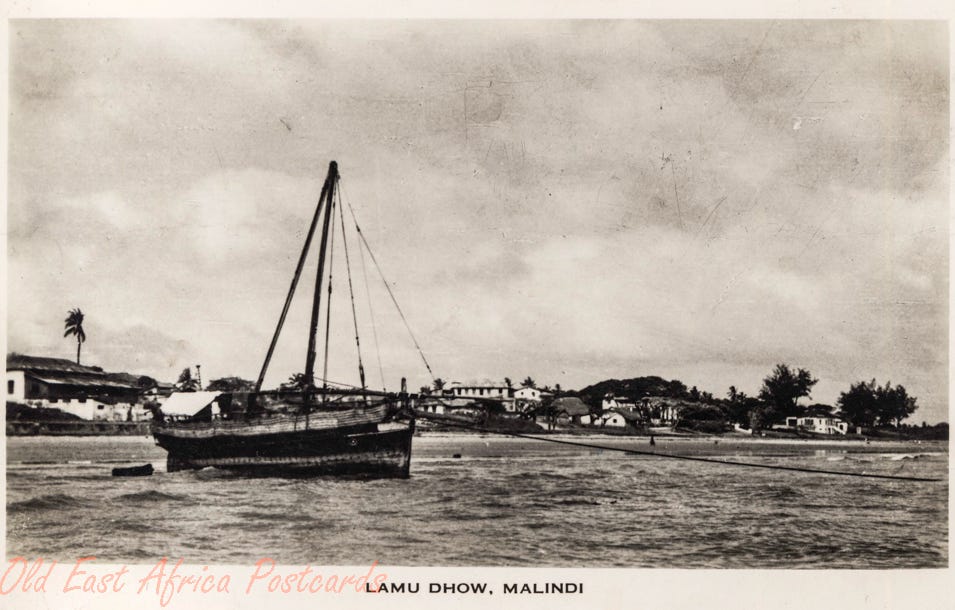
Lamu Dhow in Malindi.
In Malindi, the continued influx of foreign merchants seems not to have altered its disadvantaged commercial position relative to Mombasa.
A small community of Portuguese merchants, settlers and priests was established in the city during the early 16th century. These seem to have become acculturated into the Swahili mode of commercial transactions based on personal ties and exchanges conducted in private residences rather than large markets.41
Indian Merchants from the city of Cambay in Gujarat were found at Malindi and many other towns on the East African coast at the time of the Portuguese arrival.42
Cabral’s account from 1500 found three large ships from Cambay at Malindi, each with a capacity of 1/3 of a ton. A report from 1517-18 mentions that the merchants of Malindi “are great barterers, and deal in cloth, gold, ivory, and divers other wares with the Moors and Heathen of the great kingdom of Cambaya; and to their haven come every year many ships with cargoes of merchandise, from which they get great store of gold, ivory, and wax.”43
Besides the Portuguese and Indians, a report from 1608 mentions the arrival of Hadrimi sharifs from Yemen who were “pale and white, differing very much from the color of the Moors [ie; Swahili]”; and could be found “among the principal gentlemen of the whole coast of Malindi”44
Historical traditions mention intermarriages with the ruling family of Pate and how the latter then supplanted the Bauri, the Shirazi clan who formerly had ruled at Ozi and Malindi.45 The ascendant clan with links to Pate, who were known as the waVumba, after their main town that is today located at the Kenya/Tanzania border, subsumed several of the older towns in the region and reinvigorated external trade.46
The Sharifs, alongside the Swahili of Malindi, were involved in trade from northern Madagascar.47
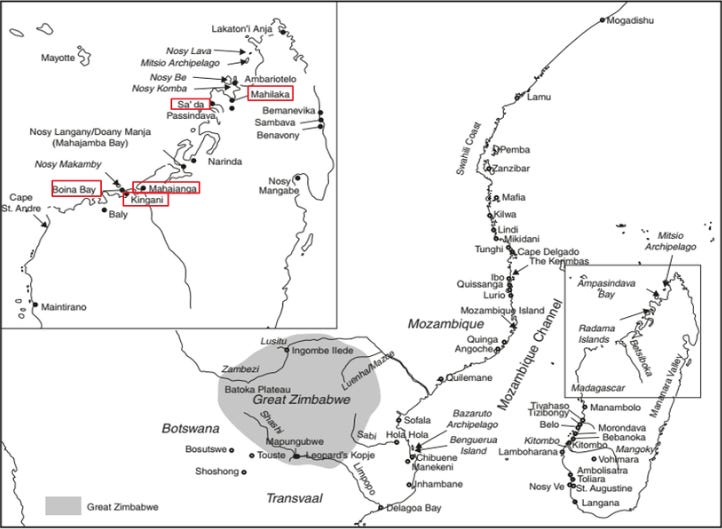
Northern Madagascar and the Swahili Coast. Map by G Campbell
In 1614, Luis Mariano observed that “The entire coast between Mazalagem and Sadia speak a language analogous to those of the Cafres, that is to say the language of the countries of Mozambique and of Malindi” [ie; Bantu-Swahili] and the inhabitants of Northern Madagascar “resemble in pigment and in culture the Negroes from Africa from whom they apparently derive” In the interior, the language of “Buque” [ie; Malagasy] is spoken which was “totally different from the African tongues and very similar to Malay”.48
Diogo do Couto (d. 1616), recounting the exploration of the coast by Lobo de Sousa in 1557, reported that: “The Moors of the coast of Malindi, who have come to Madagascar for a long time, have founded two cities there, where their descendents still live today under the authority of shaiks; one of these cities is built on an island located in the middle of a bay named Manzalage ... and the other is on the northeastern coast in another bay called Bimaro.”49
Note that Portuguese sources of the 16th and 17th centuries make an almost systematic distinction between the “Mouros da terra” (the native Muslims) or “Naturals da costa” (natives of the coast) or “povo Melindano” (people of the coast of Malindi) or Moors of Malindi, who were friendly to the Portuguese, and the “Mouros da Arabia” (the Moors of Arabia) who represented a competing religious and economic order, and were mostly associated with the city of Pate.50
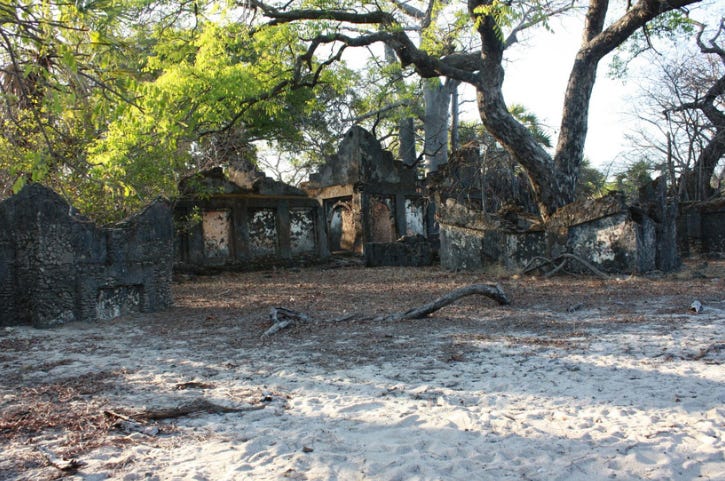
Tombs of Mazalagem, Antsoheribory Island, Madagascar.
[ see; The African settlement of Madagascar ]
Malindi after the 16th century: Decline, Invasion and Re-emergence.
Despite these developments, Malindi fell into decline during the 16th and 15th centuries. Its alliance with the Portuguese, while politically useful, hadn’t translated into significant commercial gains.
A small Portuguese “factory” (residence of a factor) set up to control outbound trade in 1509 was closed by 1512.51 Letters from the Malindi ruler addressed to the Portuguese king in 1520 complained about Portuguese captains along the coast who monopolised trade and captured passing ships.52
Malindi didn’t have a good harbour for large ships, and as early as 1569, the sea had encroached on large parts of the settlement, leaving it in ruins.53
In 1606, a visitor to Malindi reported that “the houses of which are lofty and raised from the ground, but are already very ancient. Their inhabitants are Moors who, although formerly rich, now live in utter poverty.”54
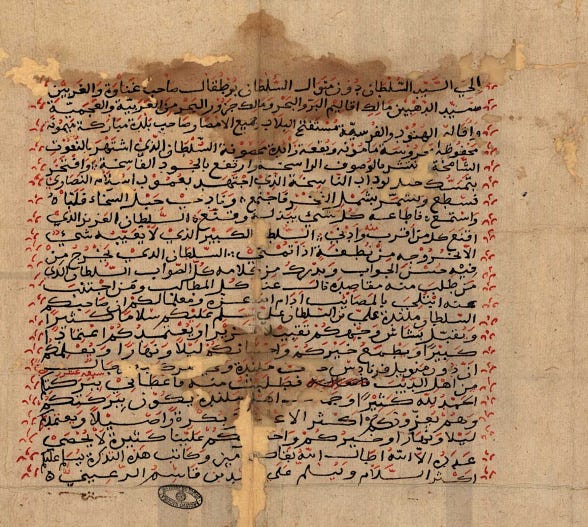
Letter by the Malindi Sultan ‘Ali bin ‘Ali, addressed to the Portuguese king Dom Manuel (r. 1495-1521). Arquivo Nacional Torre do Tombo, Lisbon.
In Mombasa, the importance of the Malindi dynasty declined after the rebellion of Prince Hassan in 1631. By 1661, an incursion against the Portuguese by an allied force from the island of Pate and the Omanis briefly forced the remaining population on Malindi to flee to Mombasa.55
By 1640, sections of the Segeju, who were still allies of the Malindi ruler, were settled in parts of the old town. They had since been acculturated to the typical coastal lifestyle, adopting Islam and the Swahili language.56
The Malindi diaspora remained prominent in the southern towns, and could be found in Mombasa, the Kerimba Islands of Mozambique, and in Zanzibar.57
In Kilwa, they served as secretaries, courtiers, and religious figures. An epitaph in Kilwa dated to March 1712 records a certain Mwinyi Said al-Malindi, who may have been part of the ‘Malindane’ amirs and courtiers of the king of Kilwa when the French visited the island in 1711.58
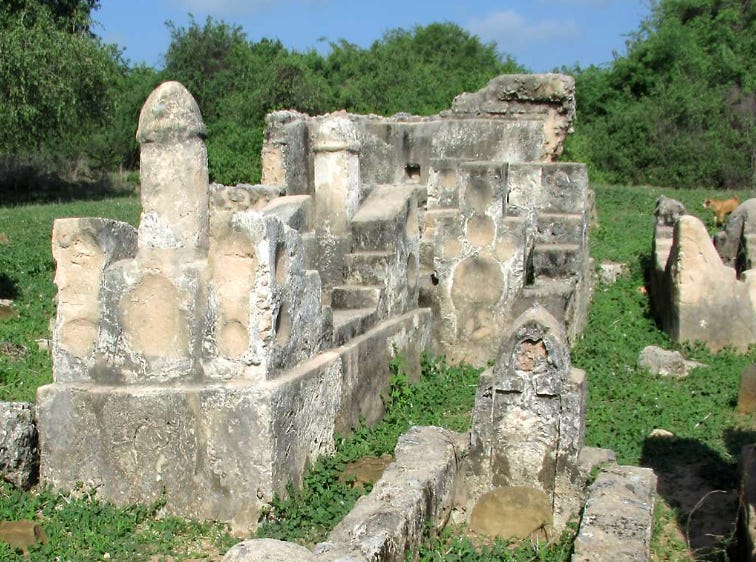
Malindi Cemetery, Kilwa Kisiwani, Tanzania.
Malindi didn’t contribute significantly to the defence of Fort Jesus when Portuguese rule collapsed in 1698 to a combined Omani-Swahili coalition, nor to the brief Portuguese restoration in 1728-9 when the Swahili turned against their erstwhile allies when their rule became overbearing.59
The old town was reportedly sacked by the Omani Arabs during the 1720s, and finally abandoned. By the time of the Dutch visit in 1776, their Swahili informants reported that Malindi was inhabited by “evil natives,” “very ill-natured people,” and that “even the Arabs did not dare to come there with their ships”.60
Half a century later, the narrative of the British Naval Captain William Fitzwilliam Owen, who reached Malindi in 1824 and inspected Vasco Da Gama’s pillar, corroborates the Dutch report and identifies the group which occupied the old town as the Oromo:
“The Sowhylese [Swahilis] the native inhabitants of the country, and the slaves, alone remained, who, hitherto trusting to others for their defence, were ill able to maintain the city against the attacks of such formidable enemies as the Galla, by whom there can be little doubt it was ultimately taken and destroyed; and as a descendant of the native kings of Maleenda [Malindi] was still living at Mombas, it is more than probable that those of the inhabitants who escaped fled to that place forprotection.
The territories of the ancient kingdom of Maleenda are at present totally occupied by the Galla, who are much dreaded by the Arabs in their coast navigation; and our pilot informed us that they never attempted to land, as the enmity of these savages is so great that they are constantly on the watch to entrap them.”61
About two decades later, in 1845, the German missionary Ludwig Krapf visited Malindi and described it as “a ruined and deserted town”. He also transcribed the historical tradition about the ruined town/place of ‘Shunguaya’ [Shungwaya] near Pate, the original home of the ‘Suahili’ [Swahili], from where they were forced to migrate southwards to Malindi and Mombasa following its invasion by the Oromo.62
The Shungwaya tradition refers to a period of social upheaval during the late 17th to mid 18th century that was associated with the expansion of southern Oromo speakers along the coast, but is also thought to represent long-standing relationships and conflicts on the northern Swahili coast.63
The old Swahili town at Malindi was refounded in the late 1850s or early 1860s under the direct encouragement of the Omani Sultan of Zanzibar specifically for the production of food grains for export. Its population quickly grew, mostly because of captives who came from Zanzibar.64
In the 1870s, both Malindi and Mambrui were settled by the Omanis, the Washela (Swahilis from Shela in Lamu), and Hadrami migrants and soon developed into the foremost cereal-producing region on the coast. Malindi and Mambrui together supported a population of about 9,000.65
Malindi came under British colonial rule by 1890, as did most of what would later become Kenya. Today, the old town is a tourist centre, while many of its historical sites have faded into the background of the modern city.
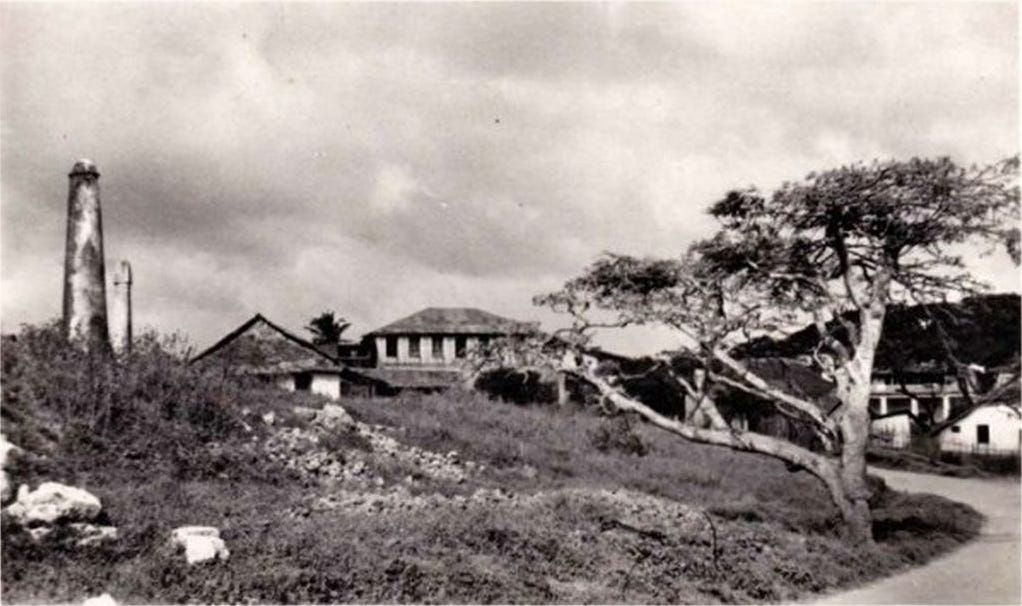
Malindi in the early 20th century.
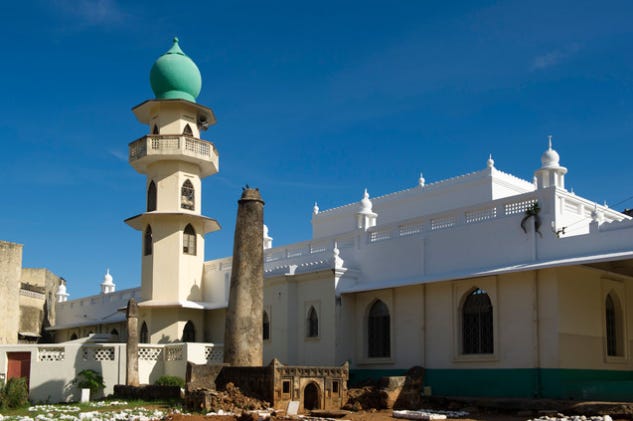
Ancient pillar tomb in front of the modern Juma mosque, Malindi, Kenya.
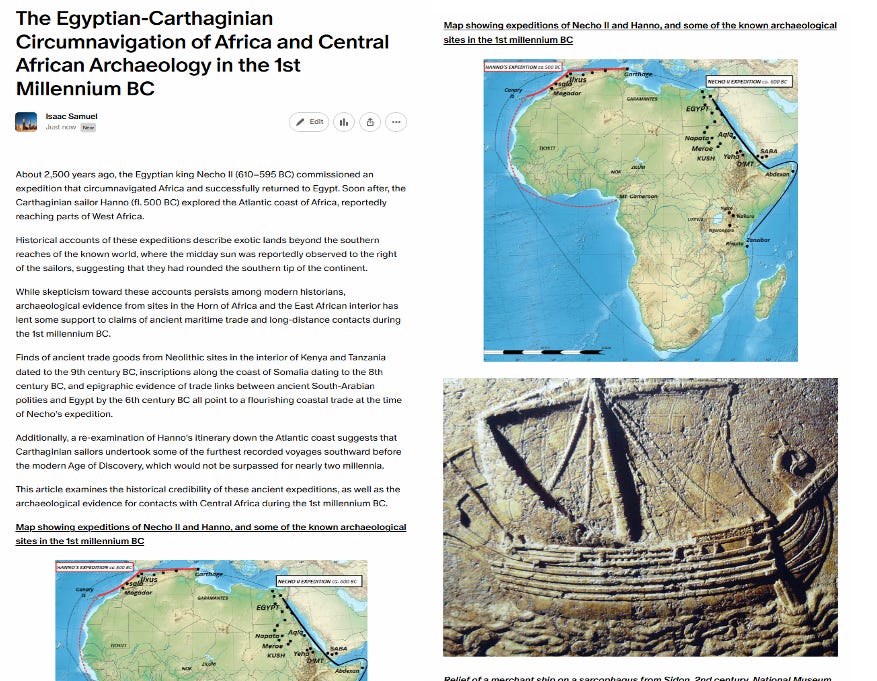
About 2,500 years ago, the Egyptian king Necho II (610–595 BC) commissioned an expedition that circumnavigated Africa and successfully returned to Egypt. Soon after, the Carthaginian sailor Hanno (fl. 500 BC) explored the Atlantic coast of Africa, reportedly reaching parts of West Africa.
My latest Patreon article examines the historical credibility of these ancient expeditions, as well as the archaeological evidence for contacts with Central Africa during the 1st millennium BC.
Please subscribe to read more about it here;
The East African Coast: Select Documents from the First to the Earlier Nineteenth Century by G. S. P. Freeman-Grenville pg 20
The East African Coast: Select Documents from the First to the Earlier Nineteenth Century by G. S. P. Freeman-Grenville pg 20, 23. The Swahili: The Social Landscape of a Mercantile Society by Mark Chatwin Horton pg 177. Swahili origins: Swahili culture & the Shungwaya phenomenon. by: Allen, J. de V. pg 94
A History of Overseas Chinese in Africa to 1911 by Anshan Li 33-35 43-46
Empires of the Monsoon: A History of the Indian Ocean and Its Invaders By Richard Hall, pg 84-86. China and East Africa: Ancient Ties, Contemporary Flows by Chapurukha M. Kusimba et al, pg 109, 237. Worlds of the Indian Ocean, Vol. 2, by Philippe Beaujard pg 461-462, 493
The Swahili: The Social Landscape of a Mercantile Society by Mark Chatwin Horton pg 136
The Swahili: The Social Landscape of a Mercantile Society by Mark Chatwin Horton pg 137. An Outport for Gedi?—Archaeological Survey in Mida Creek, Kenya by Caesar Bita and Wes Forsythe
The Swahili World, edited by Stephanie Wynne-Jones, Adria LaViolette pg 206-207
The Swahili World, edited By Stephanie Wynne-Jones, Adria LaViolette pg 207-213
The Swahili World, edited By Stephanie Wynne-Jones, Adria LaViolette pg 207, 212-213
The Monumental Architecture and Archaeology of the Central and Southern Kenya Coast By Thomas H Wilson, pg 113-116
Men and Monuments on the East African Coast, by James S. Kirkman. pg 66
Gedi, une cité portuaire swahilie. Islam médiéval en Afrique orientale by Stephane Pradines. Beyond Commoner and Elite in Swahili Society: Re-Examination of Archaeological Materials from Gede, Kenya by Matthew Pawlowicz
Eastern Approaches - East Africa and the Orient: cultural syntheses in pre-colonial times. Edited by H. Neville Chittick and Robert I. Rotberg, pg 237-238. The Swahili World, Edited By Stephanie Wynne-Jones, Adria LaViolette pg 222
Swahili pre-modern warfare and violence in the Indian Ocean by Stephane Pradines, pg 22
An Outport for Gedi?—Archaeological Survey in Mida Creek, Kenya by Caesar Bita and Wes Forsythe
Swahili origins: Swahili culture & the Shungwaya phenomenon. by: Allen, J. de V. pg 204-205
Swahili Domestic Architecture, between Warehouses and Palaces by Stephane Pradines, pg 137, 173-174
A journal of the first voyage of Vasco da Gama 1497 - 1499, edited by Ernst Georg Ravenstein, Hakluyt Society, 1898, pg 44, n. 1
A Handful of Swahili Coast Letters, 1500–1520* By Sanjay Subrahmanyam and Muzaffar Alam pg 272
The Portuguese Period in East Africa. By Justus Strandes pg 165
Les cités-États swahili de l’archipel de Lamu, 1585-1810 : dynamiques endogènes, dynamiques exogènes, by Thomas Vernet pg 52. The Swahili: The Social Landscape of a Mercantile Society by Mark Chatwin Horton pg 166.
Worlds of the Indian Ocean, Vol. 2, by Philippe Beaujard pg 550
Les cités-États swahili de l’archipel de Lamu, 1585-1810 : dynamiques endogènes, dynamiques exogènes, by Thomas Vernet pg 61
The East African Coast: Select Documents from the First to the Earlier Nineteenth Century by G. S. P. Freeman-Grenville pg 49, 222. The French at Kilwa Island: An Episode in Eighteenth-century East African History by G. S. P. Freeman-Grenville pg 35
The French at Kilwa Island: An Episode in Eighteenth-century East African History by G. S. P. Freeman-Grenville pg 35, 43. Kilwa: a history of the ancient Swahili town with a guide to the monuments of Kilwa Kisiwani and adjacent islands pg 142
Les cités-États swahili de l’archipel de Lamu, 1585-1810 by Thomas Vernet pg 63. Records of South-Eastern Africa collected in various libraries and archive departments in Europe, Vol. 3, by George McCall Theal. pg 84-86
Records of South-Eastern Africa collected in various libraries and archive departments in Europe, Vol. 3, by George McCall Theal. pg 83
Records of South-Eastern Africa collected in various libraries and archive departments in Europe, Vol. 3, by George McCall Theal. pg 85, 88, 91, 95
Les cités-États swahili de l’archipel de Lamu, 1585-1810 by Thomas Vernet pg 64. The East African Coast: Select Documents from the First to the Earlier Nineteenth Century by G. S. P. Freeman-Grenville pg 111
Les cités-États swahili de l’archipel de Lamu, 1585-1810 by Thomas Vernet pg 64
Les cités-États swahili de l’archipel de Lamu, 1585-1810 by Thomas Vernet pg 51, 65. Swahili origins: Swahili culture & the Shungwaya phenomenon. by: Allen, J. de V. pg 150
Portuguese Conceptual Categories and the “Other” Encounter on the Swahili Coast by Jeremy Prestholdt pg 395. The Portuguese Period in East Africa. By Justus Strandes pg 165-168
Les cités-États swahili de l’archipel de Lamu, 1585-1810 by Thomas Vernet pg 81, 83-86. The Portuguese Period in East Africa. By Justus Strandes pg 114-115
Les cités-États swahili de l’archipel de Lamu, 1585-1810 by Thomas Vernet pg 98-120, 125, 261. Swahili origins: Swahili culture & the Shungwaya phenomenon. by: Allen, J. de V. pg 100-104. The Portuguese Period in East Africa. By Justus Strandes pg 139-140, 146
The East African Coast: Select Documents from the First to the Earlier Nineteenth Century by G. S. P. Freeman-Grenville pg 126
East African Travelers and Traders in the Indian Ocean by Thomas Vernet pg 167, 185.
East African Travelers and Traders in the Indian Ocean by Thomas Vernet pg 184, 197, n.56
Les cités-États swahili de l’archipel de Lamu, 1585-1810 by Thomas Vernet pg 152-153
Les cités-États swahili de l’archipel de Lamu, 1585-1810 by Thomas Vernet 364, n.53. East African Travelers and Traders in the Indian Ocean by Thomas Vernet pg 188.
The Portuguese Period in East Africa. By Justus Strandes pg 242. East African Travelers and Traders in the Indian Ocean by Thomas Vernet pg 188
Les cités-États swahili de l’archipel de Lamu, 1585-1810 by Thomas Vernet pg 82
Gujarat and the Trade of East Africa, c. 1500-1800 by Edward A. Alpers
The East African Coast: Select Documents from the First to the Earlier Nineteenth Century by G. S. P. Freeman-Grenville pg 61, 132
Les cités-États swahili de l’archipel de Lamu, 1585-1810 by Thomas Vernet pg 168, n. 44, 196)
Eastern Africa and the Indian Ocean to 1800: Reviewing Relations in Historical Perspective by Randall L. Pouwels 407, 421
The “Shirazi” problem in East African coastal history by Allen, J. de V. pg 15-24
Les cités-États swahili de l’archipel de Lamu, 1585-1810 by Thomas Vernet pg 173, 179
Worlds of the Indian Ocean, Vol. 2, by Philippe Beaujard pg 584
Worlds of the Indian Ocean, Vol. 2, by Philippe Beaujard pg 614
Les cités-États swahili de l’archipel de Lamu, 1585-1810 by Thomas Vernet pg 6-7, 196
Swahili origins: Swahili culture & the Shungwaya phenomenon. by: Allen, J. de V. pg 207
Port cities and intruders by Michael Pearson, pg 136. The Portuguese Period in East Africa. By Justus Strandes pg 98. A Handful of Swahili Coast Letters, 1500–1520* By Sanjay Subrahmanyam and Muzaffar Alam pg 269
Records of South-Eastern Africa collected in various libraries and archive departments in Europe, Vol. 3, by George McCall Theal. pg 213-214
The East African Coast: Select Documents from the First to the Earlier Nineteenth Century by G. S. P. Freeman-Grenville pg 157
Les cités-États swahili de l’archipel de Lamu, 1585-1810 by Thomas Vernet pg 307-308
The Portuguese Period in East Africa. By Justus Strandes pg 304
Ivory and Slaves: Changing Pattern of International Trade in East Central Africa to the Later Nineteenth Century, by Edward A. Alpers pg 74. Horn and Crescent by Randall Pouwels, pg 82, 172
The French at Kilwa Island: An Episode in Eighteenth-century East African History by G. S. P. Freeman-Grenville pg 43-47
Fort Jesus and the Portuguese in Mombasa, 1593-1729 By Charles Ralph Boxer, Carlos de Azevedo
The Dutch on the Swahili Coast, 1776-1778: Two Slaving Journals, Part I by Robert Ross and Fk. G. Holtzappel pg 308, 341
Narrative of Voyages to Explore the Shores of Africa, Arabia, and Madagascar by William Fitzwilliam Owen, pg 242
Travels, Researches, and Missionary Labors during an Eighteen Years’ Residence in Eastern Africa by Johann Ludwig Krapf, published by Ticknor and Fields 1860, pg 124-125, 148-149
Horn and Crescent by Randall Pouwels pg 10-15. Swahili origins by James de Vere Allen, The Shirazi problem in East African coastal history by James de Vere Allen pg 12-14
Slaves, Spices, & Ivory in Zanzibar: Integration of an East African Commercial Empire Into the World Economy, 1770-1873 by Abdul Sheriff, pg 71
Horn and Crescent by Randall Pouwels pg 114
This was so educational...I didn't even know half the things here, and I'm Kenyan. It really does show however that the idea that colonization brought advancement was false because advancements were there established through trade and ally-ship. There were industries and working (albeit at war) governments too. Such a good read. Honored to have found it.
Fascinating!