

During the Middle Ages, West Africa was one of the major suppliers of gold, much of which passed through the city of Sijilmasa in Morocco.
Despite its seemingly peripheral location, Sijilmasa was central to the story of the medieval global economy, connecting the Mediterranean and Islamic worlds.
Founded as an independent city-state in the 8th century, Sijilmasa later became the principal gold-minting center for successive empires of north-western Africa.
For over seven centuries, this cosmopolitan hub maintained control over a significant portion of the supply routes for the precious metal and established itself at the crossroads of intra-African commerce and cultural exchange.
This essay outlines the history of Sijilmasa and examines its significance within the economic networks of the medieval empires of North-Western Africa.
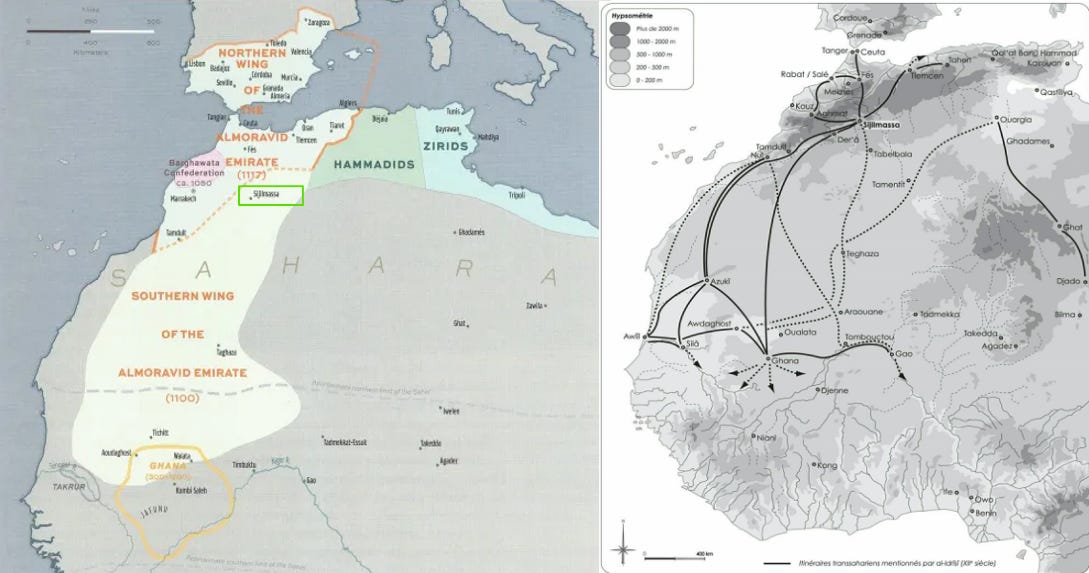
Map showing the empires of North-Western Africa and Trade routes across the Sahara.
Support AfricanHistoryExtra by becoming a member of our Patreon community, subscribe here to read more about African history, download free books, and keep this newsletter free for all:
The early history of medieval Sijilmasa (ca. 500-790 CE)
Medieval Sijilmasa was located in the Tafilalt basin of eastern Morocco, an oasis filled with alluvial sediments eroded from the Atlas Mountains by the Ziz and the Gheris rivers.
Archaeological excavations at the site suggest a long occupation before the founding of the medieval town. These include occupation sites beneath the central mosque, dated to the mid-1st millennium CE, as well as substantial pre-Islamic cemeteries and hillfort sites in the vicinity of the Medieval city.1
Surveys on the hilltop sites revealed that they were likely permanent dwellings, each one containing several structures of unusual design and dimensions, which can be identified as collective places or monuments of power. Their proximity to the Ziz River would have allowed some agricultural cultivation of the riverbed ceramic artefacts collected on the sites suggest a pre-Islamic dating2
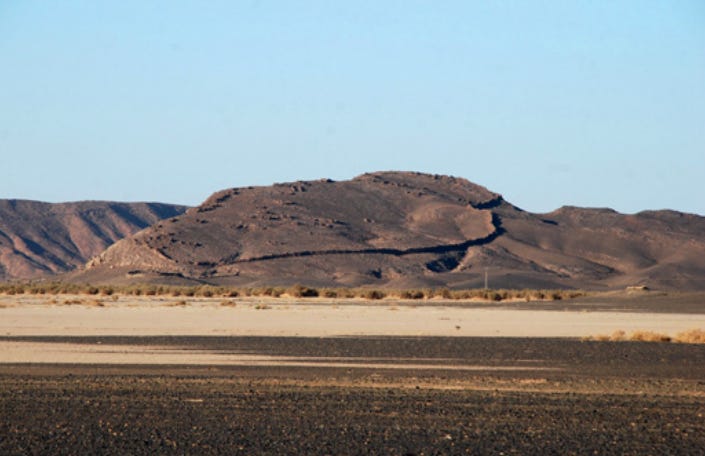
Jabal Afilal and its pre-Islamic settlement on the top of a hill, view from north-east. Image by C. Capel.
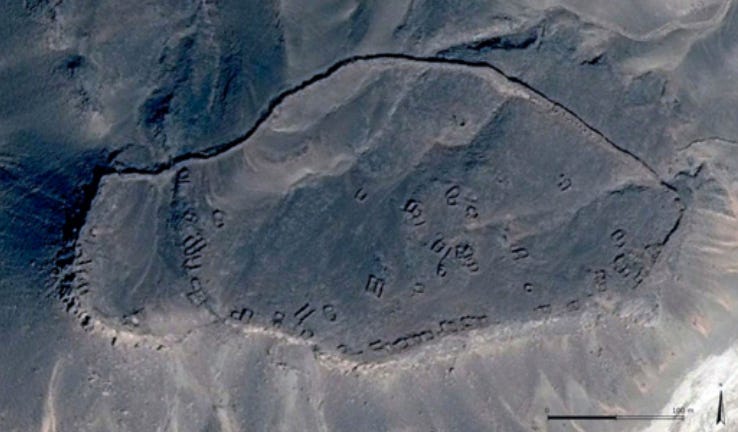
Aerial view of Jabal Afilal, surrounded by cliffs and overlooking Wadi Ziz. Image by C. Capel.
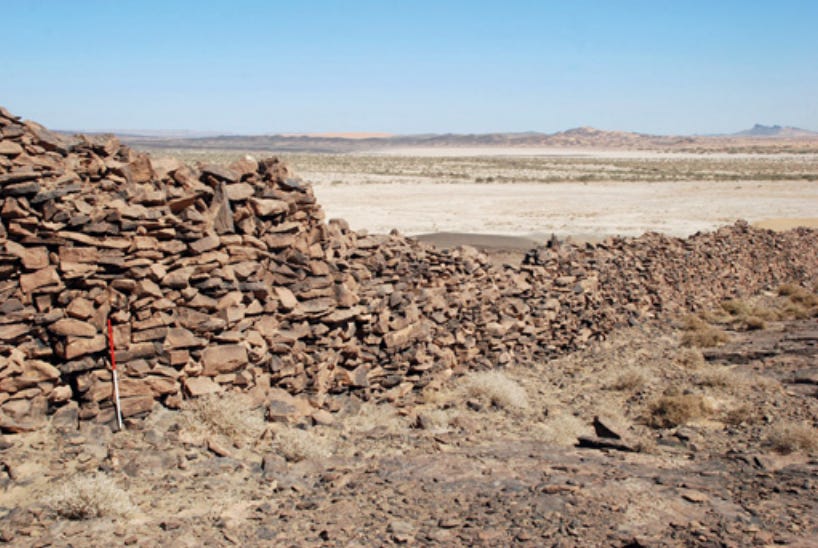
The northern wall of the Jabal Afilal settlement. Image by C. Capel.
Historical tradition dates the origin of the medieval caravan city to the beginning of the 8th century.
According to the 11th-century Andalusian historian al-Bakrī, Sijilmāsa was established in 757 by a section of the Miknasa, a section of the Zenata Berbers/Imazighen, who gathered scattered Saharan pastoral communities under the belief in the khariji sect of Islam.3 Its early history is associated with Abu al-Qasim Samgu ibn Wasul, a nomadic shepherd of the Miknasa, and his grandson Midrar, a blacksmith from Andalusia, after whom the dynasty is named.
“The Bani Midrar governed Sijilmasa for 160 years. The first of them was Abuʾl-Qasim ibn Samgu ibn Wasul al-Miknasi. . . . He had met, in Ifriqiya, Ikrima the freedman (mawla) of Ibn Abbas and heard [hadith] from him. He was possessed of flocks and often used to seek pasture on the site of Sijilmasa. A group of Sufriya joined him, and when they had reached 40 men [in number] they made Isa ibn Mazid the Black their leader and put him in charge of their affairs and began to build Sijilmasa. This was in 140/757–758.”4
The city of Sijilmāsa emerged in the context of a wider upheaval in north-west Africa marked by the Berber revolt of 740-742, and the rise of the Kharijite-Sufrite movements. In this period, the area witnessed both a widespread adoption of Islam and a dynamic of political renewal. The uprising was sparked by punitive taxation and discriminatory treatment of the Imazighen by Arab (Umayyad) governors.5
Consequently, the Miknasa, Ghumara, and other groups rebelled under the banner of Kharijism, which preached that all Muslims were equal, irrespective of tribe or ethnicity. This upheaval resulted in the creation of new political dynasties and the development of large urban centres at Nakūr, Fās, Sijilmasa, and Āghmat between the 8th and 9th centuries.6
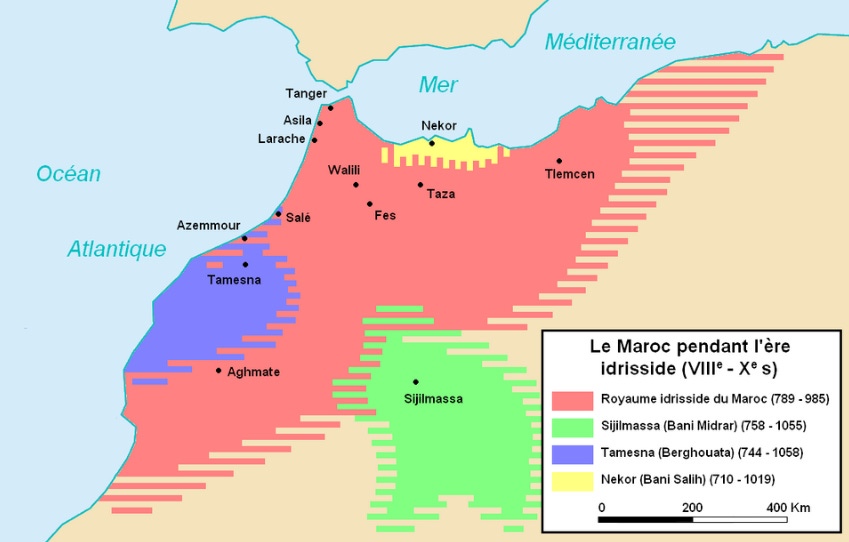
Medieval Morocco between the 8th and 11th centuries, showing the cities of Sijilmasa, Fes, and Nakur. Wikimedia Commons.
The polity at Sijilmasa was initially established as an elective imamate in accordance with the egalitarian doctrine of the Khariji.
al-Bakrī’s account notes that forty men formed the first group of sufrites at Sijilmasa, who elected ʽĪsā Mazyad al-Aswad “the black”, an imam who was a highly respected figure among the Kharijites, according to Ibn Khaldūn. But after a reign of 15 years, al-Aswad fell out with his supporters and was deposed in favour of ibn Wasul, who reigned for 13 years until he died in 784.7
The explanation for why al-Aswad was chosen over Ibn Wasul isn’t provided. Although this is traditionally attributed to the egalitarian doctrine of the Kharijites, this founding group appears to have quickly abandoned such doctrines when Wasul would later be succeeded by his son, thus creating a dynasty.
According to the archaeologist Chloé Capel (2020), the name of Abu al-Qasim Samgu ibn Wasul, whose ancestry appears predominantly Arab (the patronymic ibn Wasul and the kunya Abu al-Qasim), also contains the Amazigh term: Samgu, whose root SMX, means slave/servant. She argues that Ibn Wasul’s status may explain why Al-Aswad was chosen over him, rather than the Kharijite doctrine of egalitarianism.8
Capel (2017) argues that Sultan ʽĪsā Mazyad al-Aswad could have been part of the pre-existing population that had been settled in the Tafilalt for several generations before the founding of Sijilmasa. And that he was elected as the first chief of the young Khariji community because he had an important position in the pre-existing system, which the sufrites initially sought to preserve, before ultimately subsuming it.9
Al-Bakrī’s account mentions that the overthrow of al-Aswad was instigated by Abd al-Khattab, who referred to the sultan derisively as Sūdān. (in this context meaning, ‘black’, non-Muslim). Al-Khattab was an Arab belonging to a Yemeni tribe and an Ibadi imam who led a major revolt of the Imazighen against the Abbasid Caliphate. He was elected as the leader of the short-lived Ibadi Imamate of Tripolitania in 757, before he was defeated and killed in 761 by the Abbasids.10
So he would have been dead for over 10 years before Al-Aswad was overthrown after a relatively long reign of 15 years (i.e., in 757-771/2). This complicates al-Bakri’s account.
The historian Mahmoud Abd al-Raziq (1985) interpreted the election of al-Aswad as an ethnic rivalry between the pre-existing “black” population and the incoming Miknasa Berbers. But the historian Paul M. Love Jr (2010) rejects this false dichotomy of ‘black’ vs ‘Berber’, arguing that identities in medieval Sijilmasa would have been based on tribal affiliation rather than ethnicity. He cites Ibn Khaldun’s account that the Miknasa converted according to the religious affiliation of their tribal leadership. And that while differences in physical appearance may have contributed to disputes, their overall importance during this period seems to have been minimal.11
**The historiography of “race” in North Africa continues to pose challenges for modern scholars seeking to understand how such ideas were interpreted in classical times,12 in late antiquity13and in the early modern era.14
This topic will be examined in greater detail in future essays. Please check the footnotes 12 & 13 for a brief outline of scholarly debates regarding this topic.**
The Golden Age of medieval Sijilmasa under the Midradids (791-958 CE)
Ibn Wasul was succeeded by his son Abu al-Wezir al-Yasʿa, who was later violently deposed in 791 by his brother Al-Yasʿa. According to al-Bakrī, Sultan Al-Yasʿa was considered a despot, “impetuous, harsh, and violent”. He “subjugated all the Berbers who dared resist him,” “levied a fifth of the produce from the mines of Derä” and “had the walls of Sijilmasa built”. 15
al-Bakrī’s description of Sijilmasa mentions houses with gardens, a city wall built with stone at the base and mudbrick at the top, as well as baths and wells in the city.16 This account has been partially corroborated by excavations that uncovered a number of elite structures as well as several hydraulic features in the medieval city.17
While the structures are poorly preserved, owing to their long abandonment and looting, the excavations have shown that the site wasn’t a singularly built settlement enclosed within a wall since its foundation, but instead represented several successive urban settlements that occupied different parts of the site.18
Archaeological surveys of the medieval city indicate that the course of Wadi Ziz was artificially diverted for agricultural purposes, forming a secondary channel along which the old city of Sijilmasa was settled. Chloé Capel suggests that the cutting of Ziz occurred in the 9th century, during the reign of al-Yasaʿ, and was likely connected to his construction of the city walls, or possibly, the shifting of Sijilmasa itself to the location of medieval ruins.19
Curiously, there are several oral traditions from Sijilmasa about a despotic sultan who built the city walls and attempted to control the water supply of the Ziz River. One set of traditions recounts that Sijilmasa’s fields were enclosed by a circuit wall during his reign to confine the city’s population within the walls. This ruler is commonly identified as Sultan al-Khal, “Black Sultan,” suggesting that the oral traditions conflated Sultan Al-Yasʿa with Sultan ʽĪsā Mazyad al-Aswad, “the Black.”20
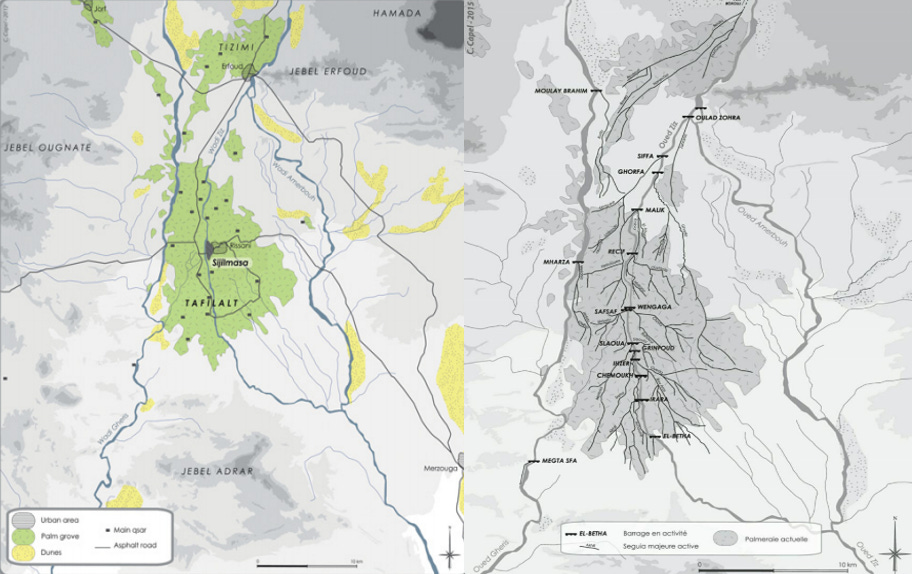
Map of the current irrigation network of Tāfīlālt, largely built on a scheme setup in medieval times, even before the foundation of Sijilmāsa (in the centre of the oasis), whose location is based on it. Image by C. Capel.21
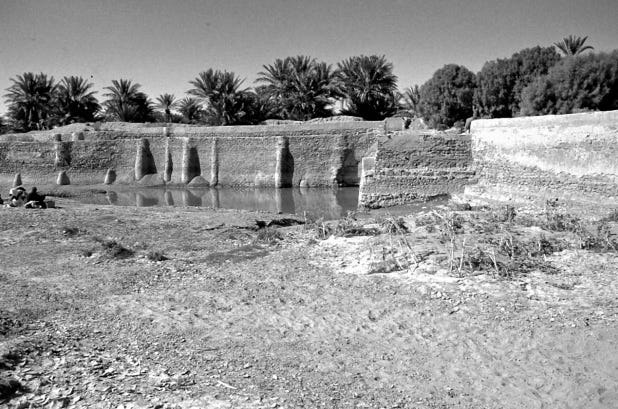
The Bou Himara dam along the Ziz river. Image by R. A. Messier, J. A. Miller
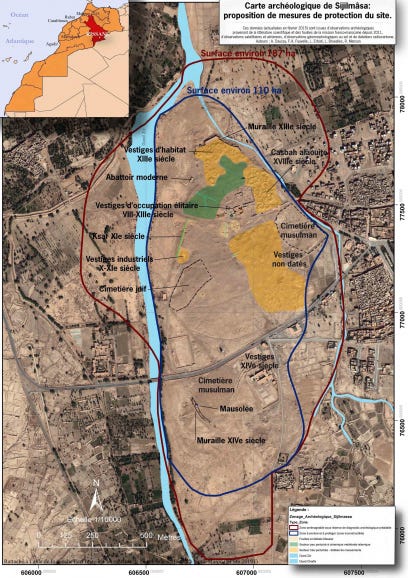
Archaeological map of the Siğilmāsa site. Map by Thomas Soubira
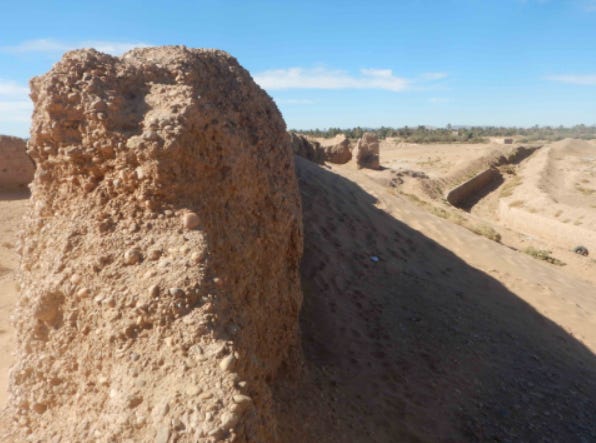
View of the 12th-13th century wall. Image by Thomas Soubira
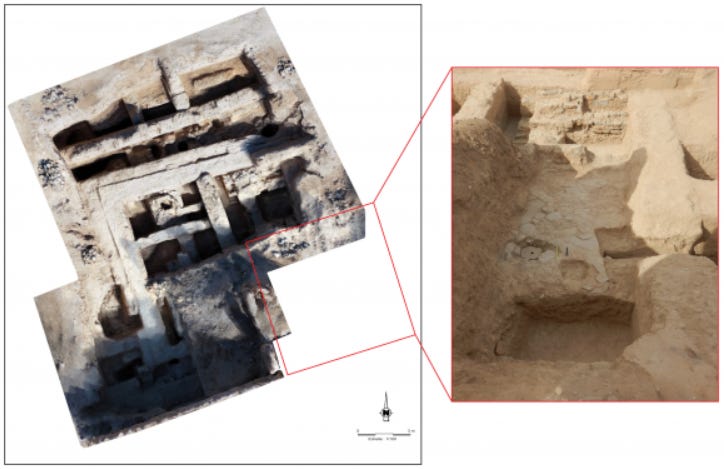
Remains of a house in Sijilmasa with a water supply structure. Image by Thomas Soubira
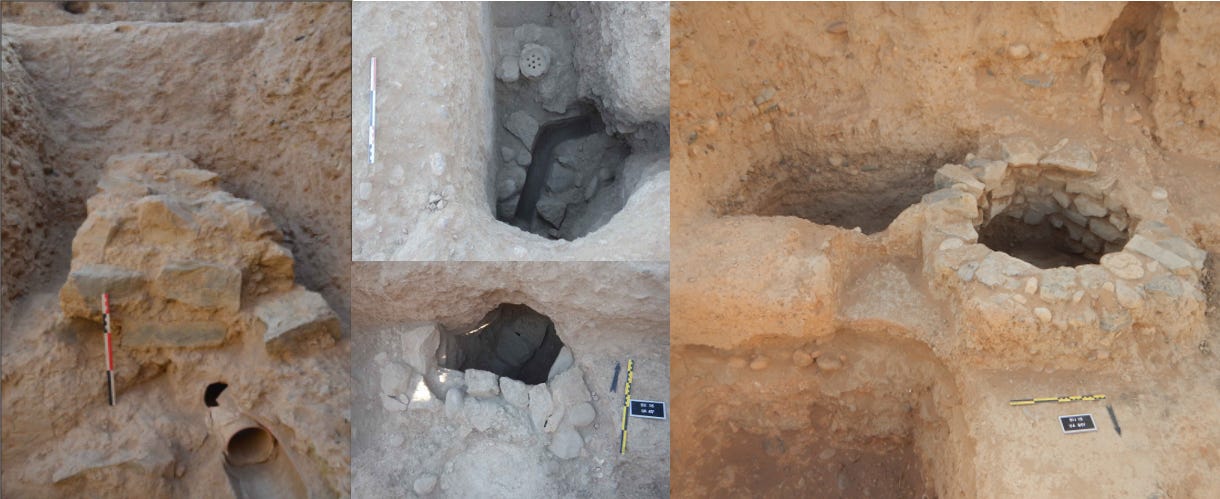
water supply and sanitary features: (left) pipeline, (center) manhole and drain, (right) cistern. Images by Image by Thomas Soubira.
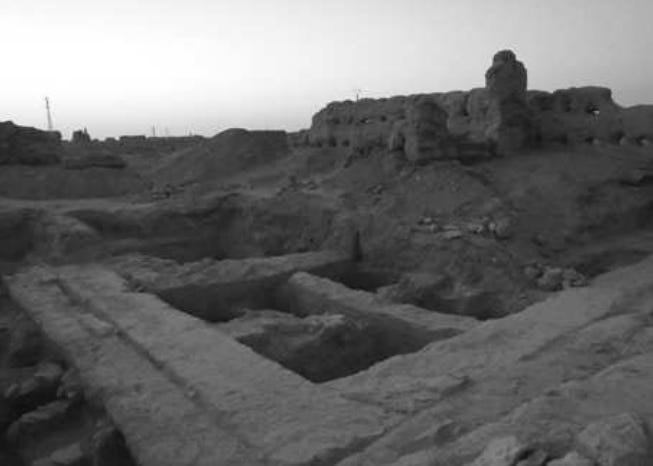
Concrete lime tank in sector A4. Image by Thomas Soubira
Al-Yasʿa died in 823/4, and was succeeded by his son Midrar, whose reign was beset by a violent succession dispute involving his sons. It is this sultan whose name was retained for the dynasty; the Midrārids (or Banū Midrār). Midrar was briefly overthrown by his son, restored, and ultimately deposed by the people of Sijilmasa for attempting to hand over power to Ibn er-Rostemiya, an outsider from the Rustamid dynasty (of Tahret, Algeria). They instead chose his son Ibn Thakis el-Amir as their new leader, who would rule until 877 and establish a relatively stable line of succession for about a century.22
During the 10th century, the wealth and importance of Sijilimasa rivaled those of other major cities in the Maghreb, such as Kairouan (Tunisia). It thus became the target of a campaign by the Ismaili Fatimids in 910, briefly became a vassal, rebelled, and was invaded again in 958. In the intervening period, one of the city’s last independent rulers, Mohammed ibn al-Fath, abandoned Kharijism in favour of Malikism. He assumed the title of Amir al-Mu’min (“Commander of the Faithful”) and minted coins in this capacity.23
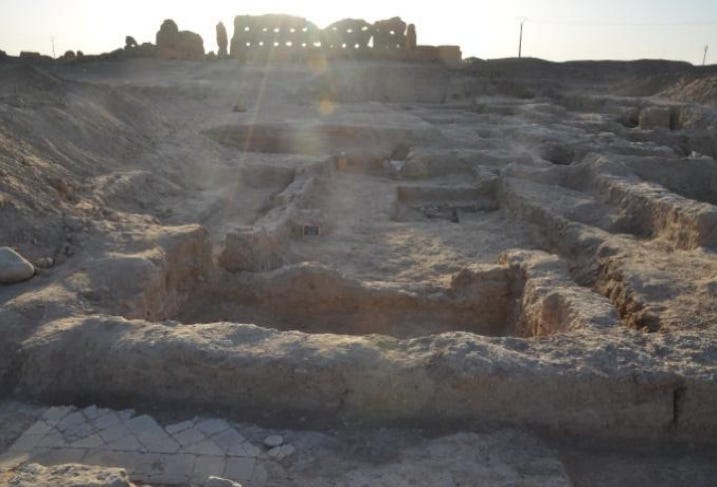
Sijilmâsa. In the foreground: terracotta paving belonging to the upper occupation level of the archaeological sequence (13th century). In the background: modern mud-brick walls (mid-15th to mid-17th centuries). Image by R. Mensan.
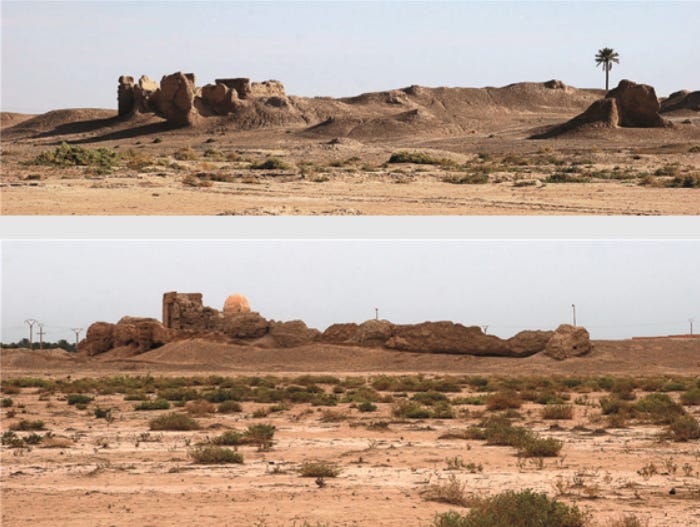
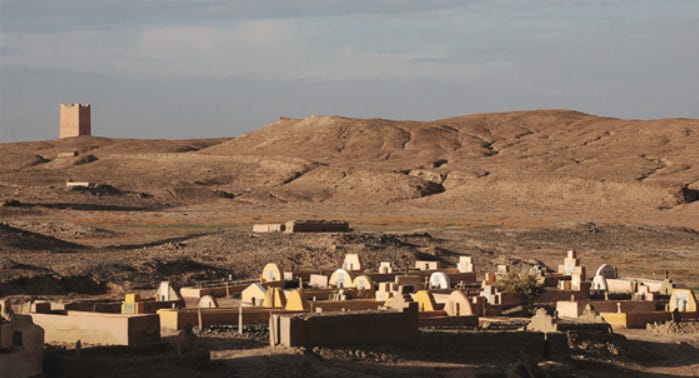
Ruins of medieval Sijilmasa. Images by C. Capel.24
Trans-Saharan Gold trade in medieval Sijilmasa during the Fatimid and Umayyad period (958-1055)
At the end of the 10th century, Sijilmasa became the main caravan stopover on the route extending south to Āwdāghust and the Ghana empire, which controlled the routes to West Africa’s gold mines.
The city’s prosperity was such that from 922 to 934, the province of Sijilmâsa brought 400,000 dinars in taxes to the Fatimid treasury in Kairouan (Tunisia), half the total revenue that the Maghreb brought to that treasury.25
This account comes from Ibn Hawqal, who visited Sijilmasa and Awdaghust in 951: “I saw a bill in Awdaghust certifying a debt owed to one of [the people of Sijilmasa] by one of the traders of Awdaghust, who was himself of the people of Sijilmasa, in the sum of 42,000 dinars. I have never seen or heard anything comparable to this story in the East.”26
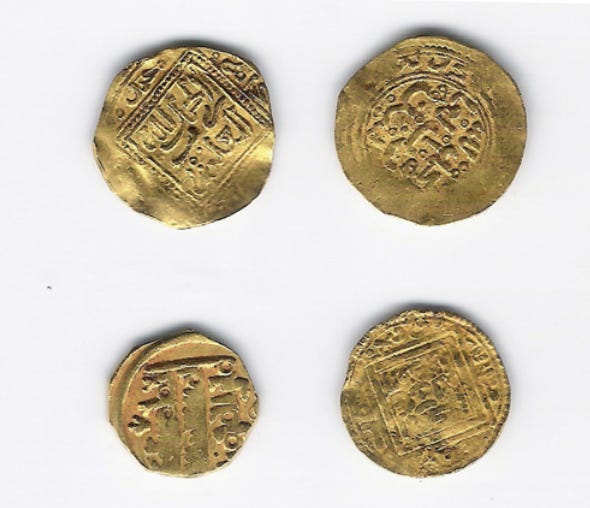
Selection of gold dinars from Sijilmasa, Morocco. Image by J. Lankton, reproduced by S. Nixon.
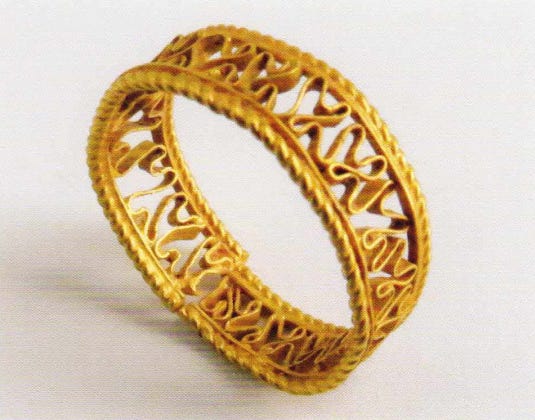
Ring excavated at Sijilmasa, Morocco, 9th/ 10th century. Gold, diameter 1.9 cm. Fondation nationale des musees du Royaume du Maroc, Rabat. Photograph by Abdallah Fili and Hafsa El Hassani. COG Image.27
The Midrarid dynasty of Sijilmasa made one last attempt at independence from 963 to 976. Arabic texts make vague references to two sons of al-Fath who ruled successively. By then, though, the Sijilmasa gold trade had become a prize sought by more powerful entities: the Fatimids of Ifriqiya, who had controlled it for brief periods, and the Umayyads of Cordoba (Spain), who seized control through their Zanata clients under Khazrun Ibn Falfal al-Maghrawi.
Alternating periods of gold minting by the Umayyads and the Fatimids seem to be correlated with changes in their control of Sijilmasa. The Fatimids established the mint in the early 10th century, and the Umayyads began to strike their coins in the Sijilmasa mint during the late 10th century. Between those, at least two local rulers minted their own coins, the last of whom was Masʿud Ibn Wanudin, who was killed by the invading Almoravids.28
The Trans-Saharan trade developed during the Islamic period, as a market for rare and highly sought-after products, such as salt, copper, gold, and slaves, was grafted onto the pre-existing network dealing with essential goods like textiles, grain, kola, alum, dates, etc.29
In the 10th century account of Ibn Ḥawqal, the route from Egypt to medieval Ghana (Kumbi Saleh, Mauritania) and the city of Gao (Mali) passed through Sijilmâsa. Sultan Ibn Tulun of Egypt (r. 863-883) had decided to close the caravan routes leading from the Kharga oasis in southern Egypt to the Maghreb and Sudan due to raiders and sandstorms, thus encouraging the route through Sijilmâsa. In al-Zuhrī’s 12th century account: “Caravans from the land of Egypt and from Wāraqlān reach [Gao], and a few from the Maghrib by way of Sijilmāsa.”30
Recent archaeological finds from the site of Tadmakka (Mali), in the form of coin moulds and crucible fragments, have provided compelling evidence for a developed gold trade by at least the 10th century. Additionally, geochemical analysis of gold objects from North Africa suggests a shift in the gold chemistry of North African coins during the 9th century, possibly related to the increased arrival of West African gold or the opening of a new West African source.31
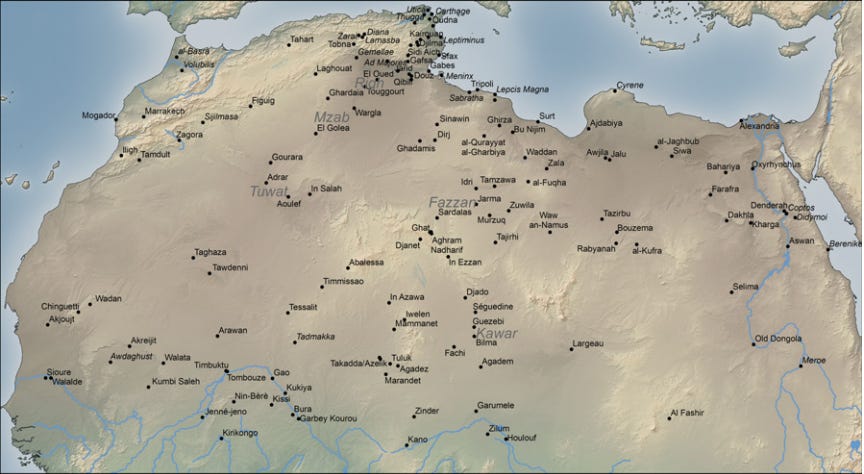
The medieval cities of the Sahara. Map by D. Mattingly
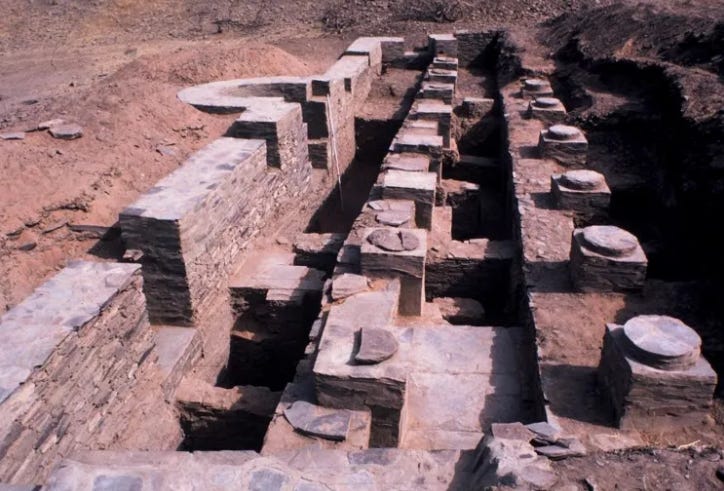
10th-12th century mosque at Kumbi Saleh, Mauritania. Image by Denise Robert-Chaleix et al.
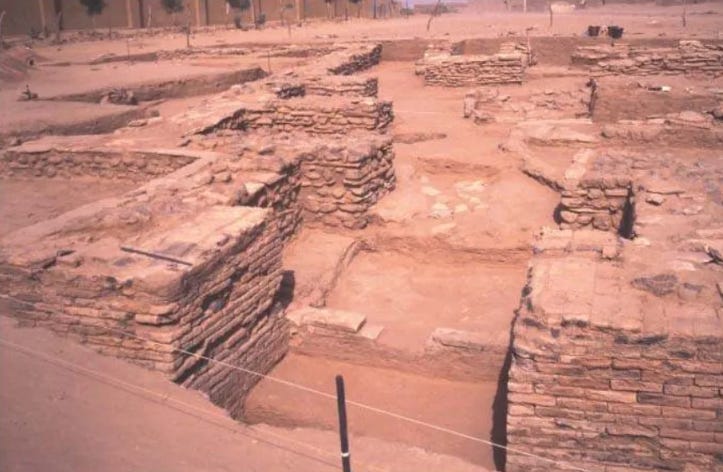
9th-10th century ‘Long house’ at Gao Ancien, Mali. Image by Takezawa & Cisse.
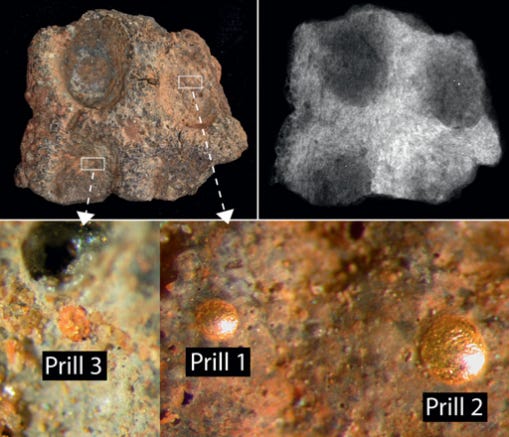
Fragment of ceramic mould for producing gold coin blanks, excavated at Tadmakka, shown together with radiograph (top right) and close-up of individual prills trapped in surface. Images by S. Nixon.
Al-Yaʽqūbī described one of the earliest “gold routes”; the tarīq lamtūnīya route, which ran from Sijilmâsa to Āwdāghust. In the mid-12th century, Al-Masʿudi wrote: “All that gold which the merchants obtain is minted in the town of Sijilmasa.” At about the same time, al-Istakhri wrote: “It is said that no other mine [the one between Sijilmasa and the land of the Sudan] is known to have more abundant or purer gold, but the road there is difficult and the necessary preparations are laborious.”32
Along this route lay the silver and copper mines of Tāmdult, which represented the last inhabited point before crossing the desert. The caravans mainly brought salt, a commodity so vital that it was traded for its weight in gold according to al-Bakrī. An important route also linked southeastern Morocco to Ghana, starting from Sijilmâsa heading east, with the salt mine of Taghāzā as an intermediate point.33
An account from the 14th century describes the organization of the trans-Saharan trade, with partners in the trading centres north and south of the Sahara. Five brothers of the Maqqarl family settled in Tlemcen (Algeria), Sijilmasa, and Walata (Mauritania), from which places they could control the trade in all its stages, by responding to the fluctuations of supply and demand at both ends of the route.34
The urban community of medieval Sijilmasa would have been made up of people of different ethnic backgrounds, including the Imazighen (Miknasa, Zenata, Sanhaja), Jews, Arabs, Andalusis, merchants from Basra and Kufa, and itinerant West African Muslims and captives.35
One of the few scholars known from Sijilmasa during the medieval period was the 15th century jurist Ibn Hilāl al-Sijilmāsī (d. 1498), who, among other works, wrote a treatise criticising the preaching of al-Maghīlī regarding the Jewish community of Tuwat.36
The traveller Walter Burton Harris, who visited the oasis of Tafilet (Tafilalt) in 1893, found the composition of its population had remained largely unchanged since the Middle Ages, although the successive dynasties of Morocco had transformed the identities of the different Imazighen confederations (Zenata and Sanhaja).
The Tafilet population of the 19th century comprised Imazighen (Aït-Atta and Haratin), Arabs (The Shereefian families; Ahl Subah Arabs; Beni Mohammed; Tafilet Arabs), and Jews (Dads).37
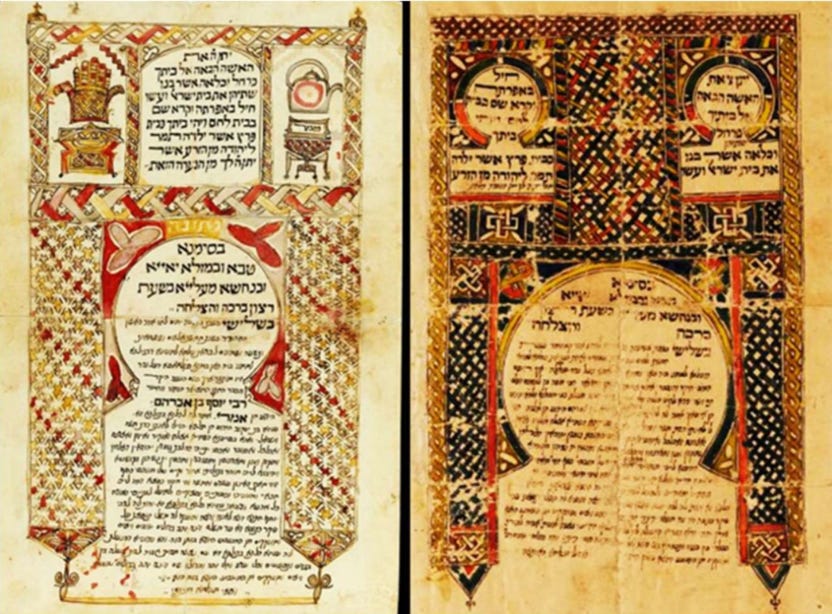
Two ketubah-s from Sijilmassa, Morocco: from 1929 (left, courtesy of the Gross Family Collection, Tel Aviv and the National Library of Israel, Jerusalem); and from 1911 (right, Courtesy of The Israel Museum and The National Library of Israel, Jerusalem).38
While no extant written accounts have been recovered from the city, Sijilmasa was considered one of the earliest centers of learning in Morocco. According to Ibn Hawqal, its inhabitants “distinguish themselves from other people in the Maghrib by their comportment. We sense in them a love of science (ilm), a sense of modesty, elegance, virtuosity, kindness, and moderation.”39
It was the ulama (scholars) of Sijilmasa who invited the leaders of the Almoravid movement to come from deep in the Sahara to free them from the oppression of the rule of the Bani Khazrun, clients of the Ummayads. They told Ibn Yasin, the Almoravid imam, of the injustice, contempt, and tyranny suffered specifically by the men of science and religion at the hands of their amir, Masʿud Ibn Wanudin. The latter was subsequently killed in battle with the Almoravids in 1055, and the city was occupied.40
Sijilmasa in the imperial era (1055-1393)
Sijilmasa would play a key role as a leading source of revenue and a flashpoint for political rivalry within three successive Moroccan empires: the Almoravids (until the 1150s), the Almohads (until the 1260s), and the Marinids (from the 1260s until the fall of the city in 1393)
The Almoravids were a reformist movement that began along the south-western edge of the Sahara among the Gudala and Lamtuna Imazighen of the Ṣanhāja group, living in what is today Southern Mauritania, just north of the Senegal River.
Their leader, Yaḥyā b. Ibrāhīm hailed from the Banū Gudala division of the Ṣanhāja, was closely allied with Wārjābī b. Rābīs (d. 1040) was the first Muslim ruler of the Takrūr kingdom of Senegal. The Takrūri, an ethnonym which became synonymous with West African Muslims in the central Islamic lands, are known to have provided auxiliaries for the Almoravids.41
The Almoravid movement began in 1048, sacking the Zenata town of Āwdāghust a few years later in 1054/5 (which is described in graphic detail by al-Bakri), and capturing Sijilmâsa 1055/6. Archaeological evidence for the Almoravid presence in Sijilmasa is much stronger than in Āwdāghust, which remained a flourishing caravan town well into the 12th century.42
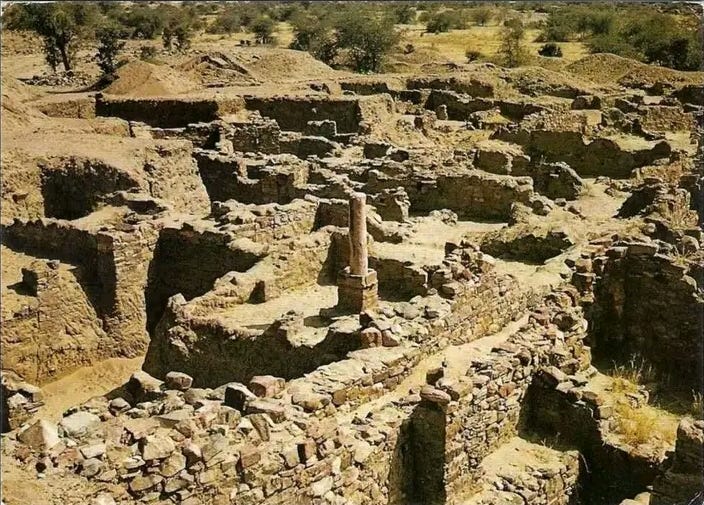
10th-13th century ruins at Awdaghust, Mauritania. Wikimedia Commons.
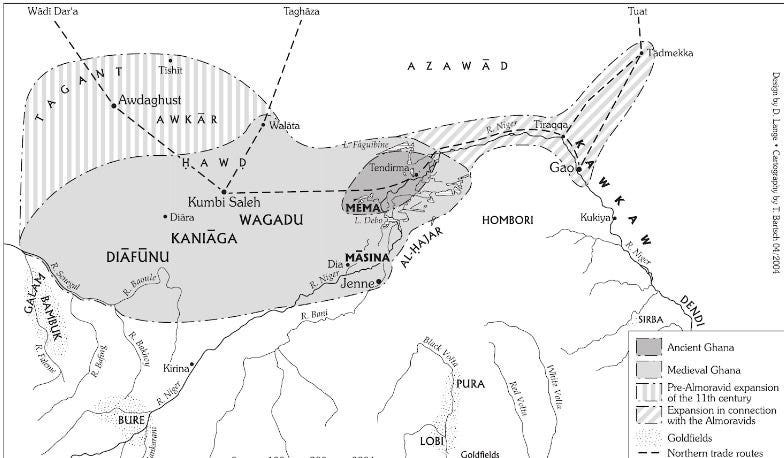
The West African empire of Ghana at its height in the 12th century, extending from Āwdāghust to Tadmekka. Map by D. Lange
While the Almoravids certainly didn’t conquer the Ghana empire, the ruling dynasty of the empire soon adopted Islam by 1076 CE, and maintained an alliance with the Almoravids, extending Ghana’s territorial control as far as the cities of Gao and Tadmekka.
Al-Idrisi’s 12th-century account describing the trade in wool, copper, and glass, gold and slaves, between Takrur (Senegal) and the Almoravids via the Sijilmasa route, points to a continued alliance between the two states.43
During the Almoravid period, the name of Sijilmâsa continued to appear on coins throughout the dynasty. They began constructing a series of low dams and an associated network of canals to divert the Ziz’s water into irrigated fields. After the capture of Marrakech by the Almohads in 1147, Sijilmasa remained a major commercial capital, as its population increased and its Grand Mosque was expanded.44
However, the Almohads exerted less control over the southern gold trade than their predecessors. Historical sources from the period describe Awdaghust as a “small town in the desert, with little water [and] there is no large trade.” Additionally, there were tensions with the Muslim dynasty of Ghana.
In a late-12th century letter from Sijilmasa’s governor to “the king of the Sūdān in Ghāna”, the former complained of the ill treatment of his merchants. Al-Idrisī’s account from around the same period noted that Ghana’s ruler delivered the khuṭba in his own name, while evincing nominal fealty to the Abbasid Caliph in Baghdad, suggesting that he rejected Almohad suzerainty.45
The letter also suggested that traders from Ghana were operating freely in Sijilmasa, unlike the situation in Ghana, where traders from Sijilmasa had been imprisoned:
“We have heard about the imprisonment of poor traders and their being prevented from going freely about their business. The coming to and fro of merchants (jallaba) to a country is of benefit to its inhabitants and a help to keeping it populous. If we wished, we would imprison the people of that region who happen to be in our territory, but we do not think it right to do that.”46
Sijilmasa was later conquered by the Marinid dynasty in 1274, and the city contained an estimated population of 30,000 by the end of the 1300s. The Marinid sultans constructed the Bab Fez, the Gate of Fez, one of the few medieval monuments of Sijilmasa still standing today. However, Sijilmasa’s monopoly over the gold trade diminished as the imperial administration allowed other groups along Morocco’s desert frontier, such as the Saadians (Arab sharifs) of the Draa Valley (150km east of Tafilat), to conduct the precious trade.47
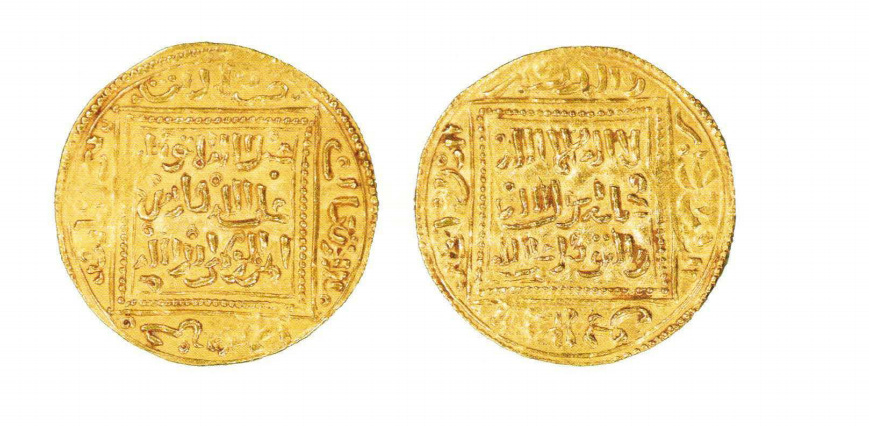
Dinar of Abu Inan Faris (r. 1348-1358 CE), struck at Sijilmasa. Gold, diameter 1.0 cm. Bank al-Maghrib 533341. Photograph by Fouad Mahdaoui. COG Image.
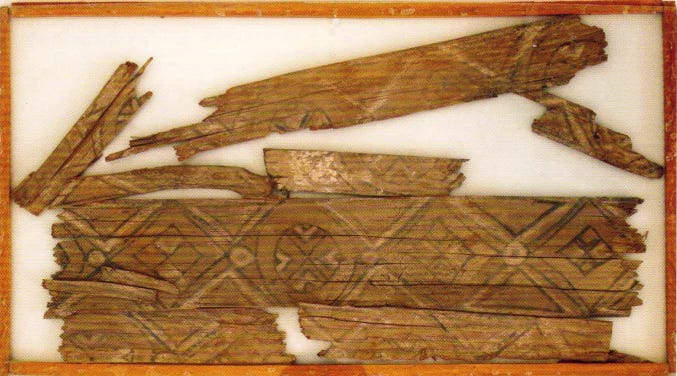
Fragments of wood veneer painted with geometric designs from the Midrarid occupation of Sijilmasa, 9th/10th century, no longer extant. Photograph by Chloe Capel, 2011. COG Image.
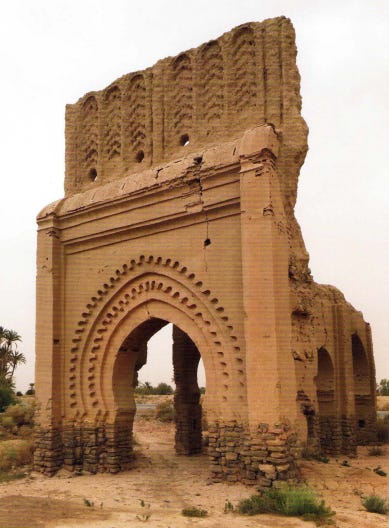
The Bab Fez (Gate to Fez) stands at the northern limit of Sijilmasa. Ancient arcades over a portal were restored in a more recent era. Photograph by Kathleen Bickford Berzock, 2017. COG Image.
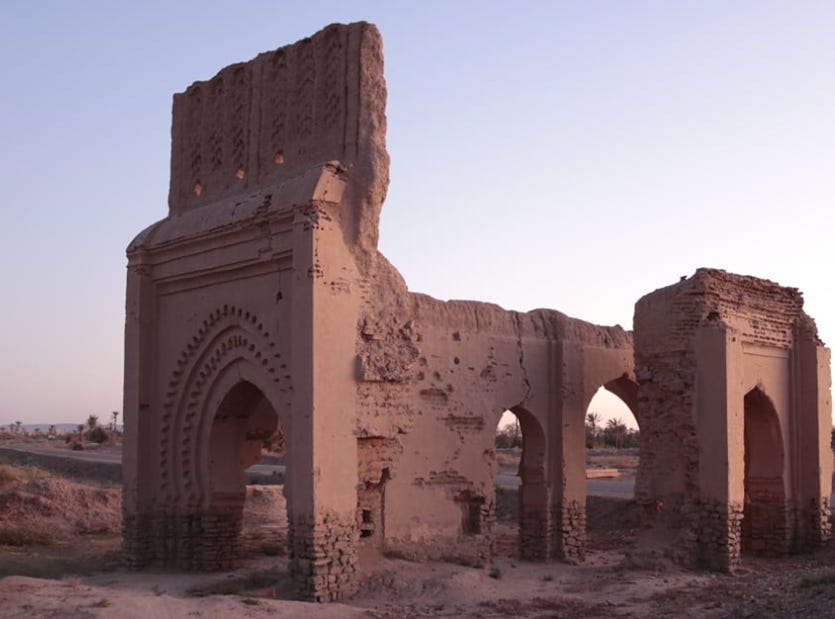
Ibn Baṭṭuṭa, who stayed for four months in Sijilmâsa before proceeding to the Mali empire in 1352–1353, wrote that the city was one of the most beautiful he had ever visited. He unfortunately doesn’t provide a detailed description of the city. The Marinid sultan Abu Inan (r. 1329-58), who had sent Ibn Battuta on the mission to Mali, died in 1358 when he was strangled by his own vizier, and the Marinid state disintegrated in a civil war that would engulf Sijilmasa.48
Competing Marinid princes had battled for control of Sijilmassa in 1331-1333, 1361-1363, and in 1387. The city had been repeatedly occupied, sacked, and traded between warring parties.49
According to Leo Africanus, who visited Tafilalt in 1511, the city had been completely abandoned in 1393. The inhabitants rebelled against the governor, killing him and demolishing the city wall. The population took refuge in the surrounding fortified settlements (qsur), many of which were subjugated by the Maʽqil Arabs.50
The civil war was followed by a period of salutary neglect during which Sijilmasa was only intermittently controlled by the successive Wattasid and Saadian rulers of Morocco. The Tafilalt region became decentralized in terms of both political power and its settlement form. A new landscape of a multiplicity of qṣurs (mud-brick walled villages) and kasbahs (citadels or castles) was created.
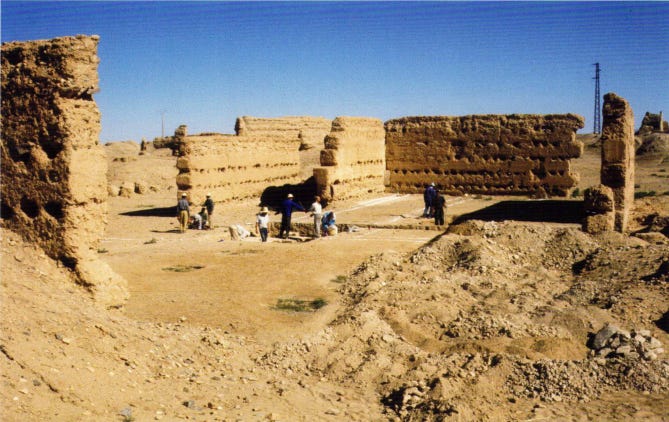
Excavations within the Sijilmasa mosque, with exposed walls from the “ Filalian” period. Photograph by MAPS, 1996.
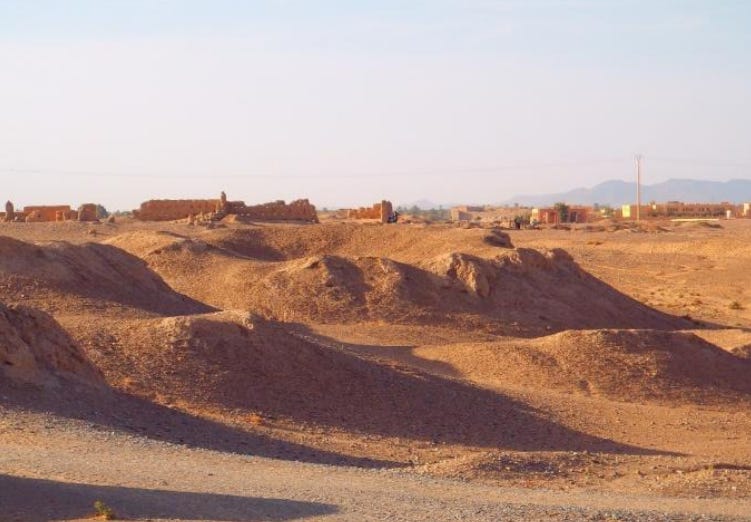
The archaeological site of Sijilmâsa: stony glacis, eroded hillocks, mud-brick walls. Image by R. Mensan
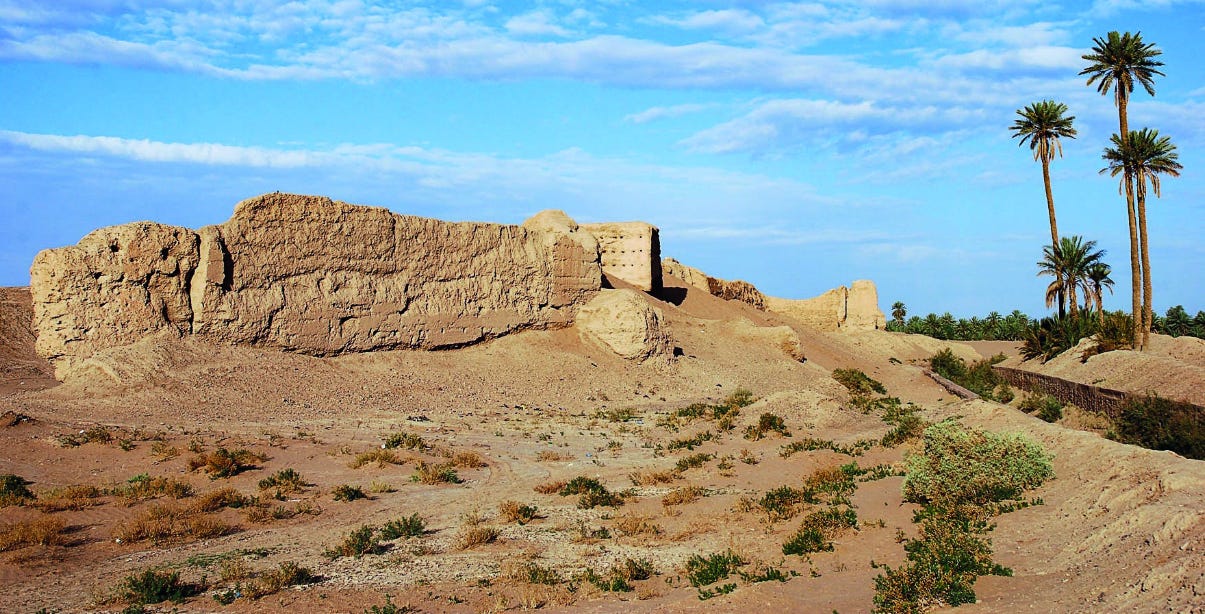
View of a section of a post-medieval wall of Saadian origin and restored by the Alaouites around 1700, it limits the citadel sector to the north of the archaeological site of Sijilmâsa. Image by C.
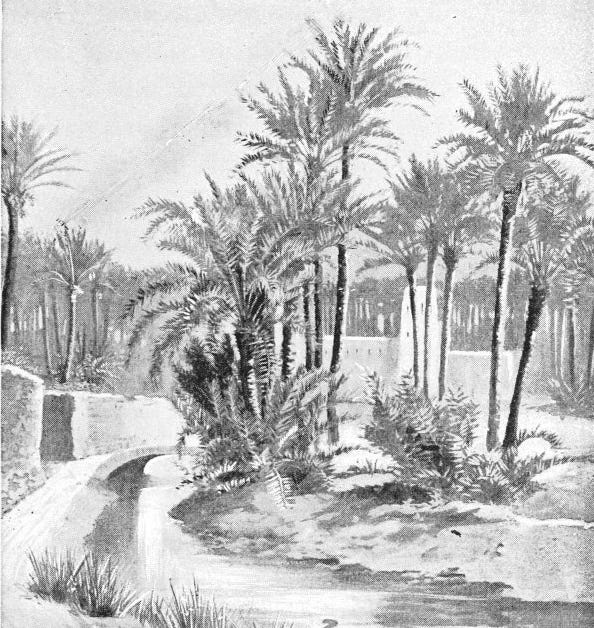
‘In Tafilet’ Image by Walter Burton Harris, 1895. “Near the ruins of Medinat el Aamra, or Sijilmassa, is the largest and deepest canal I saw, the channel bricked and bridged wherever the road or a track crosses it. This channel must be from 20 to 30 feet in breadth, and although my visit was made after a long and exceptionally dry summer, the water was some 4 to 6 feet in depth, flowing very swiftly.”
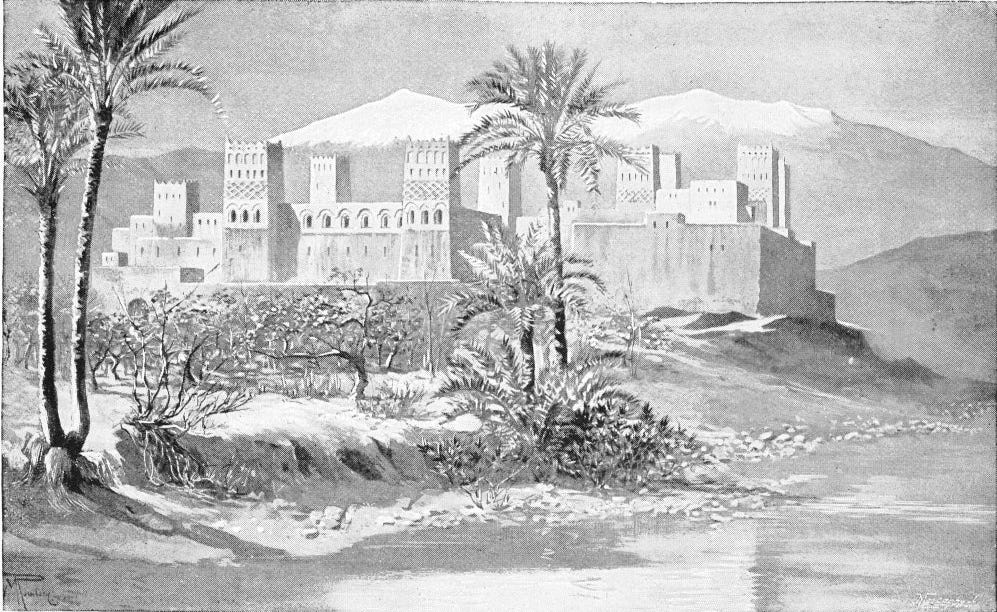
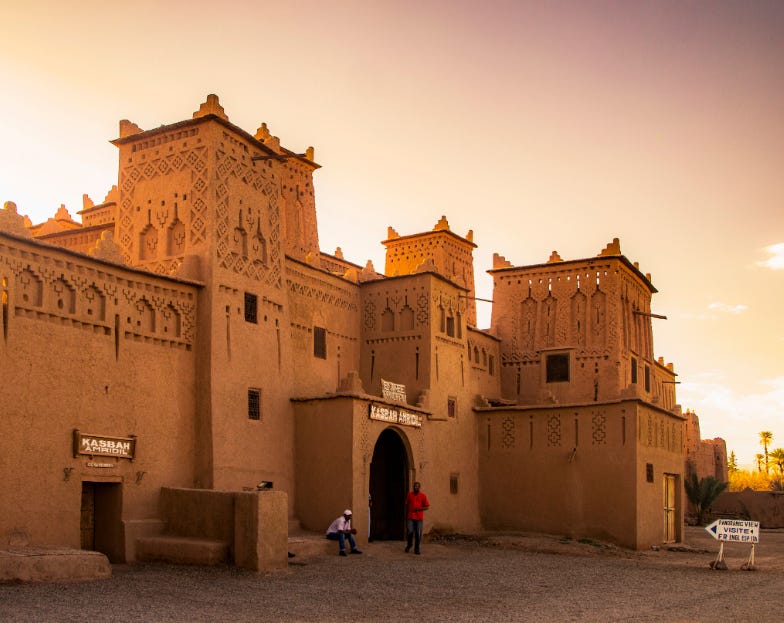
An example of a 17th-century fortified residence; Kasbah Amridil in Skoura, Drâa-Tafilalet, Morocco. Top image: ‘KASBAH OF SEKOURA’ by Walter Burton Harris, 1895.
Resettlement and later destruction. (1548-1818)
Sijilmâsa was repopulated under the Saadians in 1548, and the third sultan, Muḥammad eš-Šaykh, who intended to restore the unity of the Moroccan empire, organized this territory. From 1537 to 1548, the Maʽqil Arabs raided caravans along the route from Sijilmâsa to Fez until they were defeated. But internal conflicts in the Saadian empire resulted in rebellions, during which Sijilmasa was ruled by local marabouts like Abū Mahālli (1611-1623).51
In the early 17th century, the Tafilalt region served as a base for the expansion of the Alaouite dynasty, a Sharifian family of Arab descent who currently rule Morocco.
The inhabitants of the Tafilalt pledged fealty to Moulay Sharif in 1631, who then began a campaign of territorial conquest. The author al-Ziyani, who lived in Sijilmâsa, reports that Sultan Mawlāy Ismaïl (1673-1727) had many sons and relatives who resided in 105 houses in the city. Two governors of Sijilmasa during this period were Elmamoun, who was succeeded by Youcef. They were protected by 500 horsemen chosen from among Mawlāy’s black guard. The restoration of the section of the city north of the ruined medieval city is attributed to this sultan.52
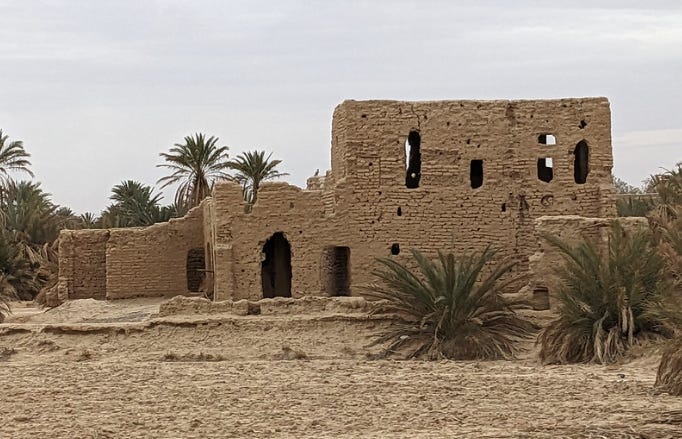
Large abandoned residence near Risanni, Morocco. Flickr image by jimsawthat
Al-Ziyani reports that Sultan Mohammed ben Abdallah (r. 1757-1790) established Sijilmasa as a residence for his children, and displaced the Ayt ʽAṭṭa Bebers from the fortified villages (ksour) of the city, in favour of the Arab sharifs. Tensions between the Arabs and Imazighen during the reign of Mawlay Sulayman (1792-1822) led to several uprisings, one of which briefly seized Sijilmasa until it was retaken by the Sultan’s army in 1801.53
One of the last accounts of Sijilmâsa dates from the early 19th century. In 1818, the Ayt ʽAṭṭa, a powerful independent Imazighen confederation, arrived at the city gates and destroyed it, considering it the last symbol of Arab domination in the Tafilalt.54
Among the travelers who visited the region, René Caillié, who crossed the Tafilalt in 1825, does not mention the city of Sijilmâsa in his travel account. It only appears in the work of Walter Harris, who visited the region in 1893 and provided a brief account of Sijilmasa’s history and its abandonment:
“In local wars that occurred at the end of the last century, Sijilmassa was destroyed, and nothing remains today of the great town but acres, almost miles, of shapeless ruins, with a mosque still in tolerably good condition.”55
A small market town was later established at Abu Am, near the ruins of the medieval city. By the close of the nineteenth century, however, the French, who were expanding into the Sahara, constructed a railway to Béchar, a desert town about 47 kilometers east of the site, effectively marking the end of the caravan trade in this region of the Sahara.56
Although much of the city now lies in ruins, the Tafilalt provenance of the Alaouite rulers of modern Morocco has enshrined Sijilmasa’s place in both memory and history as one of the important cities of Medieval Africa.
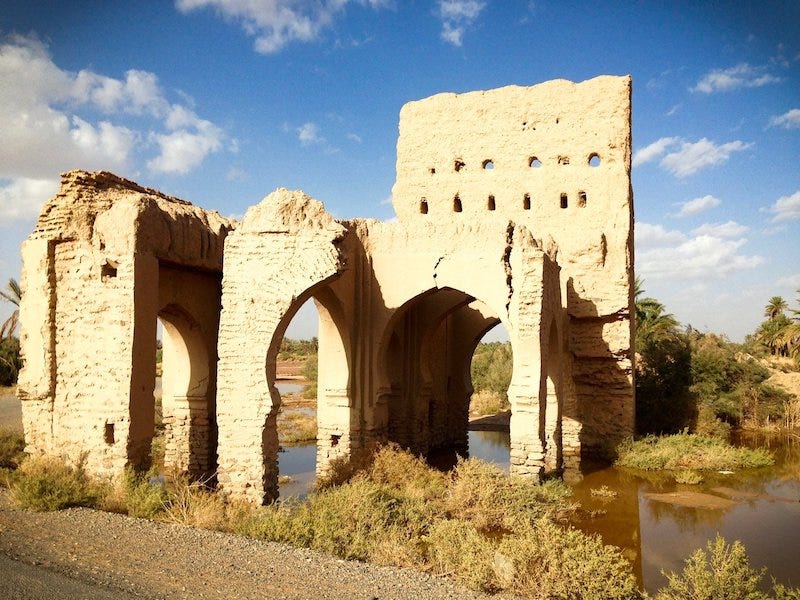
The ruins of Sijilmasa.
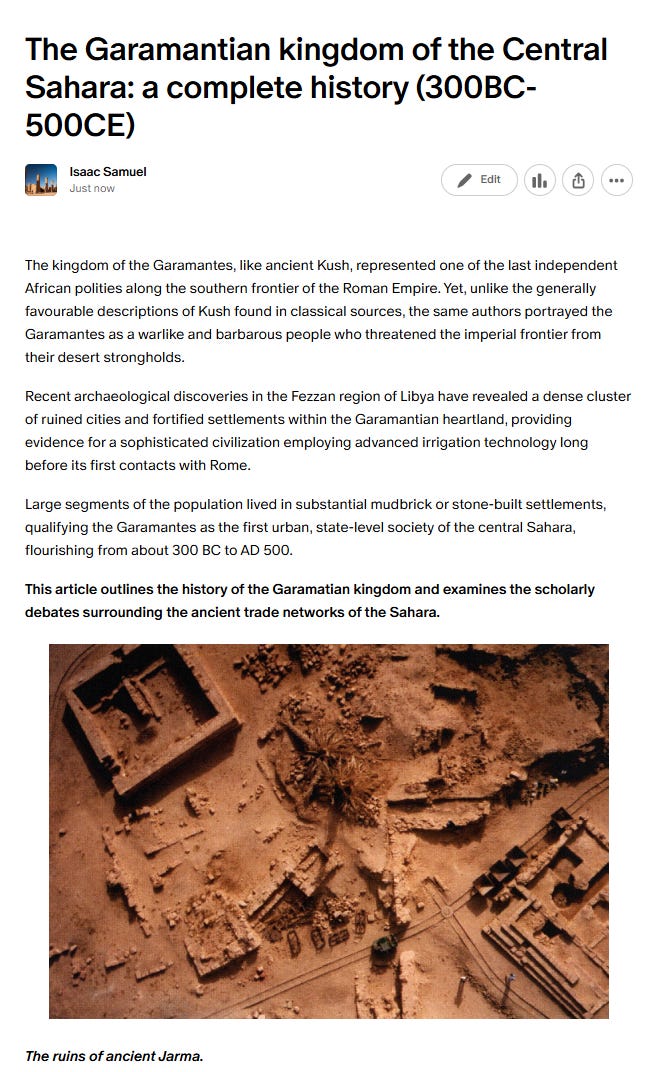
Located along the southern border of the Roman Empire, the ancient kingdom of the Gramantes (S.W Libya) flourished as one of the few independent African polities
My latest article on Patreon examines the history of the Garamantes and the scholarly debates surrounding the ancient trade networks of the Sahara.
Please subscribe to read about it here:
Urbanisation and State Formation in the Ancient Sahara and Beyond, edited by David Mattingly, M. Sterry, pg 256
Urbanisation and State Formation in the Ancient Sahara and Beyond, edited by David Mattingly, M. Sterry, pg 609-617
Urbanisation and State Formation in the Ancient Sahara and Beyond, edited by David Mattingly, M. Sterry, pg 596-7
The Last Civilized Place: Sijilmasa and Its Saharan Destiny By Ronald A. Messier, James A. Mille, pg 71
Sijilmâsa dans les sources arabes et la tradition orale By Anna Maria Di Tolla, prg 4
Authority Beyond State and Tribe in the Early Medieval Maghrib, by Chloé Capel pg 59-60.
Sijilmâsa dans les sources arabes et la tradition Orale by Anna Maria Di Tolla, prg 8. Description de l’Afrique septentrionale by al-Bakrī, translated by Mac Guckin de Slane, pg 287
Urbanisation and State Formation in the Ancient Sahara and Beyond, edited by David Mattingly, M. Sterry, pg 599-602
The Aghlabids and Their Neighbors: Art and Material Culture in Ninth-Century North Africa, edited by Corisande Fenwick, Mariam Rosser-Owen, Glaire Anderson. pg 538
Description de l’Afrique septentrionale by al-Bakrī, translated by Mac Guckin de Slane, pg 287 n.1
The Sufris of Sijilmasa: toward a history of the Midrarids Paul M. Love Jr. pg 184-185
Specialists of North African history tend to falsely conflate the autochthonous ‘black’ populations of the Maghreb with enslaved communities from West Africa that were only brought to Morocco in sufficient numbers beginning in the late Middle Ages. This erroneous thinking can be attributed to the association between ‘blackness’ and servitude, especially during the reign of Moulay Ismail (r. 1672 -1727), who infamously rounded up both autochthonous/free black Moroccans (Haratin) and recent descendants of enslaved West Africans, regardless of their status, to form his “black Guard”.
This is explored in greater detail by the historian Chouki El Hamel in “Black Morocco: A History of Slavery, Race, and Islam."
Archaeologists working on pre-islamic West African sites, most notably Carlos and Sonja Magnavita, have argued strongly against the existence of ancient migration and trade between West Africa and the Maghreb before the Islamic period, showing that there are no materials of Roman or North-African origin recovered in contemporaneous sites of the 2nd-1st millennium BC in Gajigaana (Zilum in Lake Chad), Dhar Tichitt (Mauritania), and the Inland Niger Delta (Djenne & Dia in Mali), until the 5th century CE, when a few Roman materials appear at Kissi (Burkina Faso).
see: Initial Encounters: Seeking traces of ancient trade connections between West Africa and the wider world by Sonja Magnavita. “All that Glitters is Not Gold: Facing the Myths of Ancient Trade between North and Sub-Saharan Africa,” By Sonja and Carlos Magnavita in ‘Landscapes, Sources and Intellectual Projects of the West African Sahel’ edited by Benedetta Rossi and Toby Green.
In response to these arguments, David Mattingly, an archaeologist whose work is focused on the Garamantian sites of Libya, and has long argued in favour of the Roman Trans-Saharan trade and ‘west African’ migration northwards, revised some of his initial assumptions about the identity of the Garamantes:
“Older ideas of “Berber migrations” need to be re-evaluated with a greater awareness of the potential complexities of this sort of process. To start with, there seems no good reason to postulate mass population movements of horse-owning “Berbers” into the Sahara. Rather, small groups equipped with horses and key technological knowledge that supported oasis development could have implanted themselves within existing Saharan communities.
Our ancient sources hint at the ethnic diversity of the Sahara, when the neat binary categories of “white” Gaetuli and “black” Aethiopes populations quickly collapse into the acknowledgement of Melanogaetuli (”dark-skinned Gaetuli”), Leucoaethiopes (”white Aethiopians”) and the sources vacillated between describing the Garamantes as black or light skinned.
The osteological evidence from the Sahara has long been recognised to relate to mixed populations from an early date. Much more analysis is needed from different Saharan, Sub-Saharan and Maghrebian regions, with extensive sampling for isotopic markers and aDNA. The key point is that we need to move away from the colonialist assumptions of “white” incomers conquering “black” inhabitants and imposing a pre-defined “Berber” culture on them.”
taken from: Echoes of Africa’s Past. Archaeological explorations in the Anthropocene, edited By Savino Di Lernia, pg. 251.
I have examined some of these arguments in my essay on the origins of the aeithiopian/’black’ contingents of Carthage, who were most likely drawn from a pre-existing group in North Africa, since both classical texts and archaeological record offer no evidence for a West African connection
See: Between Carthage and Zilum: ancient travel and exchanges across the central Sahara.
The historian John H. Starks, Jr.’s chapter: “Was Black Beautiful in Vandal Africa?”, In African Athena: New Agendas (Classical Presences), edited by D. Orrells, G.K. Bhambra, and T. Roynon, focuses on the Vandal and Byzantine period of North-West Africa.
He identifies a number of ‘anti-black’ sentiments that appear in several satirical epigrams collected in the Codex Salmasianus or Anthologia Latina (c.523–35 CE), and others by Roman writers like Procopius and Luxorius, written for their Latin-speaking peers and Vandal rulers in the former province of Mauretania (Morocco and Algeria). These were primarily directed against the indigenous Berber/Imazighen population, particularly those identified as Mauri/Moors of Mauretania (eg ‘a black Moor’s horrifying [horrida] sister with burned skin’; Lucan 4.678), the Garamantes (S.W Libya, who are identified as aithiopian by Ptolemy, Arnobius, and Isidore of Seville), Gaetuli near Numidia (Algeria/Tunisia, eg the ‘black Gaetulians’ of Ptol. Geog. 4.6.5), and the Aethiopes/Ethiopians south of these three groups, who are commonly identified to as ‘black’ save for those confusingly refered to as Leucoaethiopes (”white Aethiopians”).
These historical texts are not evidence that all or even the majority of the Imazighen were ‘black,’ in the modern sense, but they certainly point to an established presence of Imazighen who can be identified as ‘black’, and likely represent the ancestral groups of the modern Haratin.
Another useful article that explains the complexity of “race”, “blackness” and Imazighen identity in the classical period is provided by the classicist Frank Snowden in “Bernal’s ‘Blacks,’ Herodotus, and Other Classical Evidence,” who examines some of the classical accounts and artwork depicting ancient North Africans of the Greek and Roman period, argues that the indigenous Imazighen population was heterogeneous; predominantly light-skinned but containing elements that can be described as ‘mixed’ or ‘black.’
See the summary in note 10 above; “Black Morocco: A History of Slavery, Race, and Islam.” by Chouki El Hamel.
Most of the anti-black sentiments in modern Morocco can be attributed to the adoption of the Hamitic myth, in which Imazighen intellectuals who adopted Islam claimed descent from prestigious Yemeni lineages, as early as the 10th century, and defined themselves as bidān (white) in opposition to the ‘non-Muslim’ sūdān (black/West African). See my previous essay: The myth of the Hamitic race in religious and pseudo-scientific literature: an African perspective
Description de l’Afrique septentrionale by al-Bakrī, translated by Mac Guckin de Slane, pg pg 287-8
Description de l’Afrique septentrionale by al-Bakrī, translated by Mac Guckin de Slane, pg pg 285
L’eau à Siğilmāsa (Maroc) : témoins écrits et matériels pour une hydro-histoire du Tāfīlālt (VIIIe-XVe siècles) by Thomas Soubira
Sijilmāsa (Morocco): The Urbanism of a Medieval Islamic Site as Seen Through its Hydraulic System (8th-13th Centuries AD) By Thomas Soubira, Romain Mensan, Elarbi Erbati, and Pôle Afrique. Sijilmâsa, cité idéale, site insaisissable? Ou comment une ville échappe à ses fouilleurs, by François-Xavier Fauvelle, Larbi Erbati, Romain Mensan
The Aghlabids and Their Neighbors: Art and Material Culture in Ninth-Century North Africa, edited by Corisande Fenwick, Mariam Rosser-Owen, Glaire Anderson. pg 539-541
Sijilmassa: The Rise and Fall of a Walled Oasis in Medieval Morocco by Dale R. Lightfoot and James A. Miller, pg 90-92, The Last Civilized Place: Sijilmasa and Its Saharan Destiny By Ronald A. Messier, James A. Mille, pg 46, Sijilmâsa dans les sources arabes et la tradition Orale by Anna Maria Di Tolla, prg 37
L’or africain et le paradoxe de Sijilmassa (Maroc – VIIIe-XIVe siècles). Atelier de frappe primordial, histoire méconnue by Chloé Capel. Authority Beyond State and Tribe in the Early Medieval Maghrib by Chloé Capel
Description de l’Afrique septentrionale by al-Bakrī, translated by Mac Guckin de Slane, pg pg 288-289
Description de l’Afrique septentrionale by al-Bakrī, translated by Mac Guckin de Slane, pg pg 288-290, The Last Civilized Place: Sijilmasa and Its Saharan Destiny By Ronald A. Messier, James A. Mille, pg 83-85. The Sufris of Sijilmasa: toward a history of the Midrarids by Paul M. Love Jr. pg 180-183.
Sijilmâsa (et autres graphies : Siǧilmâsa, Sidjilmassa, Sijilmassa…) by Chloé Capel, Encyclopédie berbère.
Sijilmâsa dans les sources arabes et la tradition Orale by Anna Maria Di Tolla, pg 24
Ibn-Hawqal, the cheque, and Awdaghost by N Levtzion
This and other images labeled ‘COG’ are taken from: Caravans of Gold, Fragments in Time Art, Culture, and Exchange Across Medieval Saharan Africa, edited by Kathleen Bickford Berzock
The Last Civilized Place: Sijilmasa and Its Saharan Destiny By Ronald A. Messier, James A. Mille, pg 86-89
“Camel-Herding, Raiding, and Saharan Trade and Settlement” by Judith Scheele in ‘Trade in the Ancient Sahara and Beyond’ edited by David Mattingly, M. Sterry, A. Cuénod, C. N. Duckworth, V. Leitch, F. Cole
Sijilmâsa dans les sources arabes et la tradition Orale by Anna Maria Di Tolla prg 20. African Dominion: A New History of Empire in Early and Medieval West Africa By Michael A. Gomez pg 23.
Trade in the Ancient Sahara and Beyond edited by David Mattingly, M. Sterry, A. Cuénod, C. N. Duckworth, V. Leitch, F. Cole. pg 163-173.
The Last Civilized Place: Sijilmasa and Its Saharan Destiny By Ronald A. Messier, James A. Mille, pg 19, Sijilmâsa dans les sources arabes et la tradition Orale by Anna Maria Di Tolla prg 21)
Sijilmâsa dans les sources arabes et la tradition Orale by Anna Maria Di Tolla, prg 20-22. L’or africain et le paradoxe de Sijilmassa (Maroc – VIIIe-XIVe siècles). Atelier de frappe primordial, histoire méconnue by Chloé Capel, prg 11-14
Ibn-Hawqal, the cheque, and Awdaghost by N Levtzion
The Sufris of Sijilmasa: toward a history of the Midrarids by Paul M. Love Jr, pg 178
La réponse d’al-Sijilmāsī (IXe/XVe siècle) à l’appel d’al-Maghīlī au meurtre des juifs du Touat by Elise Voguet
Tafilet: The Narrative of a Journey of Exploration in the Atlas Mountains and the Oases of the North-west Sahara by Walter Harris
Tracing Trade and Settlement Infrastructures in the Judaic Material Culture of Tafilalt, Southeastern Morocco, by Liora Bigon, and Edna Langenthal
The Sufris of Sijilmasa: toward a history of the Midrarids Paul M. Love Jr. pg 183-184. The Last Civilized Place: Sijilmasa and Its Saharan Destiny By Ronald A. Messier, James A. Mille, pg 91
The Almoravids and the Meanings of Jihad By Ronald A. Messier pg 13
African Dominion: A New History of Empire in Early and Medieval West Africa By Michael A. Gomez pg 36-37
The Last Civilized Place: Sijilmasa and Its Saharan Destiny By Ronald A. Messier, James A. Mille, pg 93-94. West African Early Towns: Archaeology of Households in Urban Landscapes. Augustin F.C. Holl, pg 134-135
Urbanisation and State Formation in the Ancient Sahara and Beyond, edited by David Mattingly, M. Sterry, pg 551
The Last Civilized Place: Sijilmasa and Its Saharan Destiny By Ronald A. Messier, James A. Mille, pg 51
African Dominion: A New History of Empire in Early and Medieval West Africa By Michael A. Gomez pg 40-41, 39
Poems for the Millennium, Volume Four: The University of California Book of North African Literature by Pierre Joris, Habib Tengour pg 224-225
Sijilmassa: The Rise and Fall of a Walled Oasis in Medieval Morocco by Dale R. Lightfoot and James A. Miller, pg 83, 92, 94.
The travels of Ibn Battuta Vol IV pg 946-950, 977, The Last Civilized Place: Sijilmasa and Its Saharan Destiny By Ronald A. Messier, James A. Mille, pg 62
The Last Civilized Place: Sijilmasa and Its Saharan Destiny By Ronald A. Messier, James A. Mille, pg 128-130.
Sijilmâsa dans les sources arabes et la tradition Orale by Anna Maria Di Tolla, prg 29, Sijilmassa: The Rise and Fall of a Walled Oasis in Medieval Morocco by Dale R. Lightfoot and James A. Miller, pg 83, 95-96)
Sijilmâsa dans les sources arabes et la tradition Orale by Anna Maria Di Tolla, prg 31
Le Maroc de 1631 à 1812: extrait de l’ouvrage intitulé Ettordjemân elmo’arib ‘an douel elmachriq ou ‘lmaghrib, de Aboulqâsem Ben Ahmed Ezziâni pg 2-30, 47-48, 54. Caravans of Gold, Fragments in Time Art, Culture, and Exchange Across Medieval Saharan Africa edited by Kathleen Bickford Berzock, pg 118-119.
There are debates regarding the estimates of the number of Mualay’s children (528 sons and a similar number of daughters), the black army at 150,000, and the 25,000 European/“white” slaves at Meknes in al-Ziyani’s account: “The prisons of Maulay Ismail held 25,000 Christian captives and about 30,000 criminals, such as thieves and highwaymen. During the day, all these prisoners were occupied with various tasks; at night, they were locked in underground dungeons. The body of any prisoner who died was embedded in the masonry.”
Le Maroc de 1631 à 1812: extrait de l’ouvrage intitulé Ettordjemân elmo’arib ‘an douel elmachriq ou ‘lmaghrib, de Aboulqâsem Ben Ahmed Ezziâni pg 54, For other estimates by contemporary writers, see: “Black Morocco: A History of Slavery, Race, and Islam.” by Chouki El Hamel, pg 188-189, 192, 196-197, 207.
Le Maroc de 1631 à 1812: extrait de l’ouvrage intitulé Ettordjemân elmo’arib ‘an douel elmachriq ou ‘lmaghrib, de Aboulqâsem Ben Ahmed Ezziâni pg pg 153, 183
Sijilmâsa dans les sources arabes et la tradition orale by Anna Maria Di Tolla prg 32
Tafilet: The Narrative of a Journey of Exploration in the Atlas Mountains and the Oases of the North-west Sahara by Walter Harris
The Last Civilized Place: Sijilmasa and Its Saharan Destiny By Ronald A. Messier, James A. Mille, pg 166-173.