

Africa was not an anarchist paradise; it underwent broadly similar processes of centralisation and state formation to those found elsewhere, with regional variation.
In a recent publication the American political scientists Soeren Henn and James A. Robinson argue that Africa remained decentralized relative to Eurasia because Africans were highly averse to living in politically centralized communities.
They claim that Africans saw state structures as antagonistic to maintaining the valued institutions of the local community, and thus devised mechanisms to block centralization.1
These claims have been amplified in more popular venues, including by ‘The Economist,’ under the headline: How anarchic was Africa?
Robinson is also widely known as the co-author, with Daron Acemoglu, of “Why Nations Fail,” which advances the argument that institutional differences account for long-run disparities between the Western world and other regions. That thesis, like their more recent claims about African state-building, has attracted sustained criticism.
One critic advised Acemoglu and Robinson to “stop by the history department, grab a book, and read the whole thing.” In my previous essay reviewing the African sections in ‘Why Nations Fail’, I showed that Acemoglu and Robinson misrepresented their sources in order to support theoretical claims that weren’t grounded in historical evidence.
In this article, I examine the claims of Henn and Robinson concerning centralized states in precolonial Africa. I demonstrate that their analysis contradicts their sources, flattens history, and advances an essentialist interpretation of African political development that posits a uniform ‘preference for decentralization’ over time.
Support African History Extra by becoming a member of our Patreon community, subscribe here to read more about African history, download free books, and keep this newsletter free for all:
Misreading Jan Vansina’s “Equatorial Tradition” and Decentralisation in Central Africa.
In the introduction, Henn and Robinson begin with the claim, one that is far from uncontested**, that the path of state formation took a different arc historically in Africa. They argue that Africa did not develop the type of large bureaucratized states common to Eurasia, and political power remained largely decentralized.
**A critique of these reductive and impressionistic claims would require far more space than is available here. Their veracity relies entirely on the reader’s unfamiliarity with the historical development of state systems in Africa and Eurasia, and on whether societies within each continent were ever sufficiently uniform internally, or sufficiently distinct from those of the other, to justify treating them as separate analytical categories.2
This problem is especially evident in the authors’ reliance on a selective reading of regional case studies, to which I now turn.
For their main interpretative framework, Henn and Robinson draw on the work of the historian Jan Vansina, and his research on societies in ‘Equatorial Africa’ (mostly in present-day D.R.Congo), in the book titled: ‘Paths in the Rainforests: Toward a History of Political Tradition in Equatorial Africa’ (1990)
The authors reproduce a truncated quotation taken from Vansina’s work in a way that significantly distorts its context and meaning. Since this passage serves as a central pillar of their analysis, it is worth quoting in full, with the omitted sections restored:
“In the final analysis, the [Equatorial] tradition retained its ability to determine the future, to reject unwanted innovations, and to invent institutions, ideologies, values, and concepts to cope with its new environment. It maintained its own criteria of significance.
Nowhere is this more evident than in its retention of the cherished principle of local autonomy and decentralization, even while creating the institutions necessary to accommodate the rise of a single huge economic space around an integrated system of distribution. This feature cannot just be dismissed by pleading the corrosive effects of the Atlantic trade on centralizing authority.
This remarkable achievement again emphasizes that the ability to refuse centralization while maintaining the necessary cohesion among a myriad of autonomous units has been the most original contribution of western Bantu tradition to the institutional history of the world.”
This passage comes from the conclusion of Vansina’s five-chapter analysis of social organization in the regions within and adjacent to the Equatorial Forest, excluding the savannah regions to the south, where large centralized polities such as the Lunda and Luba kingdoms emerged.
Read in its proper context, Vansina’s argument is not that states in this region remained small. Rather, he is highlighting the most distinctive form of social organisation among a wider range of institutional forms that developed in the region, some of which included classical state formations such as large chiefdoms and kingdoms.
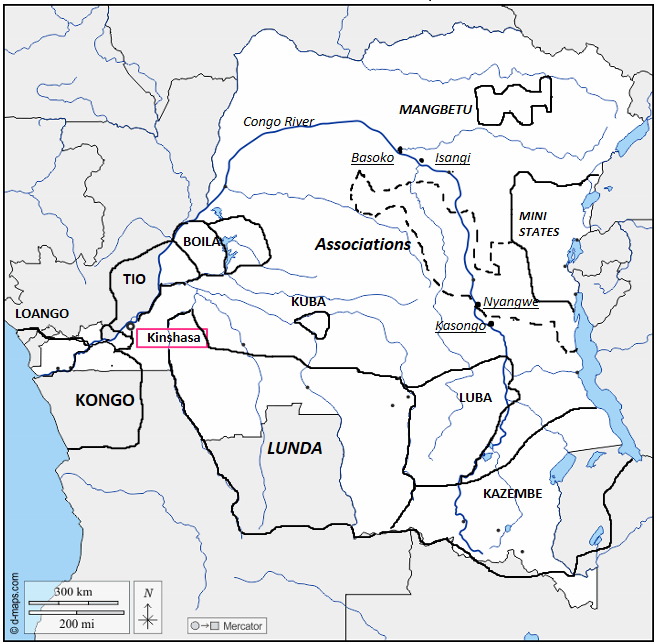
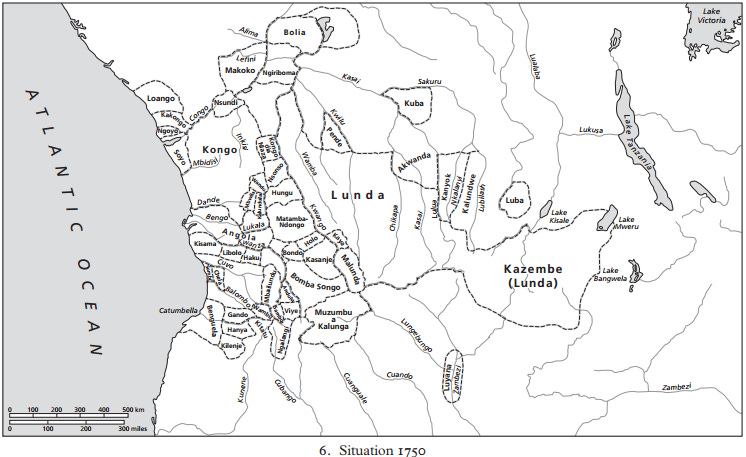
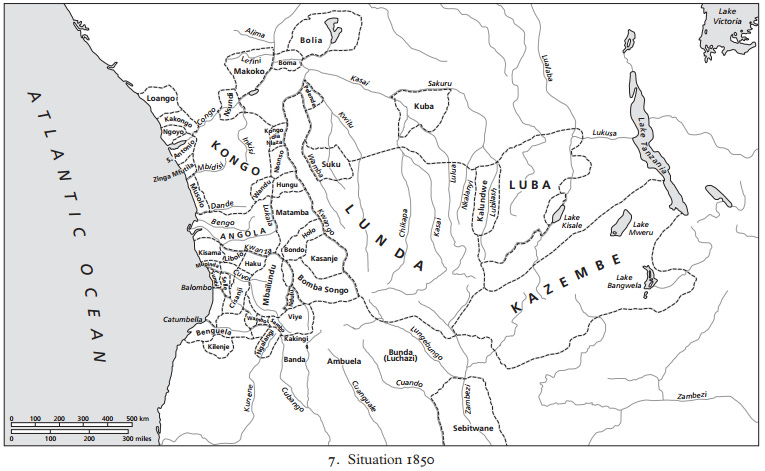
Map showing some of the kingdoms described in Vansina’s work. Based on the maps provided by Jan Vansina and John Thornton, which are included in this essay.
While the reader may be misled by Henn and Robinson into thinking that Vansina was writing about the history of small communes resisting centralization, his study is in fact a survey of the development of socio-political institutions in the region.
Like most works of history, Vansina’s book ultimately traces processes of social differentiation and the expansion of political scale, even as he seeks to emphasize the diversity of alternate paths to social and political change.3
Much of the historical material in the book is concerned with the concentration of power among rulers, and the transformation of “House-societies” into Villages, Districts, Chiefdoms, and Kingdoms.
In anthropology and historical literature, a “House” is the basic level of social organisation. In Vasina’s schematic model, the “Village” was an aggregate of Houses whose leader was assisted by the leaders of the other Houses in a council. A “District” comprised a collection of villages, united by an alliance of Houses. In some regions, a successful leader of this alliance transformed the district into a “Chiefdom.” A ruler who subjugated multiple chiefdoms founded a “Principality.” And once principalities conquered others, they became “Kingdoms,” representing the highest territorial level.4
Therefore, rather than ‘othering’ African forms of state-formation like Henn and Robinson do by setting Africa in opposition to Eurasia, Vansina’s work reveals the shared trajectories of state formation in Central Africa and Eurasia that, in some cases, resembled classical models about the origin of the state.
So similar was state-building in the Lower Congo region to Eurasia, in fact, that Vansina acknowledges this resemblance in order to illustrate the dynamism of what he calls the “Equatorial tradition”:
“The tale of relentless territorial centralization from big man to king that has been told in this section seems to confirm long-held and beloved stereotypes about the origin of the state. Many a reader may conclude that this is how social scale is enlarged, this is how complex societies necessarily arise.
But that is simply not true, as the institutional history of all the other societies of people in the rainforests show… The next chapter will show very different paths toward achieving greater social scale and will document yet two other pathways of development in the rise of kingdoms.”5
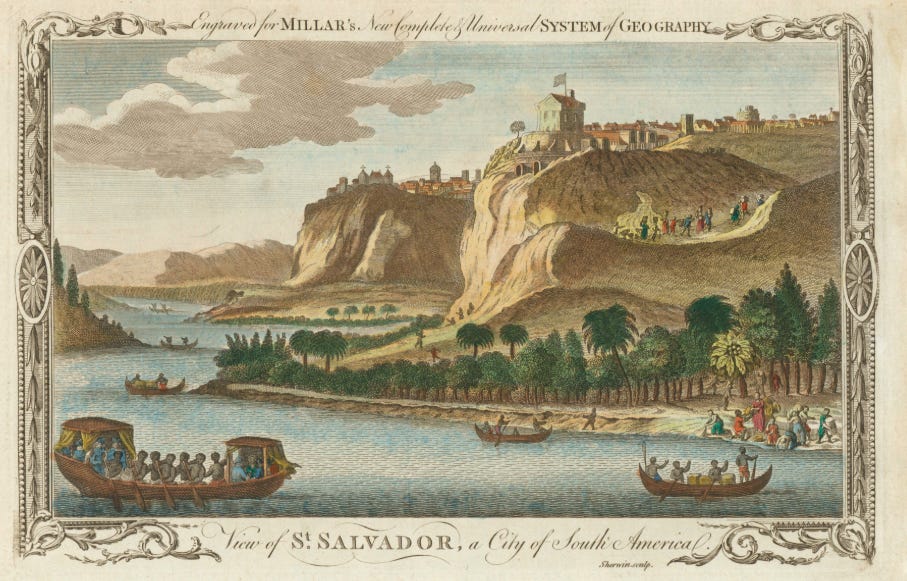
Engraving of São Salvador (M’banza-Kongo) by John Keyse Sherwin, 1782. It is miscaptioned as a city of South America, but is infact based on a famous engraving of Kongo’s capital by Olfert Dapper in 1668.
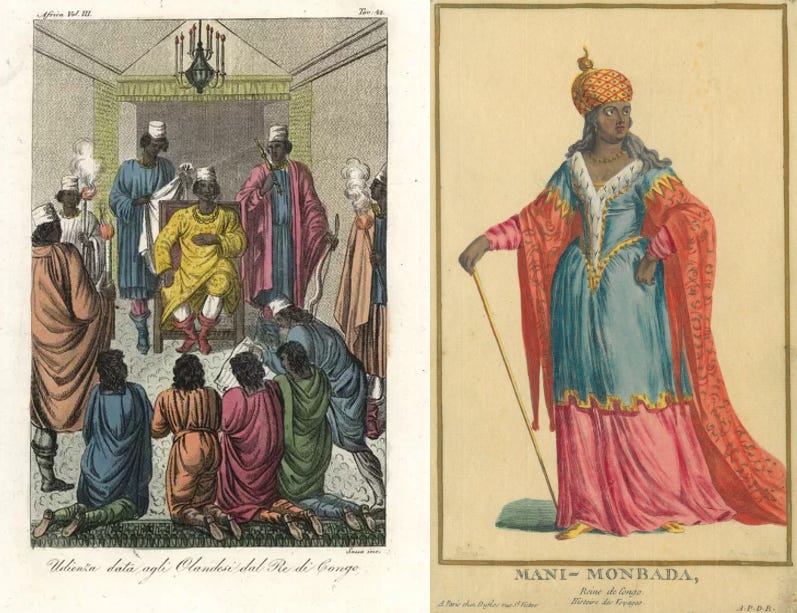
King and Queen of Kongo. King Garcia II of Kongo (seated) receiving a Dutch embassy in 1642, engraving by Olfert Dapper, colourized in 1843. Traditional costume. “Mani-Monbada, Queen of Congo” ca. 1780. engraving by Pierre Duflos
According to Vansina’s research on the Lower Congo region, “the dominant process in the institutional history of this area has been one of increasing centralization”. Here, large kingdoms such as Kongo, Loango, and Tio had emerged by the 14th century, with an estimated population of 500,000 for Kongo, in contrast to earlier House-societies of just 40 people. These large kingdoms were surrounded by smaller kingdoms and chiefdoms, whose institutions they influenced and became centralized.6
He also explains what he means by centralization. Placing the kingdom of Kongo at the top of the spectrum as the most centralized kingdom in terms of tribute collection, judiciary, military organization, and the possession of a national currency.
Next was the kingdom of Loango, which, like Kongo, had “officials in charge of departments of government such as justice, revenue, and the army, and officials of the royal household”. Last was the Tio kingdom, where the king received tribute, but military campaigns were organized by local princes.7
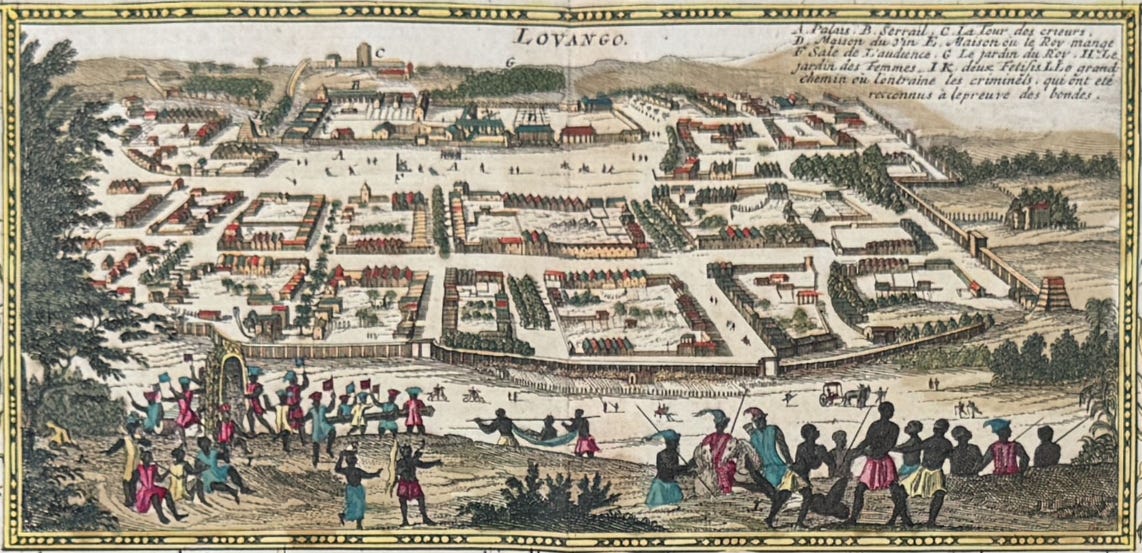
The city of Loango. Taken from ‘View of Loango & Congo, Africa’ by Henri Abraham Chatelain 1718, based on engravings of Olfert Dapper, 1668.
He then explains how the effects of the Atlantic system later resulted in the decentralization of the region. He starts with Kongo’s disintegration in 1678 and its partial restoration in 1709. Power then fell into the hands of a few new “big men” among the former aristocracy, each ruling small chiefdoms.
In Loango during the 18th to 19th century, Kingship became sacralized as central authority devolved into the hands of a few families, each of which was the center of a large House, led by a titled merchant. In Tio during the same period, the spiritual preeminence of the king was maintained, but the lords became nearly autonomous. The kingdom was only saved from complete disintegration by a settlement between the king and the lords in 1840, a few decades before colonization.8
According to Vansina’s research, decentralization of the Lower Congo in the 18th and 19th centuries was a product of specific historical processes. It was not because the inhabitants were highly averse to living in politically centralized communities.
Further inland and along the coast from Western D.R.C to the coast of southern Cameroon, where large centralized territorial polities had never existed, local groups began organizing themselves into House-societies during the 17th and 18th centuries. These grew into “Business Firms” with populations ten times larger than an ordinary House.
But the legitimacy of their rulers was precarious, being based solely on their wealth, and was vulnerable to changes in military strength, ideology, and religion. While associations and traditions of common origin provided some social cohesion, there were no centralizing institutions. For purposes of defence and trade, some firms settled together to form a town of up to 10,000 people, like Kinshasa, but without a single formally acknowledged leader.
After the region became more closely integrated in the Atlantic trade system during the 19th century, competition between the “Business Firms” became rife, and the relative strength of each Firm shifted dramatically, such that no chiefdoms or kingdoms emerged, even as trade expanded and economic exchanges grew.9
It’s in this exact section that Vansina provides the quotation that was misrepresented by Henn and Robinson. He explains that while the Atlantic trade system overwhelmed the “Equatorial tradition,” it did not destroy it but forced it to adopt, using pre-existing institutions, such as the House, the matriclan, and the association.
The Equatorial Tradition thus proved resilient throughout the 19th-century period of social upheaval and economic growth.
This is the time period and geographic region that Vansina emphasizes in his “final analysis” in the quote mentioned in the introduction above. This was a time when social organization was dominated by “Business Firms” that “refused centralization while maintaining the necessary cohesion among a myriad of autonomous units” such as agglomerated towns.
It’s this specific system of Central African “Business Firms” that Vasina chose to highlight as the Western Bantu’s contribution to the institutional history of the world, and it is evidently the only one that Henn and Robinson thought could be extrapolated to represent the rest of Africa, even though it barely represented the Equatorial Region!
For his part, Vansina stresses that these “Business Firms” were not the only forms of social organization in the region. His chapter on the north-eastern D.R.C returns to the more classic outline of state-building, bringing forward the first of the “two other pathways of development in the rise of kingdoms,” mentioned earlier.
These pathways deviate from the type of state-building witnessed in the Lower Congo that resembles similar patterns in Eurasia, but nevertheless produced centralizing processes in the earlier periods, before they were later reversed in the late 19th century.
In this region, he mostly follows the evolution of the Mangbetu kingdom. Initially a “House” polity, it expanded through matrimonial alliances and overran larger “House-chiefdoms” to become a substantial “kingdom.” These House-chiefdoms had previously subdued weaker Houses using specialized semi-mercenary warriors. They were internally differentiated and had established an orderly succession of leadership that was ultimately subverted by Manzinga, the Mangbetu founder.10

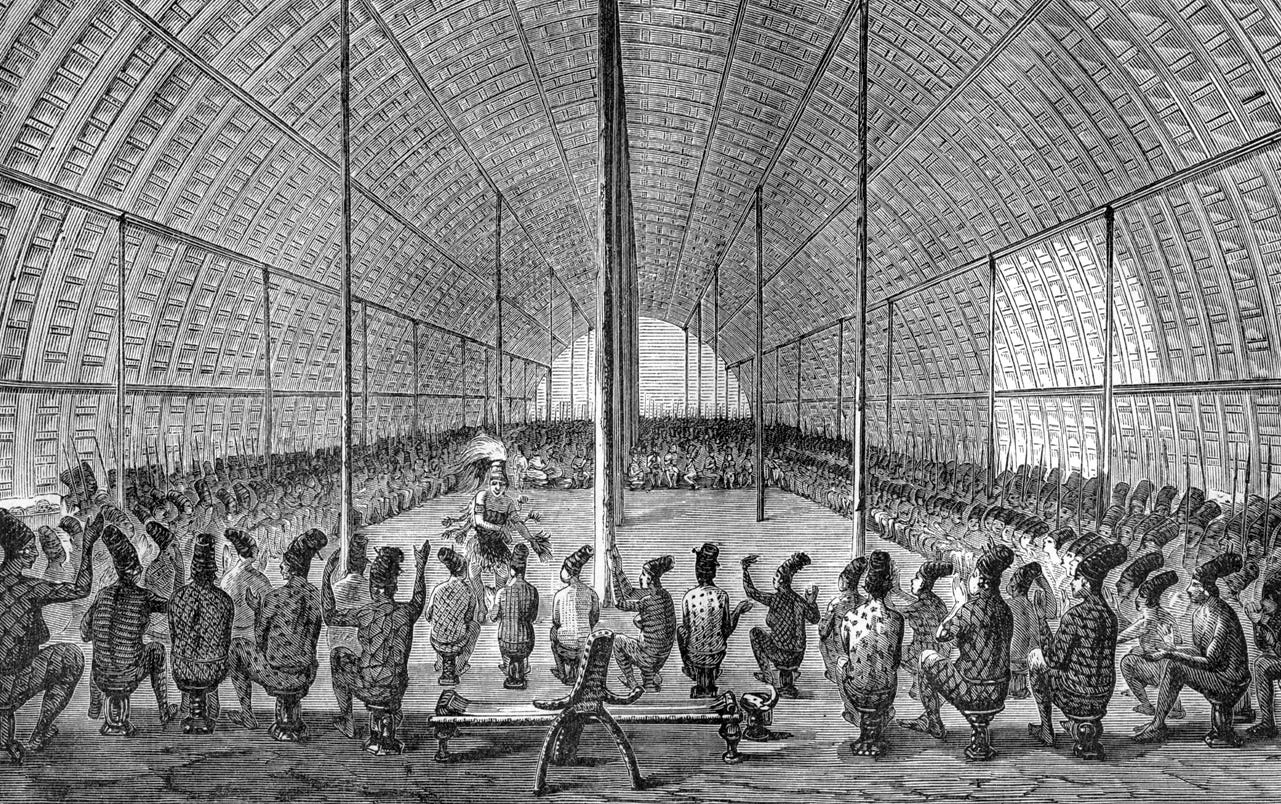
King Munza and the Mangbetu queens in the public hall, ca. 1870, illustration by Schweinfurth.
According to Vansina, the political innovations found in the House-chiefdoms were induced by the loss of equilibrium of military strength between the preceding House-polities. By the mid-18th century, these House-Chiefdoms would in turn be subjugated by King Manziga, who founded the Mangbetu kingdom. His son and successor, King Nabiembali (r. 1800-1859) , would then expand the state through military conquest.
However, this expansion did not keep pace with institutional growth, which ultimately led to the kingdom’s disintegration and the region’s reversion to small-scale polities.
“Mangbetu political institutions remained those of a House chiefdom. Nabiembali continued to gather kin, wives, clients, and slaves around him. Political relationships continued to be tagged with kinship terms, and relations between House-chiefdoms within the state were still though of in matrimonial terms…
Nabiembali also failed to create new judicial, military or financial institutions. The core of the military remained the royal bodyguard comprising professional mercenaries, close relatives, and dependents of the king. After the 1850s, income from tribute and trade became more important, but tribute was still explained in terms of gift giving. No centralized and hierarchical judiciary system developed at all.
As long as Nabiembali kept his sons in check the system worked. But when his eldest son Tuba rebelled and deposed him in 1859, the system collapsed. Tuba lacked both the military power and the prestige to align the other chiefs behind him. A series of civil wars followed and the last king, Mbunza, fell in battle in 1873. The kingdom broke up and was replaced by a number of smaller entities which began expanding into new lands shortly after Tuba took over.
By the 1870s, general unrest was extreme, because both Azande princes and slave traders from the Sudan became active in the area. So serious was this situation that an older war charm, the nebeli, now evolved into a secret self-help association to protect its adherents against both outside enemies and chiefs.”11
In this account, the centralization and later decentralization of the North-Eastern D.R.C isn’t attributed to some essentialist African attachment to small-scale polities, but is instead a product of historical processes unique to the region.
Henn and Robinson assert that Africans created internal mechanisms to ensure polities remained small by avoiding the concentration of power in one lineage or ruler. But the historical evidence shows that it was only after the collapse of centralised authority that subjects repurposed a pre-existing war charm used by centralising kings in the earlier periods into a protective association against petty chiefs.
Moving to the Eastern region, Vansina provides the second alternative to state formation, which also created centralized societies that were later broken up by the 19th century, but this time, due to external influences.
He divides it into two regions: Northern Maniema and Southern Maniema. (These more accurately correspond to the West and East as shown in the map he provides below.
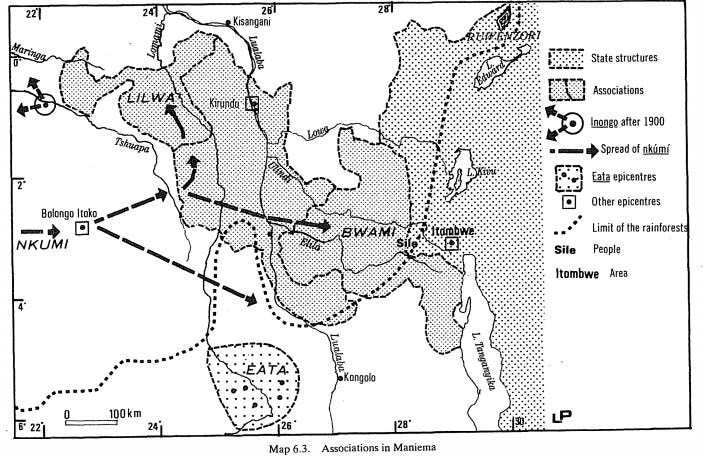
In Southern Maniema, the lands were rich in trade and contained nodes of sizeable population density, which allowed for the accumulation of wealth and the emergence of an overarching hierarchical sociopolitical association. These were graded associations that borrowed the political tradition of centralization based on a sacred kingship from neighbouring groups, which became the framework for their kingdoms.12
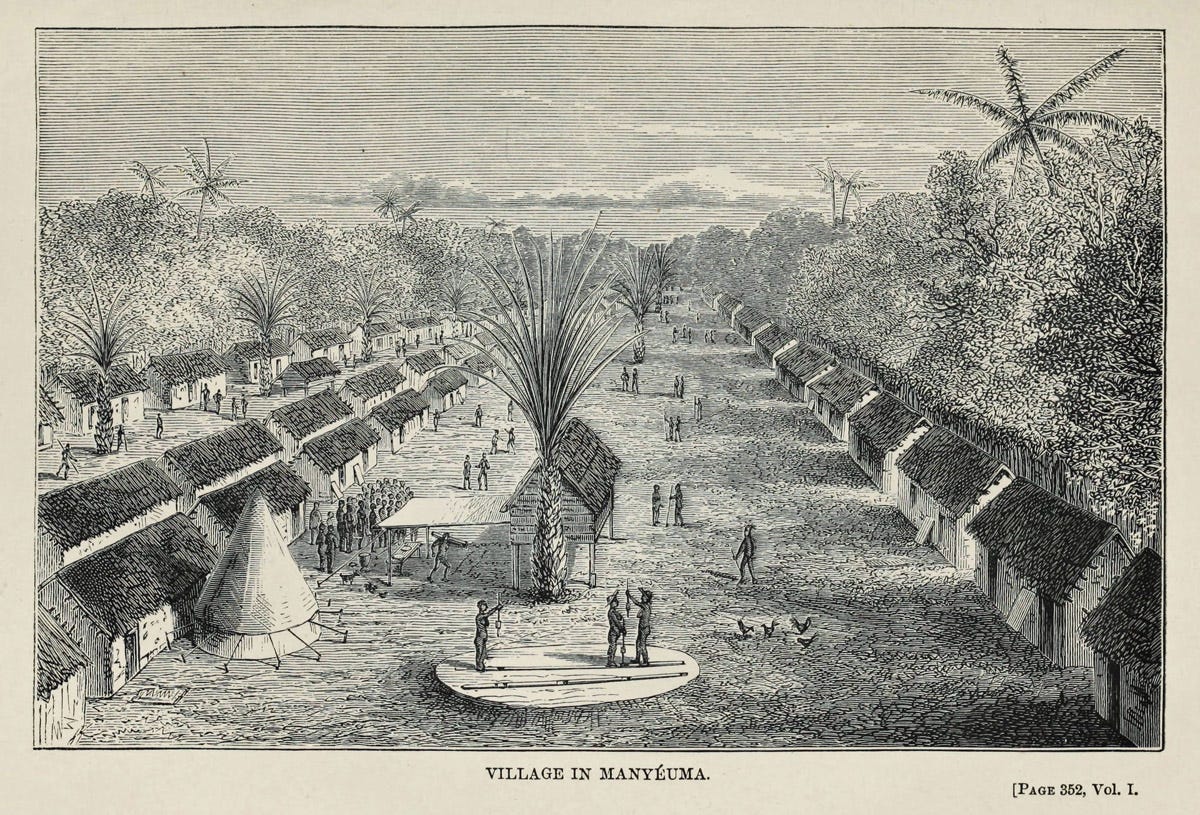
Village in Manyéuma (Manyema/Maniema), Congo. Illustration from Across Africa by Verney Lovett Cameron, 1877
However, this occurred relatively late, with such states only emerging in the 19th century. According to Vansina, the region extending from the northern shores of Lake Tanganyika to the west of Lake Edward was dominated by kingdoms that resembled smaller, earlier versions of the large kingdoms of the Great Lakes region:
“They strike us as theater-like states, because their minuscule size was matched by elaborate rules of succession, accession to the throne, and royal burial, by a complex titulature surrounding the royal office, and by intricate royal rituals and a plethora of emblems, as if these district-sized kingdoms were the equals of the great kingdoms that lay beyond the rift itself.”13
In contrast to the rest of the equatorial region, Vansina observes that social organization in Northern Maniema was the most egalitarian and least socially differentiated. House-societies grouped in villages were widely dispersed, and rules of exogamy limited the ability of leaders to accumulate power through marital alliances, while high mobility further restrained their ability to create larger communities based on shared clan traditions.
He suggests that this decentralization wasn’t internal to the region, but was instead directly caused by the domination of merchant-rulers from Zanzibar (notably, Tippu Tip and Rumaliza), who, in the closing decades of the 19th century, subsumed pre-existing societies into a vast state, and forced great changes in settlement patterns, leadership, and cultural traditions in the area.14

Ruins of a Swahili-style mosque in Isangi, eastern D.R.Congo, ca. 1894. NMVW.
On the Evolution of State Building in Equatorial Africa.
Vansina explains that, contrary to unilineal social evolutionists, the “Equatorial Tradition” produced multiple pathways to social complexity that included kingdoms, associations, and segmentary lineage societies. In all cases, the basic units of social organization: Houses, Villages, and Districts, survived because the overarching institutions were built upon them, rather than displacing them.15
Vansina identifies several other regions in the central and western parts of D.R.C where different pathways of development led to the rise of kingdoms such as Kuba, Boila, and Ngwi in the 17th century.
Their emergence followed an uneven concentration of resources between Houses, accompanied by an ideological exaltation of leaders and military conquests. These states created new administrative and judicial institutions, maintained firm central control over external trade, and survived well into the colonial period.16
It turns out that the Kuba kingdom, which is singled out by Acemoglu and Robinson for its supposedly unique level of centralization and bureaucratic institutions compared to most of pre-colonial Africa17, was in fact not exceptional, even in the Equatorial region, where numerous kingdoms with a greater level of complexity and territorial scale could be found.
In an excellent summary, Vansina outlines the conditions that enabled the emergence of centralized kingdoms in Equatorial Africa:
“A kingdom could emerge out of a whole social and political system when people had come to accept the idea of a supreme title as a desirable outcome to the dynamic drift of their political institutions. No doubt both population density and insecurity played a role in the rise of the kingdom, but they were only background factors among others…
The ancestral system [the Equatorial tradition] had been well adapted to low densities of population and limited trade. When these conditions changed, innovation had to follow. Once trading exchanges became frequent in areas across ecotones with very different resource bases or over longer distances… certain localities became strategic spots for settlement. The Houses and villages which occupied them grew rich, attracting dependents and at the same time facing more challenges than others.
Over time systematic inequality developed among Houses and their big men and led to innovation. The changing environmental and economic base clearly was crucial for the
dynamics of innovation. It would be dangerous, however, to reduce the dynamics of innovation to an environmental determinism of the sort that claims that kingdoms arose only in open landscapes with diversified resources.
The only defensible generalization is that centralizing societies began in areas of rich resources. Even so, not all areas-with rich resources provoked centralization. The correlation between centralizing innovations and areas rich in resources is only apparent and superficial. It takes no account of the fact that resources exist only in the eye of the beholder.
Innovations responded to shifts in environmental bases and economics, but the latter do not wholly explain the phenomenon. Historical accident was important. A particularly attractive or effective personality, luck in trade or in war, a new tactic in battle, a particular incident during a ritual—all could happen by accident and provoke change.
Yet although incidents in physical reality occurred all the time—the weather is never twice the same—innovation took root only when it moved from the physical realm to conscious acceptance in the cognitive realm.”18
The emergence of centralized states in the region was therefore the outcome of multiple human and environmental factors, and must be understood as historically contingent. States arose whenever the underlying conditions and political innovations were favourable.
From this overview, it becomes difficult to sustain Henn and Robinson’s claim that they used Vansina as a “jumping off point” for a broader theory of African state formation without having engaged with the work in its entirety.
Vansina’s celebrated historical research on the “Equatorial Tradition” is not without its critics from among his peers, especially concerning the origins of matriclans and the effects of the Atlantic trade system on political and economic developments in the Equatorial region.19
However, nothing in his work suggests that decentralization was a historical constant. The evidence instead points to the dynamic nature of social and political changes that were generated by historical processes unique to each region.
Central Africans did not create mechanisms to keep the scale of political society small, but instead created multiple forms of social organization that, depending on historical circumstances, included both small-scale and large-scale polities.
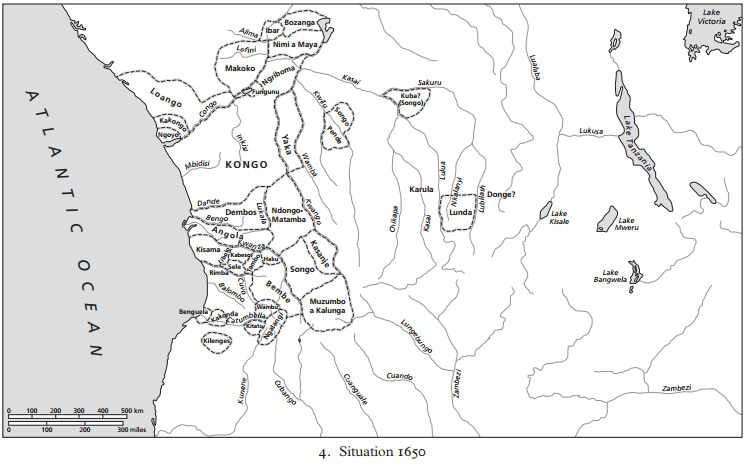
This political evolution is excellently illustrated in John Thornton’s maps of West Central Africa from 1650 to 1750 to 1850.
The Centralization and Decentralisation of Somalia in Historic Perspective.
Henn and Robison provide examples of how non-centralized societies, such as the Igbo (Nigeria), the Kikuyu (Kenya), and the Somali (Somalia), innovated a plethora of mechanisms to preserve the autonomy of the community and the clan, supposedly to protect it from the state. (pg 16-17)
Much of their explanation for the persistence of decentralization in these cases relies on anthropological studies conducted in the early to mid-20th century. While valuable in their own right, these sources generally lack the historical depth required to assess whether decentralization was a long-term structural constant, as the authors imply.
Fortunately, in some of these societies, such as the Somali, there’s sufficient historical data since the late Middle Ages which demonstrates that earlier processes of centralization and expansion of political scale were reversed after the 17th century.
The highly decentralised communities described by anthropologists in Somalia during the early 20th century do not reflect the long-term historical organization of societies in the region.
Henn and Robinson draw heavily on I.M. Lewis’ anthropological study of Somali society in the mid-20th century, which emphasizes the segmentation of political units in the absence of formal administrative hierarchies or institutionalised offices of authority, and the ease with which political alliances could be reconfigured to preserve clan autonomy. (pg 16)
However, the authors disregard historical scholarship on Somali society by scholars like Lee V. Cassanelli, who reconstructed traditions about the Ajuraan sultanate, vast territorial state that dominated Southern Somalia from the 16th to the 17th century. Its rulers, the Gareen imams, established a theocratic government, appointing emirs and naa’ibs as agents, and relied on holy-men from Yemen in judicial matters and tax collection.
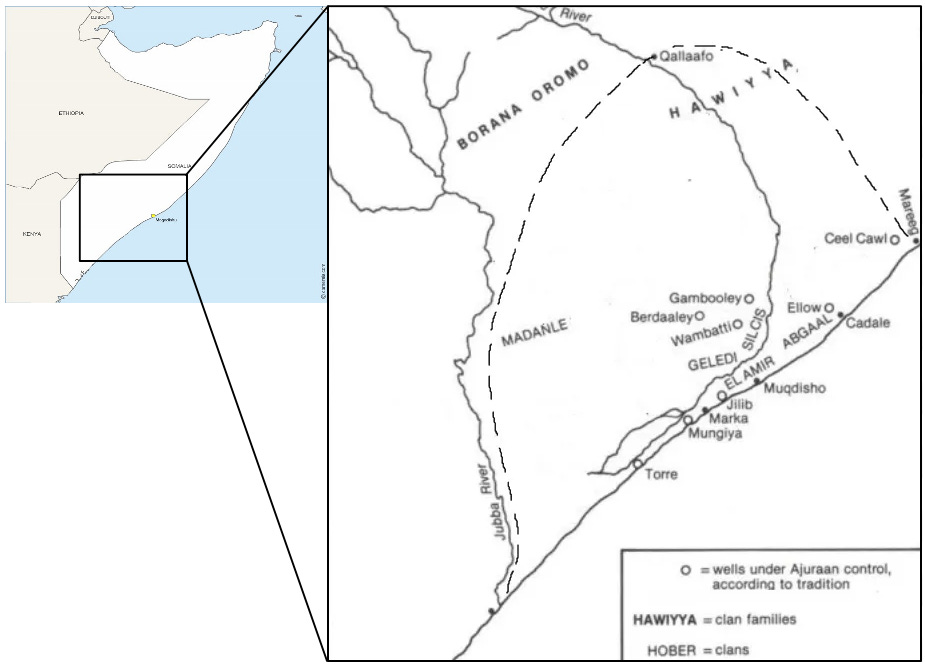
Marriage alliances reinforced ties of agnatic and religious loyalty among the leading families. The administration collected tribute from cultivators, herders, and traders and conscripted a servile labor force to undertake an unprecedented program of construction of stone wells and fortifications. Alliances with the coastal city of Mogadishu bolstered the imam’s power by providing an outlet for surplus grain and livestock, and a source of the luxury goods that symbolized his high status.20
According to Cassanelli:
“A series of local and regional alliances underpinned and legitimized the apparent concentration of power in the hands of the Gareen imams. From this perspective, the phenomenon of Ajuraan “domination” represented not a break with the typical Somali system of clan alliances and patron/client links but an extension and elaboration of it. What gave the polity its overall cohesiveness and unusual longevity were the rudimentary administrative procedures and the theocratic ideology introduced by the Gareen.”21
Cassanelli also observes that the emergence of the Ajuraan state coincided with similar developments in the northern part of the country (Somaliland).
From the 15th to the late 16th century, the medieval empire of Adal (Barr Sa’d al-Din), briefly dominated the northern Horn of Africa, subsuming much of the Ethiopian empire. Its rulers, known as the Walasma dynasty, had been displaced from the kingdom of Ifat by the Christian Ethiopian monarchs in the early 15th century.
The Adal sultans imposed their power over many pre-existing Muslim polities, including Hūbat, the coastal city of Zaylaʿ, the Ḥārla region surrounding Harar, and parts of northern Somalia. An emir was appointed by the sultan to head each territory, with the prerogative of levying taxes (ḫarāǧ and zakāt) on the population.
An impressive network of stone settlements was built in this period, whose function was mostly associated with agriculture, indicating that, like in Ajuraan, sections of the pastoral Somali communities had become sedentary, with populations concentrated in large, nucleated settlements.
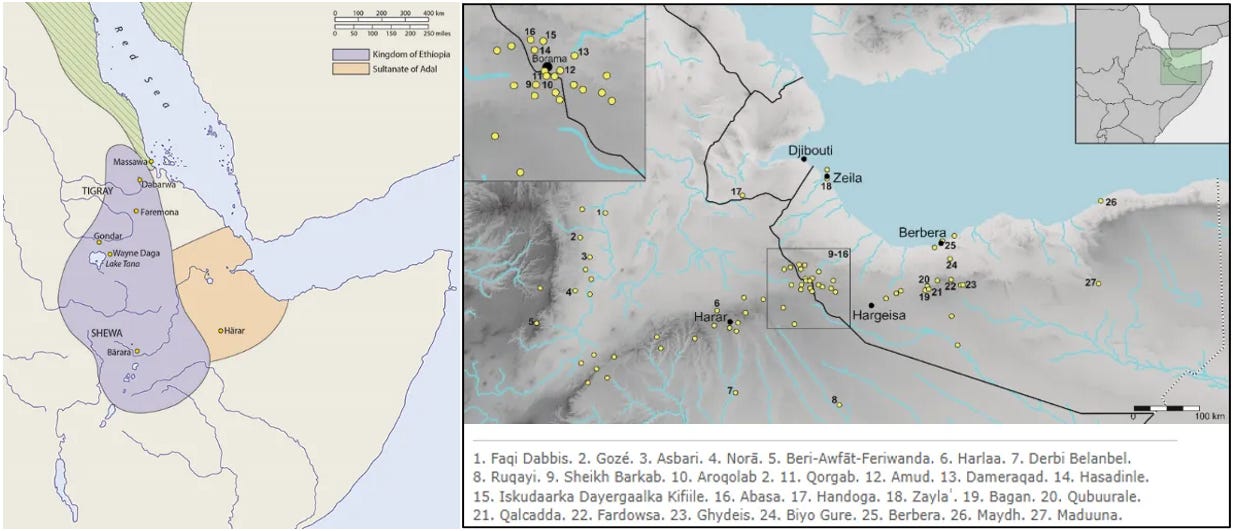
16th century Map of the Northern Horn of Africa showing Ethiopia, Adal, and the ruined stone settlements of Somaliland.

Miḥrāb and niches of the Maduuna congregational mosque. image by StateHorn
However, by the early 17th century, both the Ajuuran and Adal empires had disintegrated, the processes of centralization were reversed, and later polities which emerged in the region during the 18th and 19th centuries were relatively small.
These dramatic changes are captured in the archaeological and documentary record.
In the north, imports of trade goods ceased at the end of the 16th century, the stone settlements were abandoned, and their semi-sedentary inhabitants reverted to a nomadic lifestyle.22
When Richard Burton encountered the ruined settlements in 1854, his local informants noted that their abandonment followed the collapse of a “kingdom” three centuries earlier. It’s from Burton that we get some of the earliest descriptions of what later anthropologists would associate with the Somali’s timeless aversion to centralised authority:
“The Bedouins have lost none of the characteristics recorded in the Periplus: they are still “uncivilised and under no restraint.” Every freeborn man holds himself equal to his ruler, and allows no royalties or prerogatives to abridge his birthright of liberty.23
Burton’s prejudiced account describing an unchanging Somali society since the time of the Periplus, nearly 2,000 years ago, is echoed in Henn and Robinson’s uncritical reliance on mid-20th-century anthropological literature.
In both cases, relatively recent configurations of social organisation are retrojected into the deep past and interpreted as evidence of an enduring cultural preference for clan autonomy and decentralisation.
However, this clearly wasn’t the case during the Adal period, but only reflected changes in social and political processes that emerged across Somali society in the more recent periods.
Similarly, in southern Somalia, descriptions of the region during the early 19th century suggest changes in political alliances, social organization, and settlement patterns, such that even the coastal cities were nearly abandoned.
The once bustling city-state of Mogadishu, whose multistory buildings and thriving port are described by the Portuguese in the 16th century, had by this later period lost much of its commercial hinterland network and had become depopulated.
According to one visitor in 1824, it’s “massive buildings are principally the residences of the dead, while the living inhabit the low thatched huts by which these costly sepulchres are surrounded.”24
Although the region underwent a significant economic revival in the late 19th century, these new patterns of exchange occurred under a decentralized system that relied on pre-existing intuitions of patron-client relations.
Like the House-Firms and agglomerated towns described by Vansina in Equatorial Africa, Cassanelli notes that each Somali clan in this new system maintained its segment of the operation with its own interests, and those of its allies, in mind.25
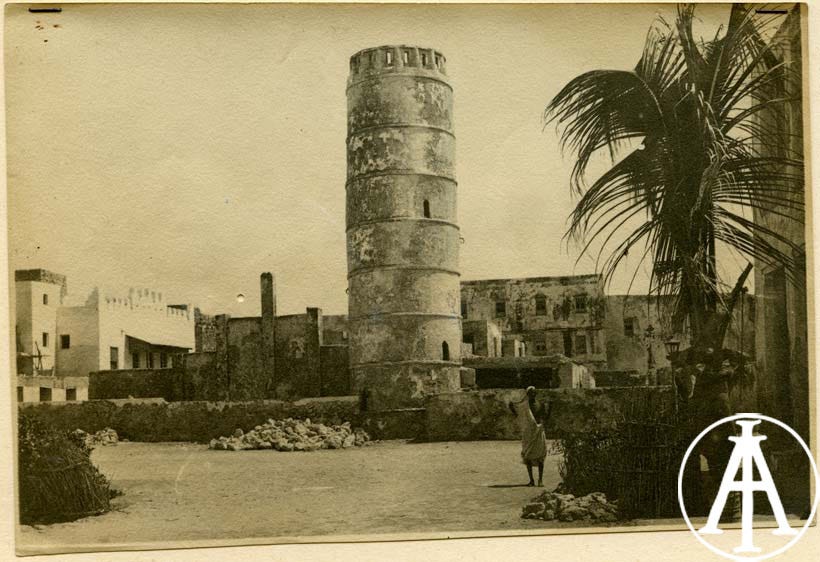
The Jama’a mosque in 1910, image from Istituto Nazionale di Archeologia e Storia dell'Arte
Centralization in 19th century Tanzania.
It would be misleading, however, to generalize the 19th century as a period of increasing decentralization in Africa. While several older kingdoms were disintegrating, new centralized polities emerged in their place, even among societies that previously had no traditions of centralized leadership!
Chief among these are the Nyamwezi of central Tanzania, who lived in small polities headed by an ntemi. But in the 19th century, the combined expansion of the caravan trade from the East African coast, the Ngoni migrations from southern Africa, and the introduction of firearms resulted in the reconfiguration of pre-existing patterns of social organization.26
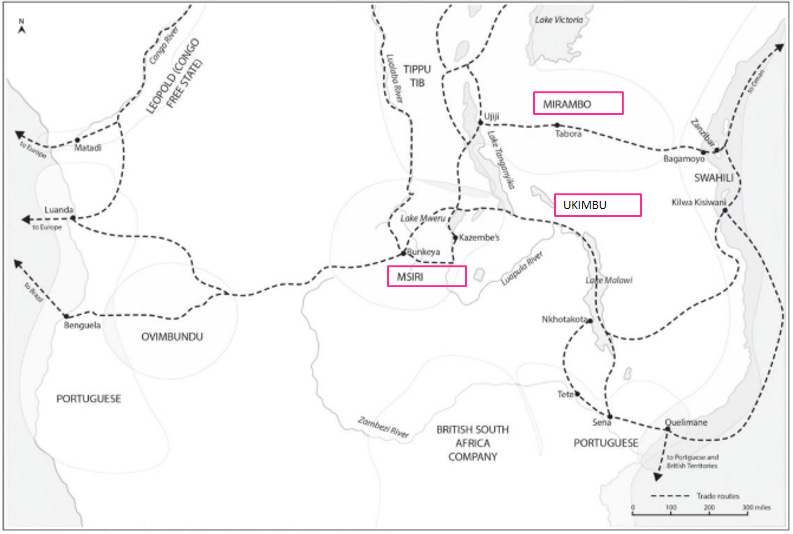
The Nyamwezi kingdoms of the late 19th century. Map by Tom Cooper, after Rex Parry. Note that part of Unyanwembe fell under Mirambo’s state but later reverted to its dynasty After his death.
New personalities, such as Mirambo, Fundakira, Nyungu ya Mawe, and Msiri, who were at times called “emperors” by contemporary European visitors due to the scale of their military conquests and authority, created large, hegemonic states by subsuming neighbouring chiefdoms.
Within a single generation, their Kingdoms (Urambo, Unyanyembe, Ukimbu, and Garanganze/Katanga) began regulating tribute collection from caravans and peasants, centralized the military, appointed subordinate chiefs, built large capitals, and formalised diplomatic relationships with older, neighbouring kingdoms like Buganda and Luba. Some of the kingdoms lasted until the onset of the colonial period.27
The example of the Nyamwezi again demonstrates that centralized states emerged when conditions for state formation were favourable. Neither their prior absence nor their subsequent disintegration can be attributed to any inherent African preference for small-scale polities, but instead reflects historically contingent processes specific to particular regions and periods.
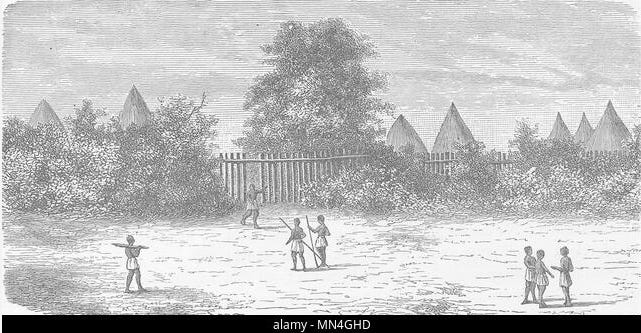
Village of Nyamwezi, ca. 1891. Likely based on an illustration of a settlement in Unyanyembe by Verney Lovett-Cameron, ca. 1873-5.
“Tribal” Maps and Speculations.
Lacking this historical perspective, Henn and Robinson devote a substantial portion of their article to speculative arguments concerning population estimates, pre-colonial warfare, and economic systems, while collapsing a wide range of societies into the analytically problematic category of “Sub-Saharan Africa.”
Many of these arguments are undermined by the fragility of their central premise regarding precolonial state formation, which, as I have argued above, is not supported by the historical evidence.
The authors’ population estimates, which they admit to be largely extrapolated from colonial-period data and projected backward (pg 38-45), are of limited value as proxies for the size of precolonial states and communities, which fluctuated significantly.
To date, only John Thornton and Linda Heywood have provided detailed population estimates from the pre-colonial period, using baptismal records and state archives to compute the population of North-Western Angola since the 17th century.28 Yet even this important body of data is not without its critics.29
Such population data cannot be captured by the “tribal map” and “Ethnographic Atlas” of Murdoch (1959, 1967), on which the authors nevertheless rely heavily, despite its criticism in the specialist literature.
The major criticisms of Murdock’s map have been usefully summarised by Cogneau and Dupraz (2015). They include glaring factual errors such as the omission of important populations, confusion or dissociation of certain ethnic groups, and in other cases, some groups are repeated in several different and incompatible chapters.
Researchers using Murdock’s data take as given the “societies,” “cultures,” “tribes,” or “ethnic groups” of the map and the Atlas. However, Murdock’s groups are neither linguistic groups nor political groups corresponding to precisely dated Chiefdoms, Kingdoms, or Empires.30
Murdock’s “Ethnographic Atlas” doesn’t represent the territorial limits of any state or society in any period of pre-colonial Africa, and is of limited analytical value even for the 1960s when it was created.
A cursory examination of the map by anyone familiar with African historical geography or contemporary ethnolinguistic distributions reveals significant inaccuracies, suggesting that Murdock had a limited understanding of both the historical and contemporary realities he sought to classify.
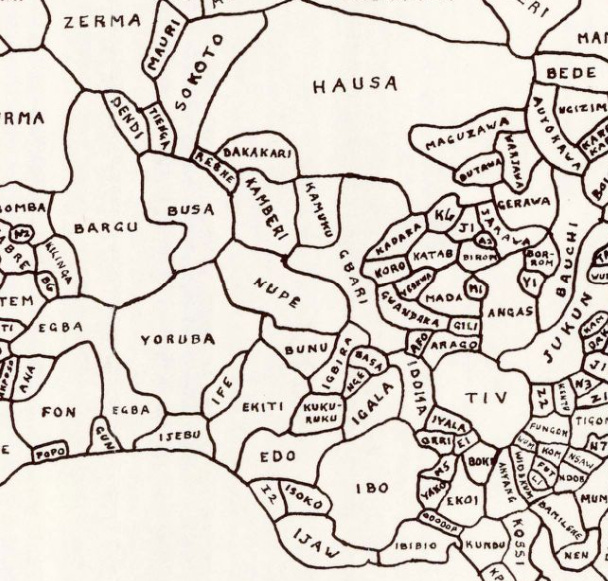
Detail of Murdock’s Tribal Map (1959) showing the people groups of Nigeria.
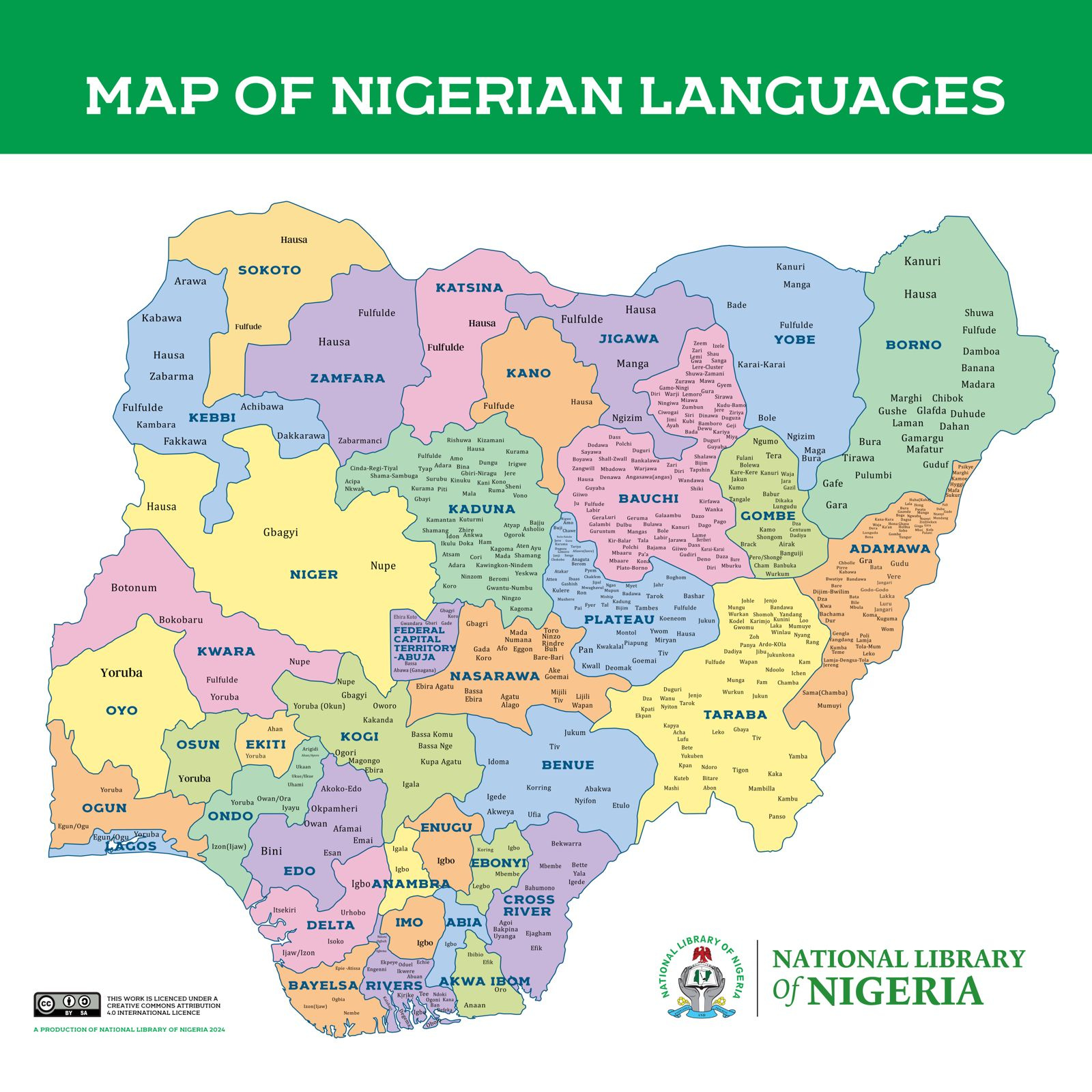
Official Map of Nigerian Languages, by the National Library of Nigeria (NLN). Note that the languages are in lower case, while the State names are in upper case. Zoom in to see which Languages are spoken in each state.
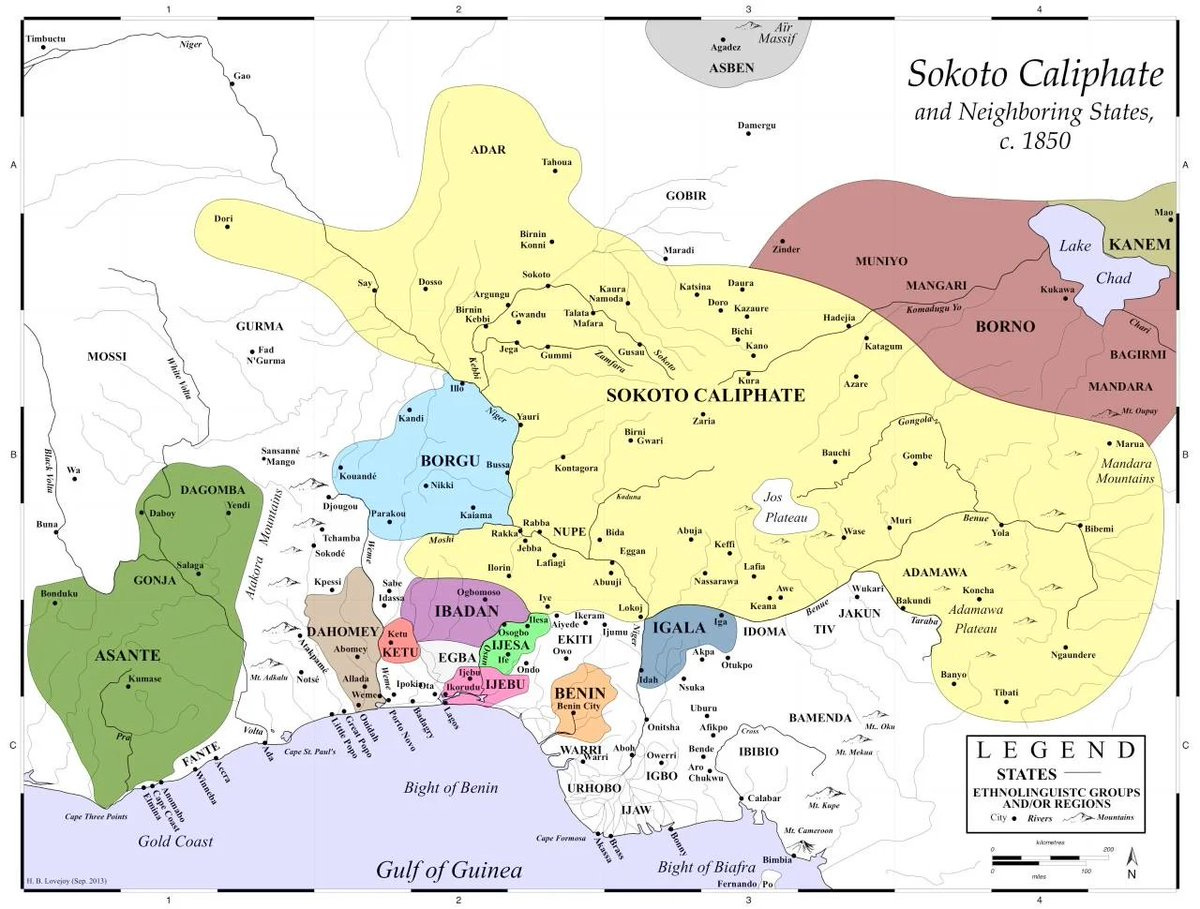
Pre-colonial map of Nigeria in the 19th century. Map by Paul E. Lovejoy.
Contrary to Henn and Robinson’s claim that warfare didn’t contribute to the centralizing process (pg 18-19), the above outline explains how warfare was central to the emergence of most large-scale polities.
The rise of large kingdoms in Equatorial Africa, Somalia, and Central Tanzania was in part based on changes in the organization of military systems and warfare. European visitors in the 19th century recognised this dynamic, for example, H.M. Stanley, who referred to Mirambo as the ‘African Bonaparte’.
The authors admit that the historical literature shows that African economic systems varied systematically with political centralization in Africa, yet they generalise the example of the Tiv, “an acephalous society completely lacking political centralization”, as “typical in Africa”. (pg 24)
However, as we have examined above, economic systems could vary considerably over time, even in a single society. There was no such thing as a “typical” African system.
The organization of market systems in the Lower Congo during the 16th-17th century bore no resemblance to the economic exchanges of the 19th century. Neither did the nature of commercial control of the Ajuran period of Somalia resemble that found in the decentralised communities of the 19th century. The Nyamwezi systems that existed before the 19th century were entirely dissimilar to those implemented by Mirambo and Msiri in the later period.
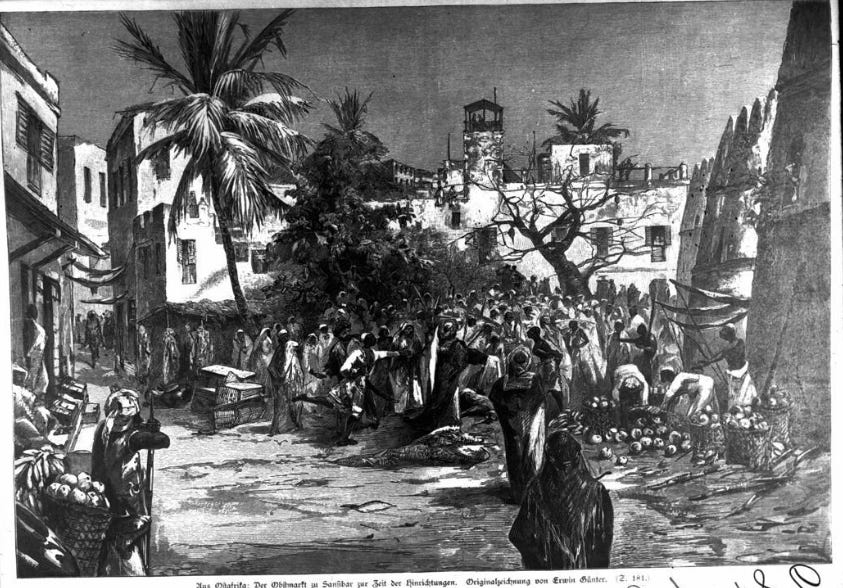
Fruit market in Zanzibar, Tanzania. ca. 1888. Koloniales Bildarchiv, Universitätsbibliothek Frankfurt am Main.
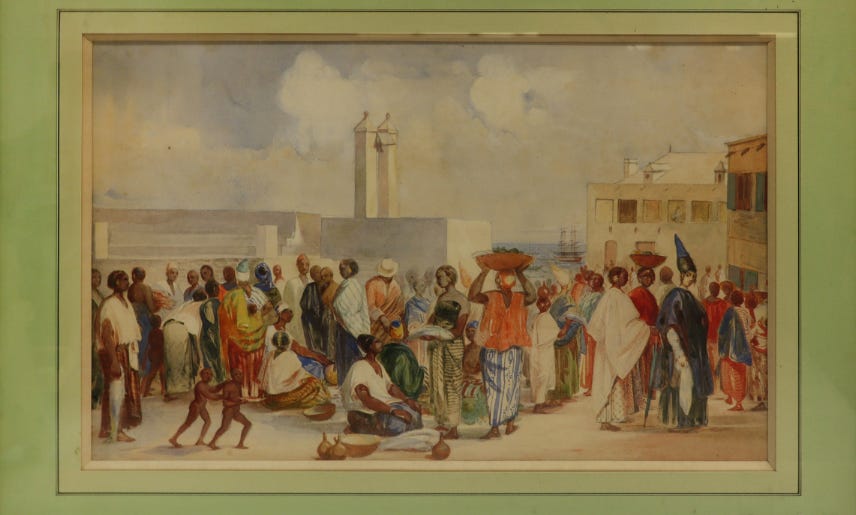
Market scene in Gorée, Senegal. ca. 1842-1867. Quai Branly
Conclusion: on the limits of Grand Theories.
In Summary, there’s no convincing historical basis for Henn and Robinson’s assertion that pre-colonial Africans were inherently predisposed toward decentralisation. The evidence instead demonstrates that states and centralizing institutions arose whenever the underlying conditions and political innovations were favorable.
As Jan Vansina demonstrates in the case of the Equatorial region during the early second millennium CE, these conditions did not produce a linear or predetermined trajectory of political development:
“There never was a single inherent program that automatically forced people to expand the scale of their societies continually and continuously from village to region so as to wrest power relentlessly from a multitude of villages in order to concentrate it in a single capital.
Nor was it a matter of taking authority away from the many family heads to centralize it into the hands of a single paramount, even though some societies did end up as large kingdoms.
What happened was that in different regions people developed their incipient societies by recognizing and implementing additional choices as further solutions to issues of common governance. As these choices and solutions were different in each region, each region went its own way.”31
Henn and Robinson’s argument thus rests on a reductive and methodologically weak reading of African political history.
It reflects a broader tendency in non-specialist writing to neglect sustained engagement with the historical literature in favour of generalist theoretical claims that repurpose outdated theories as groundbreaking discoveries.
A more adequate understanding of African state building requires careful engagement with the historical literature, rather than imposing grand theories that are poorly defined, flatten history, and are inapplicable to Africa’s social realities.
Contrary to popular theoretical claims that Africans only recognised “Wealth in People”, recent research across Multiple societies shows that Africans also valued their Landholdings, and that Land was neither abundant nor socially insignificant.
My latest Patreon article examines the research by the historian Mariana Candino, who uncovered internal documentary evidence for Land ownership and Control in West-Central Africa since the 17th century.
Please subscribe to read about it here and support this newsletter.
Africa as a Success Story: Political Organization in Pre-Colonial Africa. Soeren J. Henn and James Robinson
This recalls long-standing debates on whether Ancient and Medieval Nubia were part of the “African” or Mediterranean world (see Laszlo Torok, Jeremy Pope and Derek Welsby), whether Aksum and Ethiopia were oriented towards the Red sea world or the African mainland (see David Phillipson and Samantha Kelly), whether the Swahili cities were part of the Indian Ocean World or Africa (see; Stephanie Wynne-Jones and Randall Pouwels), and whether the Muslim states of the West Africa Sahel resembled their peers in the Maghreb or were part of a disputed tradition of “Islam Noir” (see; Rudolph Ware and John Hunwick)
After this dissection of “Sub-Saharan” Africa, one can then proceed to examine whether the historical similarities between societies as far apart as Asante, Kongo, Zulu, and Buganda shared any forms of social organisation that were sufficiently similar and consistent between themselves, to be differentiated from those found in the other African societies excluded above, and from the rest of the world.
The philosopher Valentin-Yves Mudimbe observed that Western knowledge systems invented Africa as a “conceptual entity” through a dichotomizing, Eurocentric lens, casting Africa as the “barbaric” opposite of European notions of civilization, rationality, and modernity. The fact that Henn and Robinson repurpose this framework as an example of an African “success” doesn’t undermine the fundamentally racist and exclusionary basis of its ideological foundation.
Review of Vansina, J. : Paths in the rainsforests: toward a history of political tradition in equatorial Africa. by Robin Law, African Affairs, Vol. 91, 1992.
Paths in the Rainforests: Toward a History of Political Tradition in Equatorial Africa by Jan Vansina pg 74-83, 146-152, 155-156
Paths in the Rainforests: Toward a History of Political Tradition in Equatorial Africa by Jan Vansina pg 164,165
Paths in the Rainforests: Toward a History of Political Tradition in Equatorial Africa by Jan Vansina, pg. 146, 158-164
Paths in the Rainforests: Toward a History of Political Tradition in Equatorial Africa by Jan Vansina, pg. 158
Paths in the Rainforests: Toward a History of Political Tradition in Equatorial Africa by Jan Vansina, pg. 220-225
Paths in the Rainforests: Toward a History of Political Tradition in Equatorial Africa by Jan Vansina, pg. 225-235
Paths in the Rainforests: Toward a History of Political Tradition in Equatorial Africa by Jan Vansina, pg. 172-176
Paths in the Rainforests: Toward a History of Political Tradition in Equatorial Africa by Jan Vansina, pg. 176-177
Paths in the Rainforests: Toward a History of Political Tradition in Equatorial Africa by Jan Vansina, pg. 181-185
Paths in the Rainforests: Toward a History of Political Tradition in Equatorial Africa by Jan Vansina, pg. 185
Paths in the Rainforests: Toward a History of Political Tradition in Equatorial Africa by Jan Vansina, pg. 186-191, 241-242
Paths in the Rainforests: Toward a History of Political Tradition in Equatorial Africa by Jan Vansina, pg. 191-193
Paths in the Rainforests: Toward a History of Political Tradition in Equatorial Africa by Jan Vansina, pg 22, 120-126, 230
Why Nations Fail by Daron Acemoglu and James A. Robinson pg 134-135
Paths in the Rainforests: Toward a History of Political Tradition in Equatorial Africa by Jan Vansina, pg. 145-146, 194-195
On matrilinearity and the founding clans of Kongo, see; A note on Vansina’s invention of matrilinearity by Wyatt MacGaffey. The Origins and Early History of the Kingdom of Kongo, c. 1350-1550. On the effects of the Atlantic system, see: Africa and Africans in the Making of the Atlantic World, 1400-1800 by John Thornton, pg 44-75, and my essay: What were the effects of the Atlantic slave trade on African societies?
The Shaping of Somali Society By Lee V. Cassanelli pg 95-104
The Shaping of Somali Society by Lee V. Cassanelli, pg. 103
Kola’s Kingdom: The Territory of Abasa (Western Somaliland) during the Medieval Period by Jorge de Torres Rodríguez, pg. 573. Built on diversity: Statehood in Medieval Somaliland (12th-16th centuries AD) by Jorge de Torres Rodriguez pg, 176, 179
First footsteps in East Africa, or, An exploration of Harar by RF Burton, published by Tylston and Edwards, pg 123
Muqdisho in the Nineteenth Century: A Regional Perspective by EA Alpers, pg 444-445
The Shaping of Somali Society by Lee V. Cassanelli pg 156-157
Ntemiship trade and state-building: Political Development among the Western Bantu of Tanzania, by Ralph A. Austen In East African History , ed . Daniel F. McCall , Norman R. Bennett , and Jeffrey Butler, pg 133-147
A History of Modern Africa 1800 to the Present By Richard James Reid, pg. 54-56. Nyungu-Ya-Mawe and the ‘Empire of the Ruga-Rugas’ By Aylward Shorter
Demography and History in the Kingdom of Kongo, 1550–1750 by John Thornton. African Fiscal Systems as Sources for Demographic History: The Case of Central Angola, 1799–1920 by Linda Heywood and John Thornton
Nouveaux regards sur la démographie du bassin de l’Inkisi à l’époque du royaume Kongo (XVIe-XVIIIe siècles) by IM Sakala. Revising the Population History of the Kingdom of Kongo by John Thornton
Institutions historiques et développement économique en Afrique. Une revue sélective et critique de travaux récents, by Denis Cognon, Denis Cogneau, Yannick Dupraz, Histoire & Mesure, Vol. 30, No. 1, (2015), pg. 103-134
How Societies Are Born by Jan Vansina pg 101
What you demonstrate is that Henn and Robinson are repeating an old mistake of treating the current state of a dynamic system as its permanent character. Burton encountered Somali society in 1854 and described it as inherently resistant to authority, without realising he was looking at the aftermath of the Ajuraan collapse rather than some deep cultural constant. Henn and Robinson reach the same static conclusion through mid-20th-century anthropology.
Your evidence bears this out. Kongo had tribute systems, provincial officials, and standing armies, which then fragmented when Atlantic trade disrupted the conditions that had made centralisation viable. The Nyamwezi went the other way: no prior tradition of centralised leadership, yet hegemonic states within a generation, once the caravan trade and Ngoni migrations changed what they were up against. The same underlying structures, yet completely different outcomes. Vansina says as much in the passage you provide: innovations took root only when conditions shifted, and then through historical accident. This is not a cultural argument.
There's a policy implication worth recognising. Once this kind of framing takes hold, it provides cover for bypassing state-building altogether. Hence, we see micro-finance, cash transfers, and NGOs standing in for the centralised authority Africans supposedly never sought. But if your argument is right, the failure of state-building isn't cultural resistance. It's the absence of conditions that makes state capacity develop. And that's a problem we could actually do something about.
You write rigorous things that always end up with a heft I find incisive—thx 4 that